Archive

November 2026

Browsing

The political landscape of Texas underwent a seismic shift last week as a historic Democratic wave swept several high profile Republicans out of office, including Lieutenant Governor Dan Patrick. In a poetic turn of events, Patrick had previously dared voters to remove him if they disagreed with his hardline stance against marijuana legalization. Now, with the seats flipped and a new legislative session beginning, Democrats are moving quickly to transform the state into the twenty fifth jurisdiction in the country to permit recreational cannabis use.

On the very first day of the bill filing period, lawmakers introduced multiple pieces of legislation that would allow adults aged twenty one and older to possess small amounts of cannabis and grow a limited number of plants for personal use on their own property. These proposals include various limits on possession and concentrates, alongside requirements for retail licensing. Supporters point to the victory of Lieutenant Governor elect Vikki Goodwin as a turning point, noting that her commitment to reforming hemp laws was central to her upset win over Patrick.

Despite the momentum, significant obstacles remain before these bills can become law. While Goodwin will now hold substantial power over the Senate’s agenda, she must navigate a chamber that still maintains a Republican majority. There are also internal debates regarding the specifics of the proposed laws. Advocacy groups like the Texas Cannabis Policy Center warn that current tax proposals could make legal weed too expensive, inadvertently fueling the illicit market rather than replacing it.

Beyond simple legality, advocates are pushing for comprehensive decriminalization to run parallel with any new regulations. They argue that existing penalties for concentrated marijuana products are overly harsh and continue to clog the judicial system. As Representative John H Bucy III introduces measures to ease these criminal penalties, Texas stands at a crossroads where ideological battles over drug policy meet a newfound appetite for systemic reform in Austin.


Democratic strategists and elected officials are descending upon Denver this week for a high stakes summit that was originally designed as a period of soul searching but has quickly evolved into a victory lap. Following their strongest electoral showing in fifty years, the party is gathering for the What’s Next conference to determine how to wield their newfound majorities in both chambers of Congress and across twelve newly captured state legislatures. The atmosphere is expected to be electric, shifting from the anxiety of previous cycles to a focused ambition about governing.

The guest list reads like a directory of the party’s future leadership, blending fresh faces with established heavyweights. Newly elected senators like James Talarico of Texas and Josh Turek of Iowa will rub shoulders with presidential contenders including Pete Buttigieg, Cory Booker, and Governor Josh Shapiro. While Hakeem Jeffries prepares to step into his role as House Speaker, he will navigate an environment where younger activists still harbor skepticism toward the traditional Washington power structure. This tension underscores the primary goal of the host organization, Majority Democrats, which hopes to heal long standing ideological rifts between the progressive wing and center moderates.

Beyond the policy debates, the event serves as a strategic audition for Denver itself. Mayor Mike Johnston is kicking off the proceedings with an eye toward securing the 2028 national convention, positioning his city as a prime symbol of how once purple states can shift solidly blue. By showcasing a mix of youthful energy and institutional experience, the conference aims to move past old establishment battles and establish a unified front heading into the next era of American governance.

In a victory that defies the typical political leanings of her home state, Democratic State Senator Cindy Holscher has won the race for governor of Kansas. According to a call by the Associated Press, Holscher managed to keep the executive office in Democratic hands despite facing off against Republican Ty Masterson, the current president of the state Senate and an ally of Donald Trump. The win comes after several days of tension involving recount efforts and the processing of provisional ballots in what was widely considered the most vulnerable Democratic gubernatorial seat in the entire country.

Holscher succeeds outgoing Governor Laura Kelly, who is leaving office due to term limits after eight years of navigating a deeply Republican legislature. Throughout her campaign, Holscher leaned into populist themes, positioning herself as a fighter against corporate interests and sweetheart deals for billionaires. She frequently pointed toward Masterson’s legislative record, specifically citing his involvement in past tax cuts that contributed to previous state budget crises, while pushing for increased funding for public schools over private vouchers.

Masterson centered his bid on traditional conservative pillars, pledging to be the most business and agriculture friendly governor in history while advocating for lower property taxes. His campaign took sharp turns during the final stretch, labeling Holscher as a radical socialist. However, those attacks failed to sway enough voters to tip the scales in favor of the Republicans. In response to the rhetoric, Holscher dismissed his claims as mere labels used because he lacked a substantive counterargument to her platform.

Looking forward, Holscher enters office with an ambitious agenda that includes legalizing cannabis to boost state revenue and implementing a moratorium on new data centers. Her victory ensures that Democrats maintain their foothold in Topeka even as they continue to clash with a GOP dominated legislature throughout much of the state’s administrative landscape.

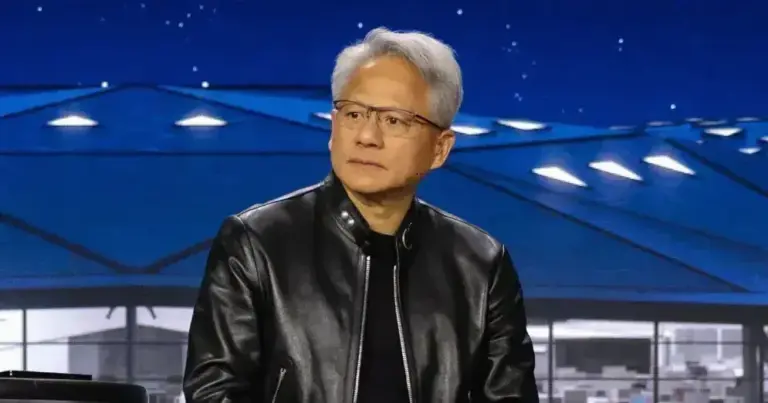
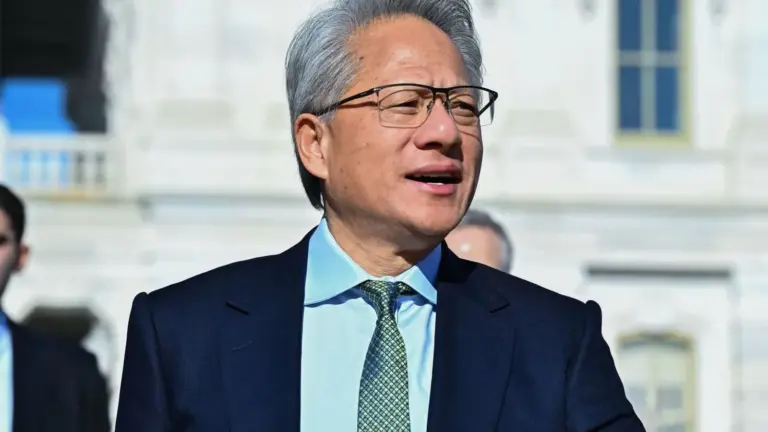
The landscape of the artificial intelligence revolution shifted violently on Thursday as Jensen Huang, the visionary co-founder and longtime chief executive of Nvidia, resigned from the company he led for over three decades. The sudden departure follows a whirlwind of scandals involving two separate extramarital affairs, one of which has ignited a national security firestorm. According to U.S. intelligence agencies, Huang was involved with a Chinese businesswoman who they conclude was acting as a spy for Beijing, using their relationship to potentially compromise sensitive information during a period of intense geopolitical tension over semiconductor dominance.

Adding to the internal turmoil were reports that Huang engaged in another improper relationship with an executive who reported directly to him, creating a breach of corporate governance that ultimately made his position untenable. While President Trump had spent the previous week defending Huang as an honorable man and praising his fantastic leadership, the combined weight of these revelations forced the board’s hand following a marathon meeting on Wednesday night. Colette Kress, the current chief financial officer, has stepped in as interim CEO while the company searches for a permanent successor capable of steering the ship through this crisis.

The markets reacted swiftly to the vacuum left by one of Silicon Valley’s most celebrated figures. As Nvidia controls roughly 90 percent of the high end AI chip market, shares plummeted at the opening bell, dragging down broader indices and sparking fears regarding stability in the AI sector. This volatility comes at a precarious time when Nvidia serves as a critical linchpin in the technological rivalry between Washington and Beijing, especially given suspicions that firms linked to Huang’s associate may have smuggled restricted hardware into China.

Beyond the boardroom and the stock ticker, the scandal threatens to dismantle one of America’s newest philanthropic powerhouses. Together with his wife Lori, Huang managed a massive foundation with approximately nine billion dollars in assets. With Huang admitting to his infidelities and facing an ignominious exit from his professional empire, observers wonder if their charitable partnership can survive similar collapses seen in other billionaire marriages recently. For now, while Donald Trump suggests legends like Tim Cook might be fit replacements, Nvidia remains in a state of profound uncertainty.

In a sudden move that has sent shockwaves through the tech industry, Nvidia’s board of directors ousted founder and CEO Jensen Huang following revelations involving a series of personal scandals and potential national security breaches. Sources indicate that the board acted swiftly overnight after reports emerged of a second alleged affair, specifically one involving Alice Huang, a woman suspected of being a Chinese intelligence asset. The company has named Kress as interim CEO while attempting to stabilize operations and reassure shareholders amidst the chaos.

The fallout extends far beyond the boardroom, as federal investigators examine whether these personal connections facilitated the illegal diversion of advanced AI hardware to China. Shares of Super Micro Computer plummeted following reports that U.S. prosecutors are probing links between Alice Huang and hardware smuggling operations. This coincides with existing charges against former Super Micro executives accused of smuggling billions of dollars worth of Nvidia-powered servers into Chinese territory, raising urgent questions about how deeply compromised the supply chain may be.

As legal pressures mount, Jensen Huang has agreed to testify before Congress to address concerns over national security risks. Senate Minority Leader Chuck Schumer and Representative Gregory Meeks have both called for transparency, questioning why the Trump administration appeared to overlook troubling intelligence regarding Huang’s relationships. Democrats are now investigating whether political ties influenced the approval of AI chip exports to Chinese government-linked firms and if investigations were stifled due to personal friendships at the highest levels of government.

While the leadership transition aims to steady the ship, legal experts warn that Huang’s resignation may actually empower disgruntled investors. A proposed class action lawsuit is already gaining momentum, with attorneys arguing that the CEO’s departure validates claims that leadership misrepresented risks to shareholders. For a company so centrally defined by its founder’s vision, Nvidia now faces an uphill battle to prove it can maintain its market dominance while navigating a storm of criminal probes and political scrutiny.

Megaspeed, the Singapore based technology firm currently embroiled in a high stakes international spying scandal, has pledged its full cooperation with United States investigators. The announcement comes at a volatile moment for the industry, arriving just hours before the sudden resignation of Nvidia CEO Jensen Huang. The fallout stems from revelations that Huang engaged in an extramarital affair with Alice Huang, a senior executive at Megaspeed whom U.S. intelligence agencies believe acted as an operative for Chinese intelligence.

Beyond the personal scandal, Megaspeed finds itself under intense legal pressure for allegedly bypassing U.S. export controls to smuggle advanced American made chips into China. To signal its commitment to transparency, the company’s chairman and CEO, Tan Yong Pong, stated that Megaspeed has hired a prominent U.S. law firm to conduct an independent audit of its graphics processing units and verify its compliance practices. While China has dismissed these accusations as mere fabrications designed to justify technological blockades, the company insists it welcomes government scrutiny to prove it operates responsibly.

The situation has created a diplomatic and legal tangle involving three different nations. In Singapore, authorities recently barred Alice Huang from re entering the country and seized her passport after determining she provided misleading information during police interviews. However, Singaporean officials noted that while their probe into Megaspeed continues, they found insufficient evidence to charge Alice Huang with specific crimes locally and expressed frustration over a lack of timely communication from U.S. authorities regarding the case.

As Nvidia reels from the departure of its legendary co founder and watches its stock price tumble, Washington is turning its attention toward potential security lapses. Reports suggest that top administration officials had been warned months ago about the relationship between the Nvidia chief and the suspected agent. With Democrats poised to take control of Congress and gain subpoena power, lawmakers are already calling for the preservation of all government records to determine how such a significant national security risk went unaddressed for so long.

Thousands of professionals found themselves staring at blank screens on Thursday morning as a massive failure within Microsoft 365 paralyzed critical business operations across North America. The disruption hit like a tidal wave starting around 10:40 am ET, initially appearing as glitches in Microsoft Teams before spiraling into a full scale blackout for Exchange Online mailboxes. For those whose entire careers depend on the flow of digital communication, the outage turned productive workdays into periods of forced idling.

The company quickly acknowledged the chaos via social media, noting that several core services including SharePoint and Microsoft Copilot were caught in the crossfire. Technical teams discovered that servers were failing automated health checks and dropping offline, creating an artificial bottleneck known as elevated load. Despite the appearance of high traffic, Microsoft clarified that the crisis was rooted in server instability rather than an external surge of users.

To combat the collapse, engineers spent several hours aggressively rerouting connection traffic across their global infrastructure and pausing all software deployments to prevent further damage. While report spikes on Downdetector eventually leveled off by mid afternoon, many businesses remained in a state of limbo while waiting for systems to fully reboot. A spokesperson for the tech giant urged patience as they worked to stabilize the environment.

Though there is currently no evidence that a cyberattack triggered the crash, the event serves as a stark reminder of how dependent modern commerce has become on single point cloud providers. This incident echoes previous disasters such as the CrowdStrike meltdown earlier this year, highlighting a recurring vulnerability where one technical hiccup can effectively shut down millions of offices simultaneously.

Prospective homebuyers are retreating from the market in droves as a combination of soaring mortgage rates and stubborn inflation pushes home sales to their lowest point in sixteen years. New data from the National Association of Realtors shows that existing home sales plummeted to 3.75 million units in October, marking an 8.8 percent drop compared to last year. While prices remained relatively resilient with a median sale price of 416,700 dollars, the volume of transactions cratered across the Midwest, South, and West.

The sudden chill in the market comes after a brief window of optimism where rates had dipped below six percent earlier in 2026. However, geopolitical instability surrounding the war in Iran and spiking inflation have sent those numbers climbing once again. The standard 30 year fixed mortgage rate is now hovering around 7.18 percent, creating a financial barrier for many who remember the era of three percent loans during the pandemic. Lawrence Yun, chief economist at the NAR, noted that buying a home has become incredibly difficult given these historic highs.

This downturn is closely tied to recent moves by the Federal Reserve, which raised interest rates in September for the first time since 2023 to fight overheating inflation. With another hike likely next month, analysts worry that affordability will continue to slide further into crisis mode. This economic pressure was felt deeply during the recent midterm elections, contributing to a Democratic victory in Congress as voters expressed frustration over stagnant home ownership and rents that are growing faster than general inflation.

Despite the grim statistics and record lows in pending contracts, some experts believe this slump is temporary rather than a permanent shift in behavior. Danielle Hale of Realtor.com suggests that current figures reflect a perfect storm involving seasonal slowdowns and political uncertainty leading up to an election cycle. For now, however, millions of Americans remain locked out of the dream of home ownership as they wait for a more stable financial horizon.

Major silver producers have managed to secure strong third quarter profits despite a volatile market that saw the metal lose nearly half its value since a peak in January. While the price drop has created a sense of uncertainty, many miners are still benefiting from a significant pricing cushion, selling their silver for 60 to 80 percent more than they did last year. This windfall allowed several companies to double or even triple their net earnings, though analysts warn that this financial buffer is beginning to erode as macroeconomic pressures mount.

The industry is facing a challenging cocktail of headwinds, ranging from central bank policy to shifting industrial demands. A recent interest rate hike by the US Federal Reserve has put broad pressure on precious metals, while the solar energy sector is starting to pivot away from expensive materials. Leading Chinese solar panel manufacturers have begun replacing silver with copper, a trend that could lead to a nearly 20 percent drop in silver usage for solar power this year according to the Silver Institute.

Operational struggles are adding further complexity for the world’s top miners. Pan American Silver saw its net earnings jump to 357 million dollars thanks to efficient silver mine management, but it was forced to slash gold forecasts due to seismic issues and ventilation failures at its Jacobina mine in Brazil. Similarly, Fresnillo reported an 11.6 percent dip in attributable silver output as declining ore grades made extraction more difficult at key sites like Saucito and Juanicipio.

Despite these hurdles, some firms found bright spots in their portfolios. Hecla Mining Company recorded record free cash flow of 151 million dollars, largely driven by exceptional performance at its Greens Creek operation in Alaska. However, Hecla must now scale back activities at its Keno Hill mine until permitting issues regarding waste and water treatment are resolved toward the end of the decade. As global mine output remains flat and deficits loom into 2026, the industry finds itself balancing current profitability against a tightening supply chain and unstable demand.

The Canadian government is doubling down on its commitment to the mining sector with a series of strategic tax extensions aimed at fueling early stage discovery. Under the latest proposals in Budget 2026, the federal government intends to keep both the general mineral exploration tax credit and the specialized critical mineral version active through March 2032. This move is expected to inject nearly one billion dollars into the industry over five years, while also adding antimony to the list of prioritized critical minerals to attract further investment.

While these measures provide a necessary lifeline for junior explorers who rely heavily on flow through shares to secure seed money, some industry leaders argue that the support stops too soon. The Prospectors and Developers Association of Canada welcomed the extension but noted they had pushed for a much longer own term commitment to provide true stability. Meanwhile, critics like Todd Stone of the Association for Mineral Exploration warn that without expanding existing expense credits to cover feasibility and engineering studies, many promising finds will never actually become working mines.

To bridge this gap between discovery and production, Ottawa is pairing tax breaks with hundreds of millions in direct spending. The updated Canadian Critical Minerals Strategy will receive significant funding beginning in late 2027, focusing on processing technology and geoscience research, alongside renewed support for mapping efforts in Northern Canada via the GeoNorth program. There is also a clear push toward sustainability, with clean energy credits being extended well into 2040 to help mining operations reduce their carbon footprints.

Despite these incentives, there are notable omissions that may frustrate some investors. Specifically, mining firms have been left out of a new capital gains exemption designed to spur growth in other Canadian businesses. Nevertheless, the government remains optimistic about the sector’s trajectory, pointing to over forty four billion dollars in critical minerals projects currently under construction or awaiting final assessment as evidence that Canada is poised to strengthen its role in the global supply chain.