Archive

November 2026

Browsing

CME Group is moving closer to securing a landmark storage agreement that could fundamentally change how investors interact with the uranium market. According to reports from Bloomberg, the exchange operator is currently finalizing a deal with ConverDyn, a joint venture between Solstice Advanced Materials and General Atomics. This partnership would allow CME to store uranium concentrates at the Metropolis Works facility in Illinois, which stands as the only commercial scale conversion plant operating within the United States.

If finalized, the arrangement would pave the way for a futures contract based on physical yellowcake rather than simple cash settlements. Under the proposed framework, Solstice would oversee the inventory management while ConverDyn handles the necessary accounting. Legal teams are reportedly reviewing the documents now, with hopes that the deal can be closed before the end of the calendar year. While all involved parties have remained silent on the matter, such a move would provide a tangible alternative to current cash settled contracts that often suffer from low trading volume.

The timing of this initiative aligns with a broader surge in global demand for nuclear fuel, driven largely by government energy expansions and the massive electricity requirements of artificial intelligence data centers. With years of underinvestment leaving supply tight, spot prices have climbed significantly, recently hovering around ninety dollars per pound. By introducing physical delivery options, CME joins a small group of entities like the Sprott Physical Uranium Trust that offer direct exposure to the actual commodity.

This push into uranium is part of a wider aggressive expansion strategy by CME Group to diversify its product offerings throughout 2024. The exchange has already made waves this year by updating its gold and silver trading hours and announcing upcoming ventures into tungsten futures. By bridging the gap between financial speculation and physical ownership of radioactive fuel, CME aims to capture more of the momentum building behind the nuclear energy renaissance.
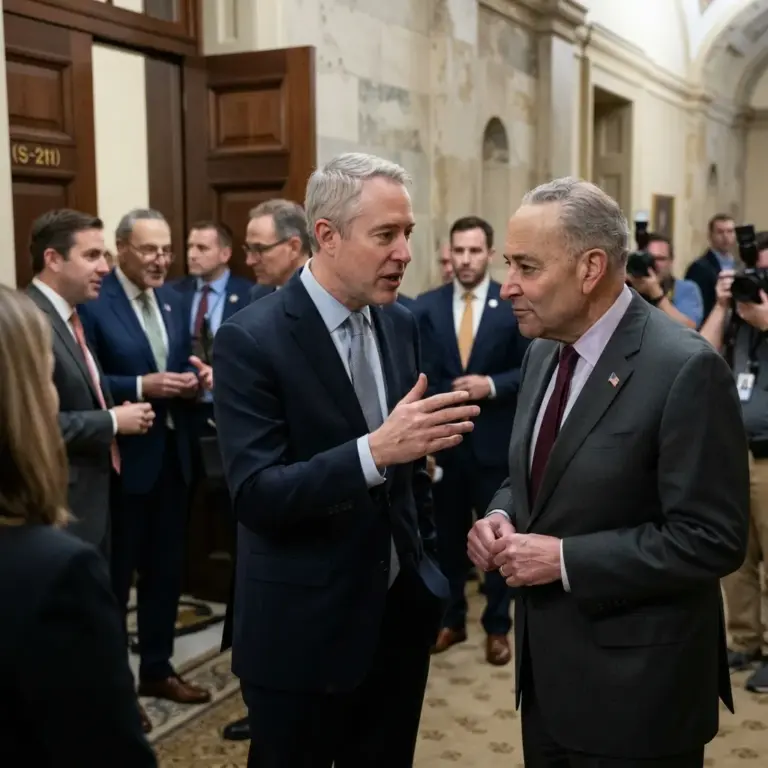

Senator Chris Van Hollen of Maryland has officially launched a bid to replace Chuck Schumer as the Senate majority leader, signaling a rare and public fracture within the Democratic caucus. Taking to X on Thursday, Van Hollen argued that the American electorate is demanding a fundamental shift in how the economy is managed and calling for new leadership to dismantle systemic political corruption. While he admitted in a subsequent interview that he enters the race as an underdog, Van Hollen insisted that the internal dynamics of the caucus are currently in flux.

The move has already ignited a divide among Senate Democrats. Independent Senator Bernie Sanders quickly voiced his support for Van Hollen, framing the challenge as part of a broader necessity to confront billionaires and special interests. Other figures, such as Senator-elect Abdul El-Sayed, pointed to Van Hollen’s willingness to take political risks—citing his critical stance on weapon shipments to Israel and his diplomatic efforts in El Salvador—as evidence that he can champion progressive priorities more effectively than the current leadership.

For his part, Senator Schumer remained composed in response to the challenge, asserting that he possesses the necessary votes to maintain his position. Pointing to the party’s strong performance in the recent midterms where Democrats secured a substantial majority, Schumer expressed confidence in his track record since taking over from Harry Reid in 2017. His supporters, including Senator Kirsten Gillibrand and Senator Jacky Rosen, have praised his strategic brilliance during the campaign cycle and urged their colleagues to remember the success achieved under his guidance.

Despite those endorsements, tensions remain high regarding Schumer’s handling of previous government shutdowns and his perceived interference in Democratic primaries. Van Hollen specifically criticized these actions, suggesting that a leader should not pick winners and losers in primary contests. As leadership elections approach early next month, some undecided senators are weighing whether stability under Schumer outweighs the promise of a new direction offered by Van Hollen’s insurgent campaign.

The trajectory of Vice President JD Vance’s political career appears to be hitting a sudden and unexpected crossroads. Once viewed as the undisputed successor to Donald Trump and the primary heir apparent to the MAGA movement, Vance is now reportedly grappling with whether he actually wants to seek the presidency in 2028. This internal struggle comes in the wake of what many are describing as catastrophic results during last week’s midterm elections.

According to reporting from CNN’s Alyana Treene, the electoral blowback has forced the Vice President into a period of deep reflection regarding his viability as a future candidate. The midterms served as a harsh reality check for the administration, leaving Vance to weigh his current standing within the party against the daunting prospect of leading a national ticket in four years. While he had previously been positioned as the natural next step for the Republican platform, those calculations have shifted significantly following the recent losses.

As Vance wrestles with these doubts, the broader political landscape is already beginning to reorganize around potential successors and challengers. With the GOP facing questions about its direction after the midterms, any signal that Vance might step back from a 2028 bid could open a vacuum for other ambitious figures to emerge. For now, however, it remains unclear if this hesitation is a temporary reaction to short term defeat or a permanent pivot away from higher office.

Vice President JD Vance is grappling with a profound identity crisis regarding his political trajectory following a devastating series of midterm election losses. Once viewed as the inevitable successor to Donald Trump, the forty two year old is now weighing whether a run for the presidency in 2028 is feasible or even desirable. Sources close to the vice president suggest that while a bid remains possible, he is privately wrestling with the collapse of the MAGA coalition and the personal demands of being a father to four children. For some of his advisors, the current political climate feels too toxic for anyone carrying the administration’s banner to succeed.

Much of this uncertainty stems from the ongoing war with Iran, a conflict that has eroded public trust and served as a primary catalyst for recent Republican failures at the polls. While Vance attempted to frame these losses through the lens of foreign policy in a recent social media post, reports indicate that his analysis irritated President Trump. This tension highlights a delicate balancing act for Vance, who must decide if he can realistically maintain his anti establishment credentials while occupying one of the most powerful offices in government, all while navigating the unpredictable temperament of his boss.

Despite these headwinds, some staunch allies argue that Vance is still perfectly positioned to dominate a future primary. They view him as the natural choice to lead what they hope will be a rebuilt populist movement, suggesting that two years provides ample time for political winds to shift. However, other high profile Republicans like Ron DeSantis and Ted Cruz are already circling, sensing vulnerability in what was previously seen as Vance’s reserved lane. These rivals represent a growing challenge for a man whose path to victory depends entirely on whether he can convince disillusioned voters that the Republican brand is still worth their trust.

Ultimately, Vance faces an uphill battle to resurrect a base that feels betrayed by broken promises on affordability and foreign intervention. With New White House Chief of Staff Stephen Miller sharing his vision for returning to core campaign promises, there is some optimism within the inner circle. Yet pollsters warn that simply tweaking the message may not be enough. To survive politically, Vance may have to move beyond being Trump’s protege and instead architect an entirely new version of populism capable of surviving in an era where traditional MAGA loyalty has begun to fade.

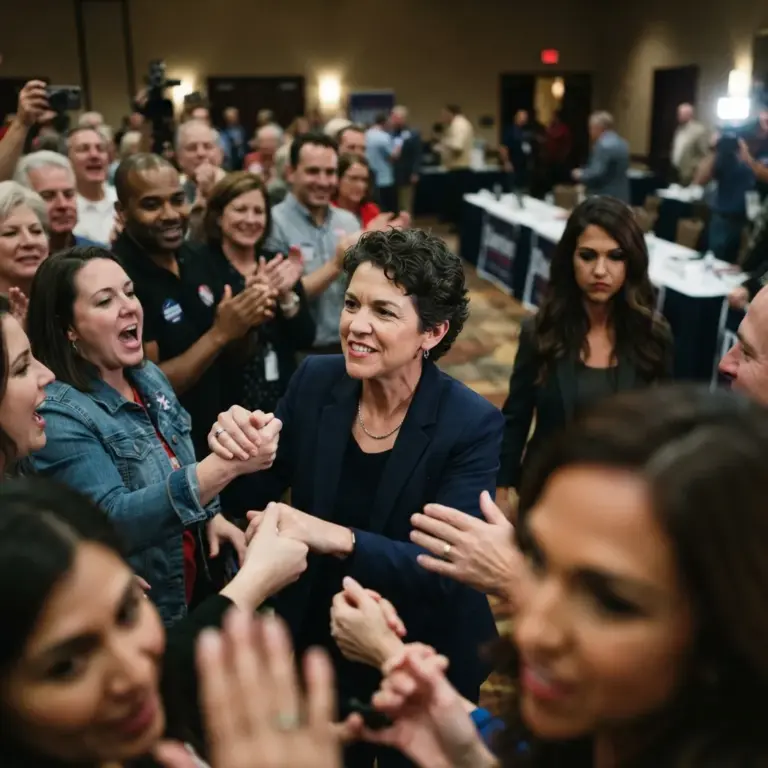
The political trajectory of Lauren Boebert came to an abrupt halt this week as NBC News projected her defeat in Colorado’s Fourth Congressional District. The conservative firebrand, known for her provocative presence in Washington and high profile clashes with colleagues, lost her seat to Democratic challenger Eileen Laubacher. Laubacher, a retired Navy rear admiral and Afghanistan war veteran who previously served on the National Security Council under the Biden administration, framed her victory as a win for character and integrity over self interest during an emotional election night speech to her supporters.

Boebert entered the race having already made a strategic move from the Third District to the deeper red Fourth District following a razor thin victory in 2022. However, that geographic shift provided little protection against a broader national trend that saw numerous GOP incumbents swept away by a wave of anti Trump sentiment. Following the results, Boebert attributed her loss to an onslaught of campaign spending directed at her opponents and criticized the Senate for blocking House approved legislation, suggesting those factors undermined her efforts.

Her tenure in Congress was often defined more by viral moments than policy wins. From heckling President Joe Biden at the State of the Union alongside Marjorie Taylor Greene to being escorted out of a Beetlejuice musical in Denver for disruptive behavior, Boebert remained a constant fixture in the headlines. Her relationship with former President Donald Trump also grew strained toward the end of her term after she broke ranks to support the release of Justice Department files regarding Jeffrey Epstein, prompting Trump to publicly label her weak minded.

Before entering politics as a gun rights activist and owner of Shooters Grill, Boebert rose through the party ranks by upsetting established Republicans like Scott Tipton. While she built a brand as a fierce defender of MAGA values, her legacy remains clouded by frequent interpersonal conflicts on Capitol Hill and highly publicized disputes with both allies and enemies alike. For now, voters in Colorado decided they were ready for a different approach to leadership embodied by Laubacher’s military background and focus on public service.

Fresh off his midterm election victory, Luke Bronin is wasting no time in tackling government corruption. He has joined a growing coalition of newly elected members urging House Democratic leadership to implement a strict ban on stock trading for members of Congress and their spouses. Under the proposed rules, lawmakers would be prohibited from dealing in commodities, futures, and derivatives, though exceptions would remain for diversified mutual funds and qualified blind trusts. The movement reflects a broader desire to prevent self enrichment among those holding public office as the party prepares for its upcoming majority.

Meanwhile, Connecticut’s entire Democratic congressional delegation recently backed legislation designed to provide critical financial relief to combat injured veterans. The Major Richard Star Act aims to remove current restrictions that prevent medically retired veterans with fewer than twenty years of service from collecting both full retirement benefits and disability compensation simultaneously. While Senator Richard Blumenthal has attempted to fast track the bill through unanimous consent, single objections have repeatedly stalled progress. Blumenthal remains optimistic that Congress can finalize the measure before the calendar year ends.

In agricultural news, the state has opened a second window for farmers to apply for a fifty three million dollar federal disaster relief program. Eligible applicants have until December ninth to seek funding for damages resulting from extreme weather events throughout 2023 and 2024. The demand is expected to be high; during the first round of applications, nearly one hundred and forty five farmers requested sixty seven million dollars, already exceeding the total available allocation for the state run initiative.

Local tensions have also risen in West Hartford where striking union workers at Triumph Group gathered on Veterans Day to demand better pay and benefits. Members of UAW Local 405 argue that while the aerospace component manufacturer has seen significant profits, those gains haven’t reached the workforce. They were joined by state officials and local legislators in calls for the company to return to the negotiating table, noting that many of the affected employees are themselves veterans who feel abandoned by their employer.

SpaceX is preparing for one of its most daring tests yet as the massive Starship rocket aims to lift off from South Texas, circle the globe, and touch back down on its own landing pad in less than a day. While the spectacle highlights Elon Musk’s ambitions for Martian colonization, the success of this behemoth may create a logistical nightmare for NASA. As SpaceX shifts its focus toward this next generation of space travel, it plans to phase out the Falcon 9, the reliable workhorse that currently serves as the primary taxi for American astronauts heading to the International Space Station.

The transition creates a precarious gap in orbital access. For years, the Dragon capsule atop a Falcon 9 rocket has been the gold standard for reliability, but SpaceX executives now view that hardware as outdated technology. Company president Gwynne Shotwell recently likened the Dragon to a minivan, arguing that while it works for short trips, it is entirely unsuitable for a six month journey to Mars. However, since there is little commercial profit in ferry services for government astronauts compared to high margin ventures like Starlink and AI, SpaceX appears ready to abandon the minivan regardless of whether NASA has another ride lined up.

This shifting dynamic represents a complete reversal of fortunes from two decades ago. In 2008, SpaceX was nearly bankrupt and survived only thanks to a critical lifeline from NASA that allowed them to keep developing their early rockets. Today, those roles are flipped. With billions in revenue pouring in from satellite internet subscriptions and artificial intelligence projects, NASA’s contracts have become small potatoes in comparison. The agency is no longer the benefactor but rather a client dependent on a partner whose priorities have moved far beyond low Earth orbit.

Beyond human flight, the decision to wind down Falcon operations threatens to leave both civilian and military payloads stranded on the ground. Analysts suggest thousands of planned launches could vanish by 2030, leaving the Pentagon scrambling for alternative providers who can match SpaceX’s scale and speed. While officials claim confidence that other suppliers can fill the void, history suggests that once Starship becomes operational several times a day, there will be no looking back toward the era of smaller rockets.

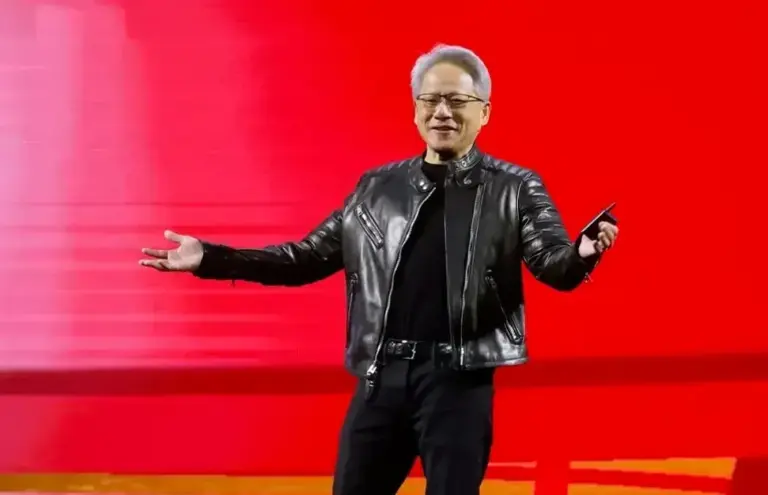
The tech world has been shaken by the rapid collapse of Jensen Huang’s tenure as CEO of Nvidia, a downfall triggered by a series of scandals that blend private infidelity with grave national security concerns. While Huang once stood apart from the volatile public personas of other AI pioneers, he now finds himself at the center of a federal firestorm. At the heart of the crisis is an admission of multiple extramarital affairs, including one with Alice Huang, an executive at Singaporean firm Megaspeed. U.S. officials suspect Alice Huang acted as a Chinese spy, potentially leveraging her relationship with the Nvidia chief to funnel sensitive information back to Beijing.

The implications extend far beyond a broken marriage, as investigators scrutinize whether these personal ties compromised American interests in the global AI arms race. Reports suggest that Megaspeed may have used its massive purchases of Nvidia chips to illegally supply China, leading to a Justice Department probe. Adding fuel to the fire are allegations from lawmakers that the Trump administration ignored warnings about Huang’s compromising relationship in exchange for financial cuts from export sales. This revelation has prompted Democratic leaders to launch formal investigations and summon both Huang and Commerce Secretary Howard Lutnick to testify before Congress.

Inside Nvidia, the situation was equally chaotic, characterized by systemic boundary violations and internal friction. In addition to the external security risk, revelations emerged regarding Huang’s relationships with subordinates, including Vice President of Healthcare Kimberly Powell and another unnamed employee. By Wednesday night, a visibly defeated Huang stepped down from the company he co-founded 33 years ago. Sources describe him as appearing shattered during his exit, while simultaneously expressing deep skepticism toward his successor, interim CEO Colette Kress, whom he reportedly viewed as incapable of steering the company’s strategic vision.

Now facing potential legal repercussions and public disgrace, Huang has agreed to testify before Congress ahead of Thanksgiving. As Nvidia attempts to stabilize under new leadership and navigate strict government restrictions on chip exports, the industry is left grappling with how such immense power was concentrated in a man whose personal lapses may have endangered U.S. technological superiority. For now, the focus remains on what secrets were shared in those private moments and how much damage was done to national security before the house of cards finally fell.

The tech world is currently buzzing with chaotic reports regarding Nvidia CEO Jensen Huang, though the conversation has shifted from graphics cards to a dizzying series of personal allegations. Observers are jokingly questioning whether the speed at which new romantic entanglements are surfacing suggests some kind of social singularity, where the drama accelerates faster than the hardware the company produces. While these rumors provide plenty of fodder for internet speculation, they have begun to overlap with far more serious concerns involving international espionage.

At the center of the storm is Alice Huang, whose alleged relationship with the CEO has drawn scrutiny from government officials. Reports suggest that Donald Trump received warnings last year about her potential ties to Chinese intelligence services, specifically concerning her business dealings. The situation took a turn toward the bureaucratic when it was revealed that Nvidia allegedly stepped in during a Commerce Department investigation into her company, raising questions about where corporate loyalty ends and national security begins.

This intersection of private luxury and geopolitical tension leaves many wondering how such distractions fit into the leadership of one of the most influential companies in AI history. As critics joke about whether high productivity tools were actually designed to free up time for multiple affairs, the real focus remains on chips and China. For now, the public is left weighing whether this is simply a case of celebrity gossip or a genuine liability for a firm sitting at the heart of global technological warfare.

OpenAI has officially dissolved its independent robotics division, redistributing those researchers into the company’s broader research and applied organizations. While such a move might look like a retreat to outside observers, the company insists it is actually a strategic evolution. According to a spokesperson, robotics remains central to the firm’s long-term goals, but the internal structure is changing because the nature of the technology has shifted. The shift was made evident this week at a major academic robotics conference in Austin, where OpenAI had reserved a booth that ultimately remained empty and unmarked.

The decision marks a pivot away from creating niche AI specifically designed for machines and toward a belief in embodied AI. Essentially, OpenAI believes that the massive general purpose models they are already building for language, vision, and code can simply be plugged into hardware to act as its brain. Recent tests involving GPT 6 Astra suggest this theory holds water, with the general model outperforming specialized robotic software in simulated tasks. By treating robotics as a downstream application of general intelligence rather than a unique engineering problem, OpenAI hopes to streamline its development process and avoid duplicating effort across different teams.

This reorganization also aligns with an urgent push by CEO Sam Altman to eliminate side quests and curb staggering operational losses. With quarterly losses reportedly hitting nearly eleven billion dollars, the company is under immense pressure to focus on core products as it eyes future funding rounds and a potential public offering in 2027. Moving robotics under the leadership of Mark Chen and Greg Brockman allows the company to concentrate its computing power on frontier models that serve multiple purposes simultaneously rather than maintaining expensive, siloed departments.

However not everyone agrees that specialized robotics brains are obsolete. Some experts argue that while general models provide great reasoning, they lack the real world deployment data gathered by robots working on actual factory floors. Despite these debates over methodology, OpenAI continues to aim for a public demonstration of its own humanoid robot by 2027. For now, the company is betting that once you solve general intelligence, solving the physical movement of a machine becomes a relatively simple extension of that knowledge.