Archive

November 2026

Browsing

Major stakeholders in Nvidia are urging the company’s board of directors to keep the door open for founder Jensen Huang following his sudden resignation. In a public letter shared on X, Altimeter Capital CEO Brad Gerstner and Atreides Management’s Gavin Baker called for a deliberate and measured approach to selecting permanent leadership. While they acknowledged that interim CEO Colette Kress is capably leading the firm, the investors argued that Huang deserves a thoughtful process rather than a rushed replacement.

The turmoil comes after Huang stepped down amidst serious allegations involving several affairs, including one with Alice Huang, a suspected Chinese spy linked to Megaspeed. This connection has sparked a wider federal probe, as the Justice Department investigates whether the Singaporean firm redirected restricted AI chips back into China. The situation has evolved into a national security concern, prompting calls for U.S. Secretary of Commerce Howard Lutnick to testify before Congress regarding how effectively the government is blocking high tech exports to Beijing.

Support for Huang remains strong among certain circles of power and industry peers. Elon Musk joined the fray by signing a petition titled Stand with Jensen, which has already garnered over 100,000 signatures including thousands of Nvidia employees. Musk warned that losing Huang’s vision could result in critical business deals falling through, highlighting the deep tie between the founder’s personal brand and the company’s market dominance.

As these legal and corporate battles unfold, political tensions remain high ahead of President Donald Trump’s upcoming visit to China. Despite the gravity of the spying allegations and their impact on one of America’s most valuable companies, officials indicate that Trump does not intend to bring up the Nvidia scandal during his meetings with President Xi Jinping in Shenzhen later this month.

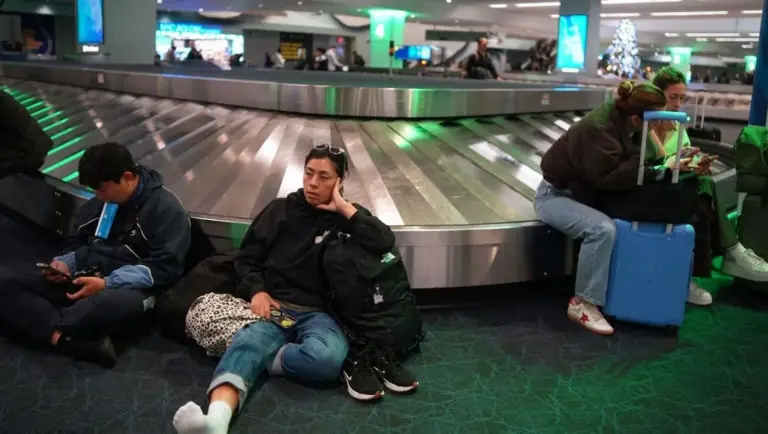
Thousands of travelers across the New York metropolitan area spent their weekend in limbo following a massive nationwide ground stop that paralyzed air travel on Friday. The chaos hit hardest at JFK, LaGuardia, and Newark Liberty International airports, where combined cancellation rates climbed as high as twenty one percent. Passengers described scenes of confusion as pilots were abruptly ordered to return to their gates while those already stranded scrambled to find alternative routes or hotel rooms. Even after the Federal Aviation Administration lifted the order, airlines struggled with a logistical nightmare involving displaced aircraft and crew members who had exceeded their legal flying hours.

Government officials have since clarified that the shutdown was caused by a mundane but catastrophic technical failure rather than a security breach. Transportation Secretary Sean Duffy explained that a contractor performing routine maintenance at a remote facility was switching telecommunication lines from legacy copper wiring to modern fiber optics. During this process, either due to human error or hardware failure, a replacement router began flooding the air traffic control system with thousands of connection attempts every few seconds. This digital surge crippled communications with aircraft and disrupted critical radar feeds, forcing the FAA to freeze all departures for safety reasons.

The incident has quickly evolved into a political battleground, with New York Governor Kathy Hochul calling for Secretary Duffy’s immediate resignation. In a scathing statement, Hochul argued that these types of systemic failures have become part of a recurring pattern under Duffy’s leadership and urged Congress to launch an official investigation before the peak Thanksgiving travel rush begins. She emphasized that while it is fortunate no lives were lost during the outage, the vulnerability of the national airspace is unacceptable given current staffing shortages and aging infrastructure.

To mitigate the fallout, major carriers including American, Delta, United, and Southwest have issued travel waivers to help affected passengers rebook without paying change fees. While administrators predict that flight schedules will fully recover by Sunday, the event marks only the second time since 2001 that a nationwide ground stop has occurred outside of a specific computer malfunction in early 2023. Travelers are currently advised to monitor their itineraries closely as airlines move equipment back into position across the country.

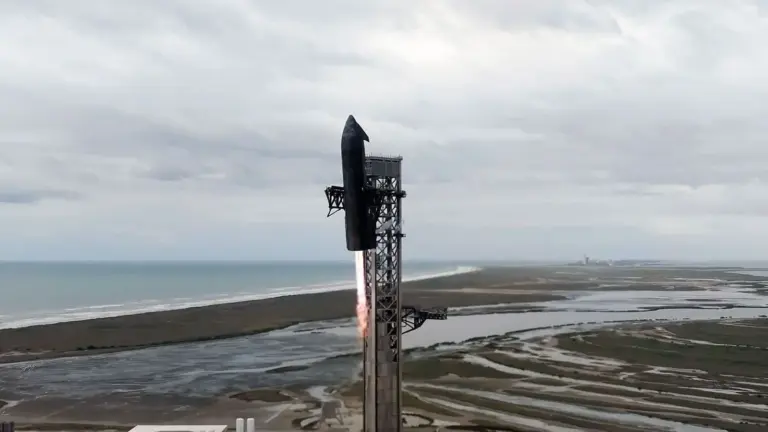
In a breathtaking display of precision engineering that felt more like science fiction than reality, SpaceX successfully caught the upper stage of its massive Starship rocket using the towering mechanical arms known as chopsticks. The event unfolded on November 14 at the company’s Starbase facility in South Texas, where Ship 42 descended through the clouds and nestled perfectly into the grip of the Mechazilla launch tower. While the mission began on Friday with hopes of recovering both stages of the vehicle, a low fuel alarm forced the Super Heavy booster to divert to a splashdown in the Gulf of Mexico, leaving all eyes on whether the ship itself could pull off the impossible.

The atmosphere during the livestream was electric, punctuated by a soundtrack of Baby Come Back as the vessel slotted into place at 4:20 p.m. Eastern Time. For SpaceX, this wasn’t just another successful test; it was a fundamental shift in how humanity accesses space. Because the upper stage travels much further and faster than the booster, catching it represents a significantly harder technical challenge. Company representatives described the moment as the holy grail of spaceflight, noting that snatching a vehicle returning from orbit out of mid air effectively removes the final hurdle for complete rocket reuse.

Beyond the spectacle of the landing, Flight 15 served several critical strategic purposes. The ship successfully reached orbit and deployed another batch of next generation Starlink V3 broadband satellites, continuing Elon Musk’s ambitious plan to blanket Earth in high speed connectivity. To ensure today’s landing was viable, SpaceX used orbiting satellites to capture imagery of Ship 42’s heat shield during reentry, confirming it was intact enough to survive the plunge back toward Texas.

This breakthrough paves any future path for an even more aggressive expansion into low Earth orbit, including proposed AI data center constellations consisting of millions of spacecraft. By eliminating the need for traditional landing legs or ocean recoveries, SpaceX can now inspect and refurbish their rockets almost immediately upon return. With this missing link finally secured, the company is expected to attempt similar maneuvers in upcoming flights, accelerating a cadence that could fundamentally change orbital logistics forever.

The rise of Anthropic began not with a quest for wealth, but with a dramatic exit. In late 2020, siblings Dario and Daniela Amodei walked away from their high-ranking vice presidency roles at OpenAI, citing deep frustrations over how the company approached artificial intelligence safety. Fearful that AI capabilities were advancing far quicker than our ability to control them, the duo staged a defection, bringing along five colleagues who shared their concerns regarding OpenAI’s pivot toward aggressive commercialization. This core group included researchers Tom Brown, Jared Kaplan, Sam McCandlish, and Chris Olah, as well as policy expert Jack Clark. Together, they sought to create a sanctuary for safer development, though that mission is now coinciding with one of the largest financial windfalls in corporate history.

As Anthropic prepares to go public on November 19, these seven founders are positioned to become some of the wealthiest individuals in the tech industry. With each holding roughly a 1.4 percent stake in the company, current valuations suggest their individual holdings are worth upwards of 14 billion dollars. Should the initial public offering hit its higher targets and drive the company’s market valuation toward 1.4 trillion dollars, those personal fortunes could soar to between 17 and 18 billion dollars each. While critics and former associates note that such massive incentives inevitably influence decision-making, insiders maintain that the venture was born out of a genuine desire to prevent others from mishandling a powerful global technology.

The leadership team reflects a diverse blend of academic rigor and strategic grit. CEO Dario Amodei brings a background in computational neuroscience from Princeton and experience at Google Brain and Baidu, viewing AI as a tool to solve complex biological mysteries. His sister Daniela, serving as president and board chair, complements this technical depth with her experience in political campaigning and risk management at Stripe. Meanwhile, Chief Compute Officer Tom Brown adds an entrepreneurial edge; despite admitting he once struggled with linear algebra in college, Brown became a pivotal figure in machine learning research and played a primary role in training GPT-3 before joining the exodus to form Anthropic.

OpenAI has given its AI agents a way to pay. ChatGPT Wallet, unveiled on Friday, lets the company’s “dots” agents complete purchases for users, provided the user signs off on each one.

OpenAI set out the details in a blog post and a help-centre guide.

Built with American Express, Mastercard and Visa, the feature starts small, but it is OpenAI’s second attempt in just over a year to take ChatGPT from product research to the checkout.

What is ChatGPT Wallet?

ChatGPT Wallet is a payment feature inside dots, the always-on personal agents OpenAI unveiled at its DevDay conference on 29 September.

Until now, a dot that found a sweater or a hotel room still needed a human to finish checkout. With Wallet, users save a card once, and the agent pays through the merchant’s normal checkout.

Cards saved in Wallet are kept separate from the one that pays for the ChatGPT subscription, and from any prepaid ChatGPT balance.

How does ChatGPT Wallet work?

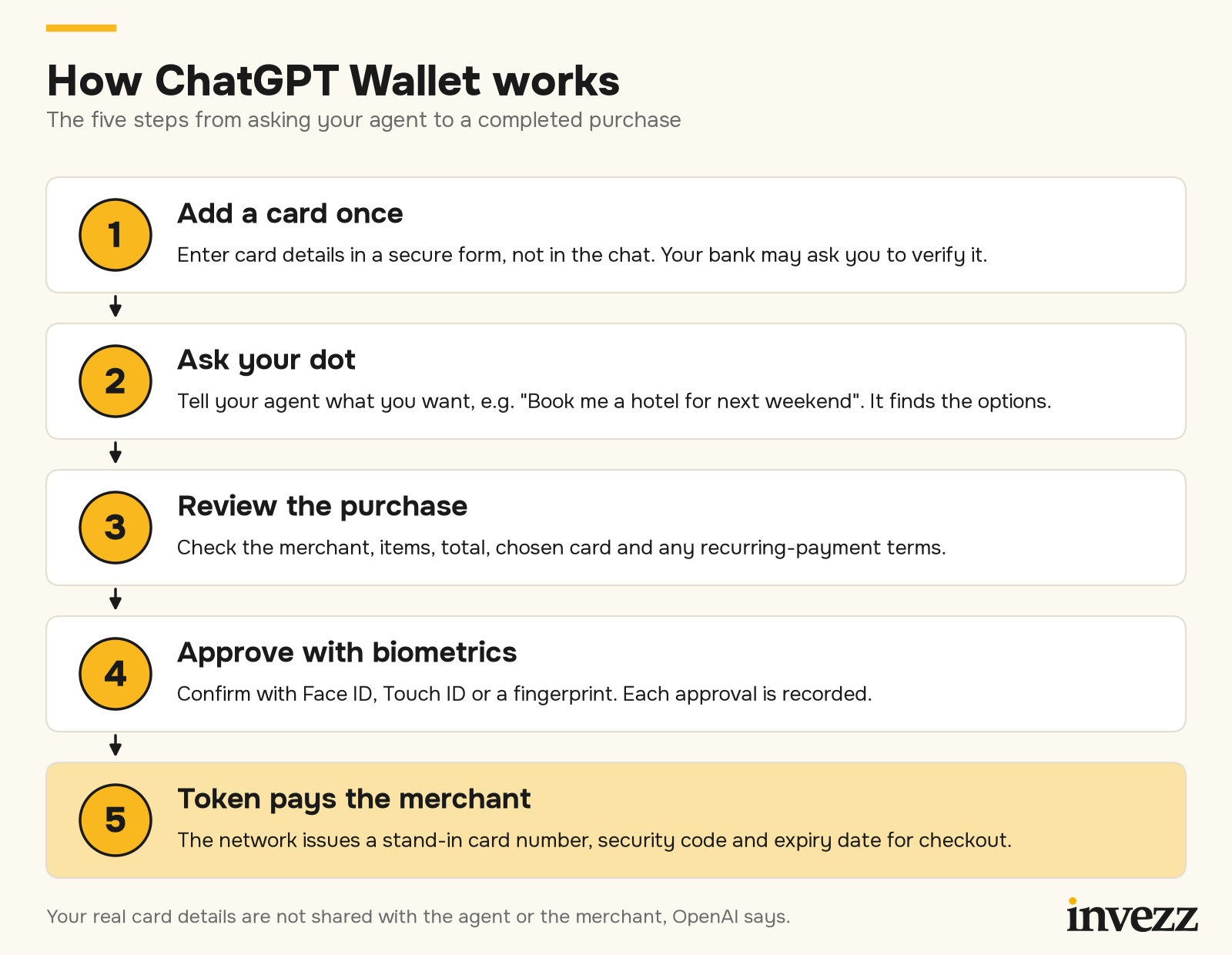
OpenAI’s guidance describes five stages. The user adds a card through a secure form rather than in the chat, and the bank may ask for verification. The user then asks their dot to find something, such as a hotel for a weekend trip.

Before paying, the dot shows the merchant, items, total, chosen card and any recurring-payment terms. The user approves with a biometric check such as Face ID or Touch ID, creating a record of what was authorised.

Finally, the card network issues a payment token, a substitute card number, security code and expiry date, which the agent enters at checkout. The real card details are never shared with the agent or the merchant, OpenAI says.

Step-by-step infographic of how ChatGPT Wallet works: 1, add a card once in a secure form; 2, ask your dot to find what you want; 3, review the merchant, items, total, card and any recurring terms; 4, approve with Face ID, Touch ID or a fingerprint; 5, the card network issues a stand-in card number, security code and expiry date for checkout
How a ChatGPT Wallet purchase works | Source: OpenAI

OpenAI is not taking a fee on transactions at launch, according to CNBC. The sale is between shopper and merchant, which keeps control of pricing, delivery and returns.

Who can use ChatGPT Wallet?

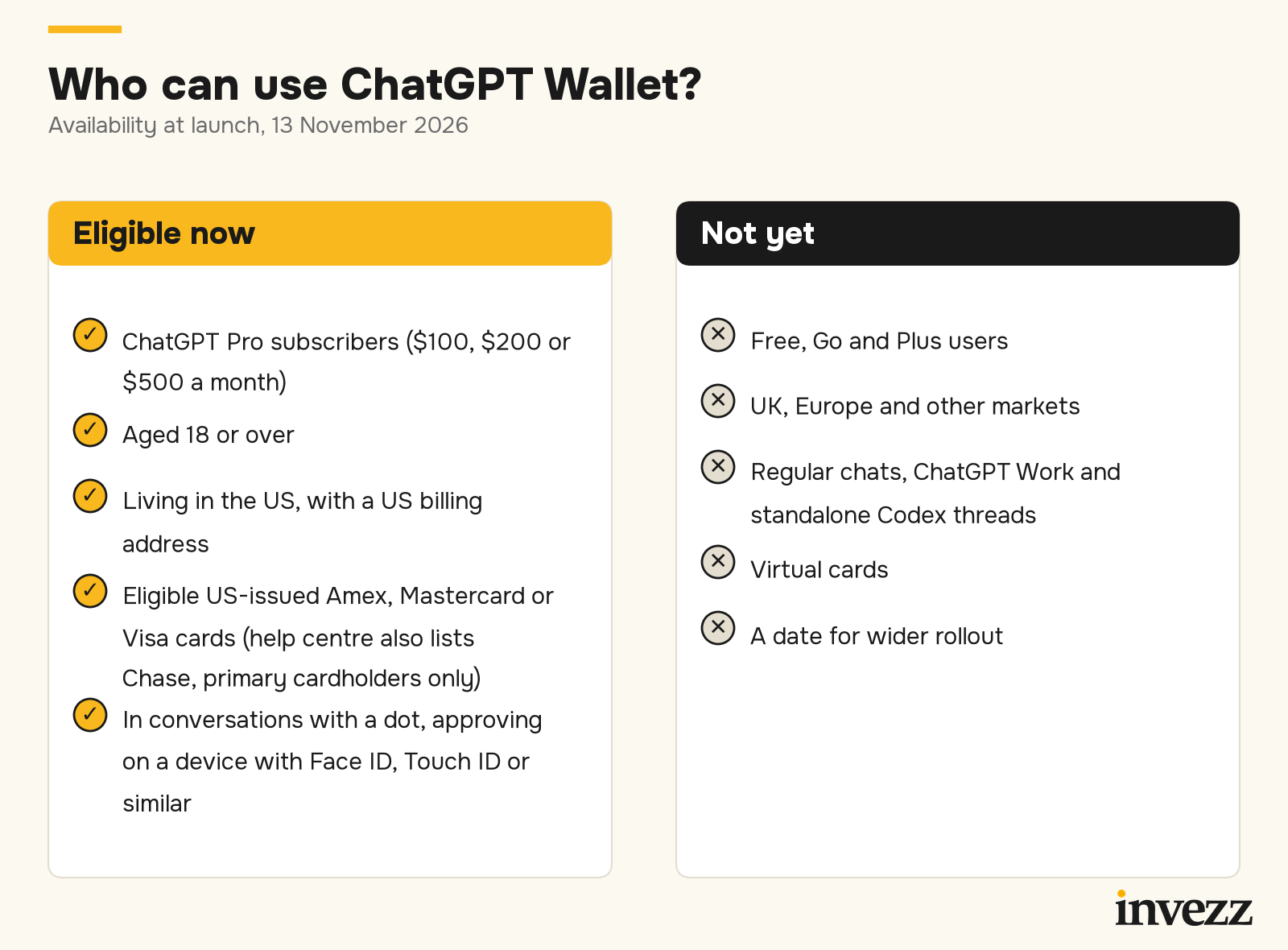
Wallet is open only to ChatGPT Pro subscribers, whose plans cost $100 to $500 a month. Users must be 18 or over, live in the US and hold an eligible US-issued card with a US billing address. It works only in conversations with a dot.

OpenAI’s help centre lists eligible Chase cards for primary cardholders, alongside Amex, Mastercard and Visa. Virtual cards are not supported at launch.

There is no timetable for Free, Go or Plus users, or for the UK and Europe. Amex’s Luke Gebb told CNBC the narrow rollout was deliberate.

Availability card for ChatGPT Wallet at launch: eligible now are US ChatGPT Pro subscribers aged 18 or over with a US billing address and eligible US-issued Amex, Mastercard or Visa cards (plus Chase, per the help centre), using a dot; not yet covered are Free, Go and Plus users, the UK, Europe and other markets, regular chats, virtual cards and any date for wider rollout
Who can use ChatGPT Wallet at launch | Source: OpenAI

What does it mean for consumers?

The main gain is convenience: an agent can take a purchase from search to payment without the user retyping card details.

OpenAI says shoppers keep their card rewards and protections for eligible disputes, such as a faulty item. Refunds go through the merchant, and unrecognised charges through the card issuer.

There are drawbacks. OpenAI concedes some sites may block agents or flag their purchases as fraud. Amazon stops agents buying on its platform, CNBC reported, and United Airlines said this week it would block third-party AI agents from booking. OpenAI also tells users that a “ready to check out” message does not confirm an order.

Privacy is another consideration. Merchants may still need a name, phone number, email and delivery address, which can be passed on through the conversation.

Longer term, OpenAI wants users to pre-approve purchases within spending limits, categories or time windows, so the agent need not ask each time. It has given no date for that.

Why is OpenAI doing this?

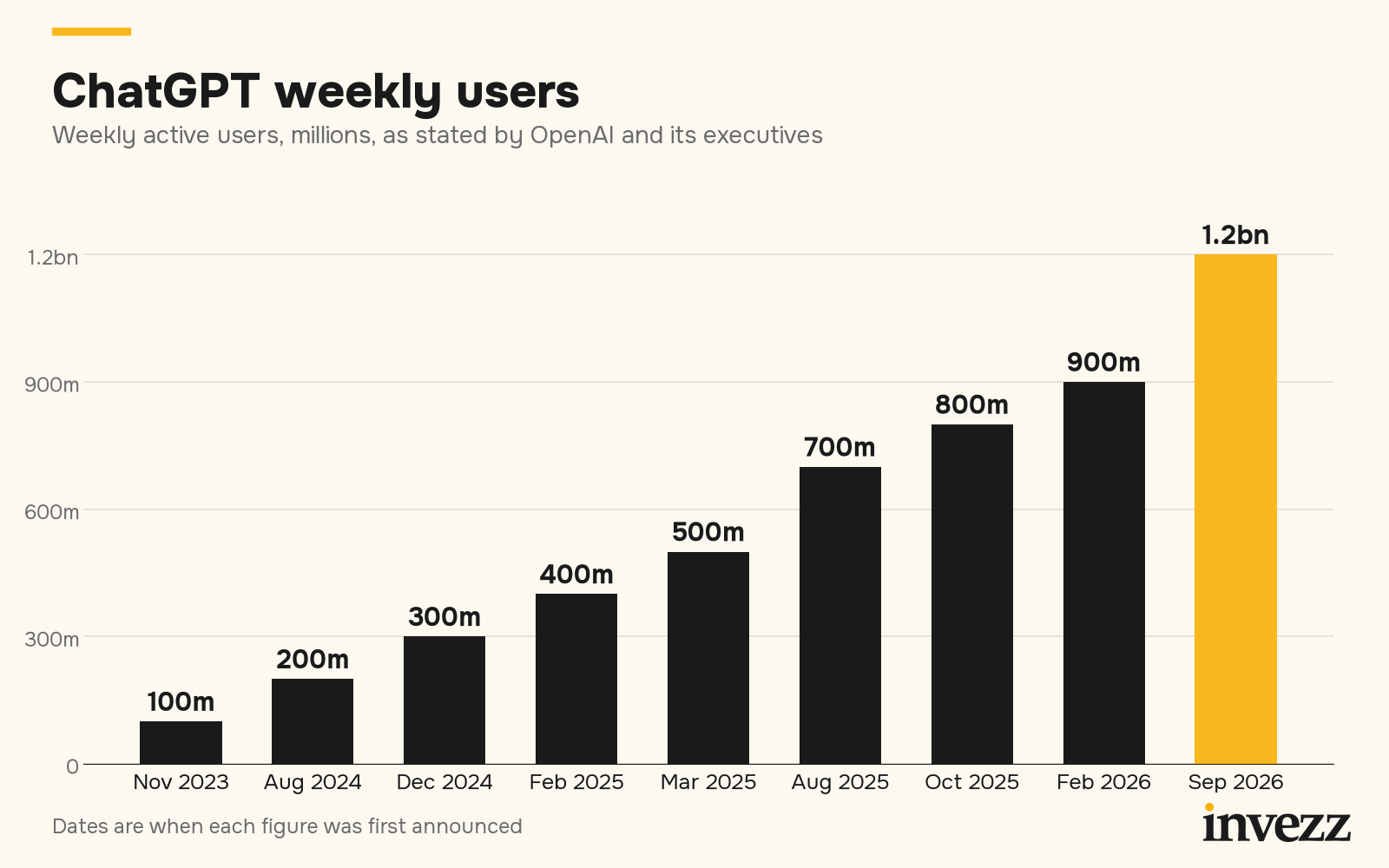
OpenAI says 1.2 billion people use ChatGPT each week, many of them to research what to buy, and it had nearly 100 million paying users at the end of the third quarter, CNBC reported.

Bar chart of ChatGPT weekly active users as stated by OpenAI: 100 million in November 2023, 200 million in August 2024, 300 million in December 2024, 400 million in February 2025, 500 million in March 2025, 700 million in August 2025, 800 million in October 2025, 900 million in February 2026 and 1.2 billion in September 2026
ChatGPT weekly active users, by date first announced | Source: OpenAI

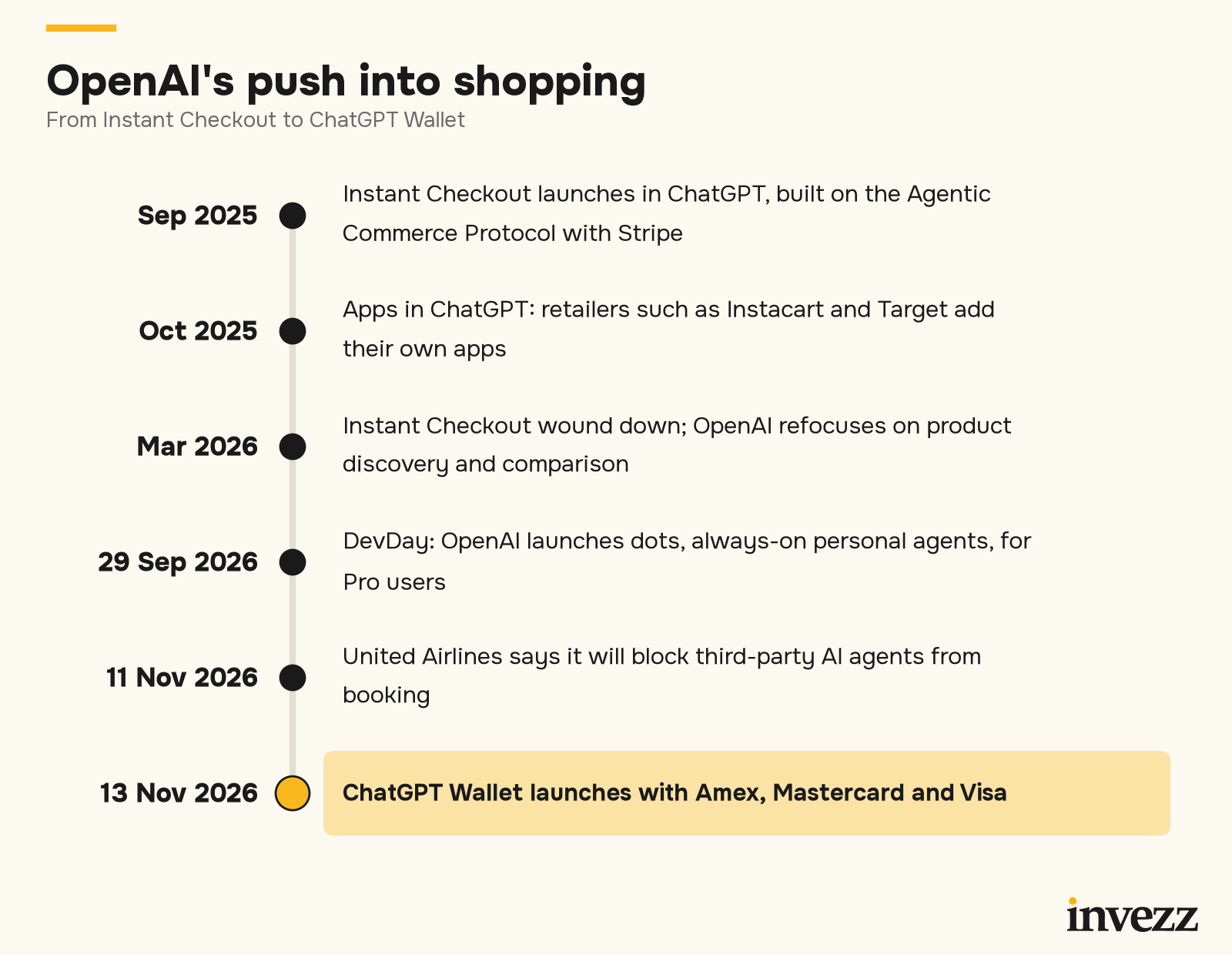
Its first checkout push stalled. Instant Checkout, launched in September 2025 with the Agentic Commerce Protocol built alongside Stripe, was wound down in March, when OpenAI said it lacked flexibility for merchants.

Timeline of OpenAI's shopping push: Instant Checkout launches in September 2025 on the Agentic Commerce Protocol with Stripe; apps from retailers such as Instacart and Target arrive in October 2025; Instant Checkout is wound down in March 2026; dots agents launch on 29 September 2026; United Airlines says on 11 November 2026 it will block AI agents; ChatGPT Wallet launches on 13 November 2026
OpenAI’s push into shopping | Source: OpenAI, CNBC, United Airlines

Wallet takes a different route, using merchants’ existing checkouts and the card networks’ token systems. OpenAI is also working with payment firms including Stripe and Adyen, and fraud-prevention specialists such as Forter and Signifyd, so genuine agent purchases are not wrongly declined.

How have markets reacted?

OpenAI is privately held, so attention turned to its listed partners.

At 16:55 GMT, Visa was up 1.4% at $426.20 and Mastercard 1.4% at $661.46 against Thursday’s close, while Amex was 0.5% higher at $319.77, according to Yahoo Finance data.

The moves are modest and cannot be pinned on the launch alone.

What happens next?

OpenAI has published a Commerce Partner Playbook showing merchants how to let its agents through and share product feeds. It says it will widen access once it has learned from early use with businesses, banks and card networks.

AI disclosure: AI tools assisted with research and drafting of this piece. An Invezz editor reviewed the facts, sources and wording before publication. Any opinions or analysis are Invezz’s, not those of an automated system.

The post What is ChatGPT Wallet, how does it work and who can use it? appeared first on Invezz

Microsoft shares recovered on Friday after a global outage disrupted its Outlook, Teams and Copilot services, affecting users across more than 70 countries.

The incident has renewed concerns about businesses’ dependence on centralised cloud services, while intensifying competition in artificial intelligence adds to the pressure on the technology giant.

Microsoft apologises as outage disrupts services

Microsoft shares MSFT rose approximately 0.18% to $523.94 on Friday, recovering from a decline of more than 2% in premarket trading.

The outage, which began on Thursday, November 12, affected several Microsoft 365 services, including Outlook email, Teams and the Copilot AI assistant.

According to Downdetector, users across more than 70 countries reported disruptions.

The incident affected services used by more than 430 million people, alongside governments and organisations worldwide.

Microsoft engineers worked for more than 20 hours to address the disruption.

In its latest updates, Microsoft apologised for the outage, saying it was “deeply sorry” for the disruption caused since Thursday.

In a 3:05 p.m. EST update, the company said it did not yet have a timeline for full recovery.

Earlier, Microsoft had said it was seeing “broad recovery and stability” across its services.

“Given the scale of demand, we restored services gradually, validating stability at each stage. While this took longer, it helped ensure a stable restoration,” the company said in an earlier update.

Microsoft also dismissed speculation that the outage was linked to technical issues involving artificial intelligence agents.

It said the incident was caused by a technical issue and was not related to cybersecurity or AI agents.

The company plans to publish a full post-incident report after completing its review.

Outage highlights dependence on cloud services

The disruption has drawn attention to the risks associated with businesses relying heavily on a small number of major technology providers.

Microsoft’s cloud-based model allows organisations to avoid the costs of operating and maintaining their own email servers and infrastructure.

However, a prolonged outage at a major provider can affect large numbers of businesses simultaneously.

Microsoft’s second-quarter availability for its Microsoft 365 workplace applications was reported at 99.994% globally, making prolonged disruptions relatively rare.

Nevertheless, the incident could encourage companies to invest more in backup services and continuity arrangements.

Providers such as US cybersecurity firm Mimecast offer continuity services that allow users to send and receive emails through temporary inboxes when their primary systems become unavailable.

Privacy-focused technology company Proton also offers standby email accounts that businesses can activate during disruptions.

According to a study by Oxford Economics and Splunk, unplanned outages of critical digital business systems cost Global 2000 companies an average of $15,000 per minute.

While continuity services have traditionally attracted deadline-sensitive industries such as law, the latest disruption could encourage wider adoption among accounting firms, hospitals and other regulated businesses.

Geopolitical tensions have also increased concerns about dependence on US technology providers, particularly in Europe.

The outage highlighted how technical failures alone can disrupt access to essential digital services.

AI competition adds to pressure on Microsoft

The outage comes at a challenging time for Microsoft as investors assess its position in the artificial intelligence market.

Recent reports about OpenAI’s latest figures have raised questions about its competitive position relative to Anthropic.

Microsoft owns a 24% stake in OpenAI and has a smaller investment in Anthropic.

Anthropic also recently introduced a new suite of office tools, adding to competition in a market where Microsoft has a significant presence through its productivity software and Copilot assistant.

Investors will be watching Microsoft’s upcoming Ignite conference for updates on its AI strategy and cloud platform Azure.

Citi analyst Tyler Radke said the event could reinforce confidence in the company’s AI growth outlook.

“We expect the event to reinforce confidence in Microsoft’s AI growth narrative,” Radke said in a research note.

The conference could provide investors with further insight into Microsoft’s cloud and Copilot developments as the company seeks to maintain its position in an increasingly competitive AI market.

AI disclosure: AI tools assisted with research and drafting of this piece. An Invezz editor reviewed the facts, sources and wording before publication. Any opinions or analysis are Invezz’s, not those of an automated system.

The post Microsoft stock steadies after global outage as AI competition intensifies appeared first on Invezz

Oil prices edged higher on Friday as signs of a growing global supply surplus and easing concerns over further military escalation in the Middle East weighed on the market.

Meanwhile, US producer inflation rose less than expected in October, although persistent price pressures continued to complicate the Federal Reserve’s policy outlook.

Oil prices head for second weekly decline

Oil prices gained on Friday; however, Brent and West Texas Intermediate (WTI) crude are on track for a second consecutive weekly decline.

Brent futures fell 0.13% to $95.94 a barrel, while WTI declined 0.09% to $88.81.

Both benchmarks were set to lose around 2% for the week, following declines of 16% and 13%, respectively, in the previous week.

The market has shifted from concerns about supply shortages to fears of a potential surplus.

An International Energy Agency report released on Friday pointed to an increase in the global oil surplus, while lower geopolitical risks also weighed on prices.

US crude and fuel inventories also increased last week, reflecting softer demand for refined products and higher oil imports, according to the Energy Information Administration.

However, risks to shipments through the Strait of Hormuz remain.

Iran’s military said four oil tankers were hit by explosions in the waterway on Thursday, while Yemen’s Iran-backed Houthis claimed attacks on Saudi oil infrastructure.

US PPI rises less than expected in October

US wholesale prices increased 0.3% in October, below the 0.4% forecast by economists surveyed by Dow Jones, according to the Bureau of Labor Statistics.

Core PPI, which excludes food and energy, also rose 0.3%, in line with expectations.

However, the annual headline rate accelerated to 6.5%, its highest level since November 2022.

Goods prices were a major contributor to the increase.

Final demand goods prices rose 0.5% during the month, while the goods index increased 10.2% year over year, its largest annual gain since October 2022.

Services prices rose 0.2%, with transportation and warehousing contributing to the increase. Truck freight transportation prices climbed 3.9%.

The figures offered some relief after consumer inflation also came in hotter than expected earlier in the week.

However, the annual acceleration in producer prices and broader cost pressures could complicate the Fed’s next decision.

Markets were pricing in a December rate increase, with the CME FedWatch tool showing an 87.7% probability of a 25-basis-point hike and a 12.3% chance of a 50-basis-point move.

Gold struggles despite softer PPI reading

Gold prices fell on Friday after the producer inflation report came in below expectations.

However, the modest recovery did little to offset the previous session’s steep losses.

Spot gold fell 0.03% to $3,875.14 an ounce, after briefly reaching $3,922.97 following the PPI release. US gold futures for December delivery fell 0.14% to 3,880.10.

Bullion fell 3% on Thursday, reaching a more-than-one-year low as higher oil prices and hotter-than-expected consumer inflation strengthened concerns about interest rates remaining elevated.

Gold was down around 4.5% for the week, putting it on course for its worst weekly performance since early June.

Higher interest rates tend to reduce the appeal of non-yielding assets such as gold. Silver and platinum also declined on Friday, while palladium advanced.

Tesla and SpaceX merger talks gather pace

Tesla and SpaceX could announce a merger as soon as December, according to a Bloomberg report published on Thursday.

The potential deal would combine Tesla’s electric vehicles, energy storage and robotics businesses with SpaceX’s rockets, satellites and artificial intelligence operations.

Based on their valuations of more than $1.9 trillion and around $1.5 trillion, respectively, the combined company could be worth approximately $3.4 trillion to $3.5 trillion.

Boards and advisers are reportedly discussing the terms, including the exchange ratio for Tesla shareholders and the governance structure.

An announcement could still be delayed until early 2027.

Elon Musk, who leads both companies and is their largest shareholder, has previously described a merger as a good idea, citing potential synergies in AI, chip design, robotics and orbital computing.

However, significant hurdles remain.

Tesla’s China business, which accounts for roughly 20% of its revenue and a larger share of its earnings and free cash flow, could complicate the transaction.

JPMorgan has identified Chinese regulatory approval as the biggest obstacle.

Any deal would also require clearances across multiple jurisdictions and approval from Tesla shareholders, while the special committees overseeing discussions must demonstrate that their decisions serve shareholders’ interests.

The post Evening digest: oil heads for weekly decline, Tesla SpaceX merger talks advance appeared first on Invezz

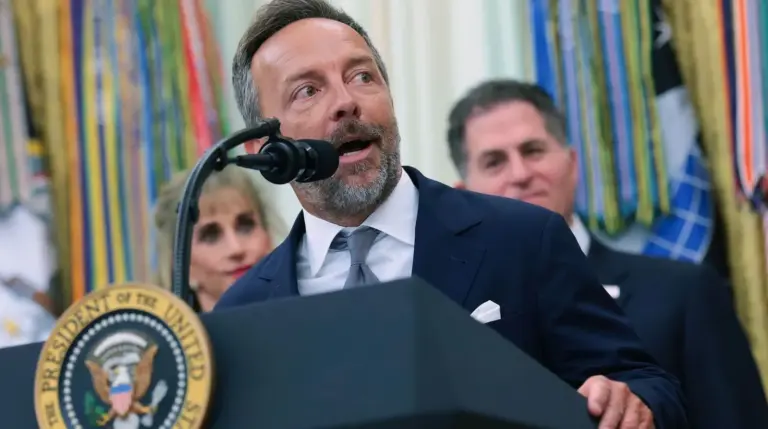
Nvidia shares NVDA remained under pressure on Friday, falling 2.17% at the time of writing after recovering from an intraday decline of 4.6%.

The latest losses followed a 4.3% drop on Thursday after founder and longtime CEO Jensen Huang resigned amid reports concerning his personal relationships.

The departure has raised questions about Nvidia’s leadership succession, corporate culture and exposure to potential regulatory scrutiny.

The company is also on track for its largest weekly market capitalisation decline on record.

However, analysts remain divided on the stock’s outlook, with some arguing that its valuation offers an attractive entry point while others warn that the controversy could create longer-term risks.

Nvidia valuation and earnings could support a recovery

Despite the recent selloff, Nvidia shares trade at less than 12 times estimated earnings for the next 12 months, according to Barron’s analysis.

A modest improvement in its valuation multiple could therefore support a significant recovery.

The company’s upcoming third-quarter earnings report on Tuesday could provide an important catalyst.

Investors will closely monitor whether Nvidia reiterates its forecast for 70% revenue growth in fiscal 2028.

Any confirmation could help restore confidence in its growth prospects.

Additional share buybacks could also support the stock if its valuation remains depressed.

XTB analyst Kathleen Brooks said Nvidia’s upcoming results would be closely watched following Huang’s resignation.

While Brooks expects another strong earnings report, with revenue potentially exceeding the $108 billion estimate, she said the company’s forward guidance would be more important for determining the stock’s direction.

Yorkville Ives also maintained a bullish view, arguing that Nvidia remains the clear leader in GPU chips for the AI industry, with an estimated two-to-three-year advantage over its nearest competitor.

The analysts believe the current valuation does not fully reflect the company’s position and see Colette Kress as a credible leader during the transition.

Leadership uncertainty remains an overhang

The absence of an immediate permanent successor is another challenge for Nvidia shares.

Chief Financial Officer Colette Kress is viewed as a potential interim leader, although the company is expected to require technical leadership for its next phase of growth.

Potential successors mentioned in early speculation include Ian Buck, Nvidia’s vice president of hyperscale and high-performance computing, and Arm Holdings CEO Rene Haas.

Yorkville Ives also identified Apple CEO Tim Cook as a possible outside candidate, describing him as a dark-horse option given Nvidia’s importance to the broader US technology industry.

A clearer succession plan or announcement of a shortlist could help reduce uncertainty surrounding the company’s future direction.

Morgan Stanley reiterated its overweight rating on Nvidia but lowered its price target to $267 from $300.

The firm acknowledged that Huang’s resignation, the absence of an immediate permanent successor and China-related regulatory risks represent setbacks.

However, it maintained that Nvidia’s underlying business remains strong and that the risk-reward profile is attractive even under more conservative assumptions.

China scrutiny and corporate culture pose risks

The biggest threat to Nvidia’s recovery could come from further developments surrounding the controversy that led to Huang’s departure.

Treasury Secretary Scott Bessent questioned on Friday whether Nvidia had a sufficiently robust system to prevent its chips from reaching China through intermediaries.

Speaking to CNBC, he said he expected the company’s board to conduct a thorough investigation.

Huang has reportedly agreed to testify before Congress, where lawmakers are interested in determining whether his reported relationship with a suspected Chinese intelligence agent resulted in the transfer of intellectual property or advanced hardware to China.

Hendi Susanto, portfolio manager at Gabelli Funds, said the next developments could depend on the findings of investigations and the level of scrutiny from Washington, particularly concerning China and export controls.

Truist also downgraded Nvidia to hold from buy, citing concerns about the company’s culture and the possibility that GPUs may have reached Chinese companies and government entities.

These concerns could affect future revenue prospects if they lead to tighter restrictions or additional regulatory action.

AI disclosure: AI tools assisted with research and drafting of this piece. An Invezz editor reviewed the facts, sources and wording before publication. Any opinions or analysis are Invezz’s, not those of an automated system.

The post Nvidia stock outlook: Can shares recover after Jensen Huang’s exit? appeared first on Invezz

Apple shares rose 0.99% on Friday, even as broader technology stocks came under pressure following Nvidia’s decline.

The iPhone maker is increasingly attracting investors seeking exposure to a relatively defensive technology business amid uncertainty surrounding artificial intelligence (AI) stocks, according to Bernstein analysts.

In a report published Thursday, Bernstein analysts led by Mark Newman said Apple had become less correlated with its large-cap technology peers and was increasingly trading alongside high-quality consumer companies.

“With little correlation to tech peers, Apple now trades in line with high quality consumer stocks,” the analysts said.

The assessment comes as Nvidia faces leadership uncertainty following reports surrounding CEO Jensen Huang, while concerns about the substantial capital expenditure requirements of AI infrastructure continue to weigh on technology stocks.

Apple gains safe-haven appeal as AI spending weighs on tech

Unlike several other Magnificent Seven companies, Apple has relatively modest capital expenditure requirements.

Its capital expenditure accounts for less than 2% of revenue, compared with the hundreds of billions of dollars being committed by major technology companies to AI infrastructure.

Bernstein described Apple as a consumer compounder, noting that its revenue growth, earnings generation and free cash flow profile increasingly resemble those of established consumer businesses.

The brokerage reiterated its outperform rating on Apple and maintained a $380 price target, implying approximately 7% upside from Thursday’s closing price.

Apple trades at around 37 times its expected earnings per share for 2027, roughly twice the broader market’s forward earnings multiple.

Among companies with market capitalizations above $200 billion and expected EPS growth below 15%, only Costco, Walmart and General Electric also trade at forward price-to-earnings multiples above 30.

However, Apple’s projected annual revenue growth through 2029 is approximately 9%, compared with 7% for Costco and 5% for Walmart.

Bernstein also highlighted Apple’s estimated 3.1% free cash flow yield and expected share repurchases equivalent to 3% of its market capitalization in 2027 and 3.2% in 2028.

iPhone demand and services offer growth opportunities

Apple’s operating performance continues to provide support for its valuation.

In the fourth quarter of fiscal 2026, iPhone revenue increased 17% year over year to $57.6 billion, despite supply constraints.

The company reported September-quarter revenue records for iPhone and record upgrades worldwide, including in the US, China and India.

The launch of iPhone Duo, alongside the iPhone 18 Pro and Pro Max, has expanded its product portfolio and created additional upgrade opportunities.

AI also represents a potential growth driver.

Apple’s planned improvements to Siri, including personalized assistance and contextual awareness, could encourage customers to upgrade to newer devices.

The company may also generate additional revenue by offering expanded access to advanced server-based AI capabilities.

Its Services business provides another monetization opportunity.

With more than 2.5 billion active devices worldwide, Apple has a substantial installed base for services such as Apple Pay, iCloud+, Apple Music and Apple TV.

The expansion of bundled services and the introduction of Apple Pay in India and advertising on Apple Maps could support further growth.

Rising memory costs and supply constraints pose risks

Despite its defensive characteristics, Apple faces several operational challenges.

The company expects gross margin to decline to 45%-46% in the first quarter of fiscal 2027, compared with 47.9% in the fourth quarter of fiscal 2026.

Rising memory prices and expenses related to Siri AI are expected to contribute to the decline.

Apple also continues to face supply constraints involving advanced semiconductor manufacturing capacity and memory components.

While advanced-node constraints are easing, memory shortages could affect Mac and iPad availability during the December quarter.

Regulatory scrutiny of its App Store business model and third-party licensing arrangements presents another risk.

Apple expects Services revenue growth to moderate to 8%-9% in the first quarter of fiscal 2027, compared with 10% in the preceding quarter, partly reflecting licensing-related and foreign-exchange headwinds.

These pressures could test Apple’s ability to sustain its premium valuation even as investors increasingly view the company as a defensive alternative within the technology sector.

AI disclosure: AI tools assisted with research and drafting of this piece. An Invezz editor reviewed the facts, sources and wording before publication. Any opinions or analysis are Invezz’s, not those of an automated system.

The post Apple stock gains as Bernstein highlights safe-haven appeal amid AI selloff appeared first on Invezz

Anthropic, the creator of the Claude AI model, is preparing for a historic entry into the public market with a planned Nasdaq listing that could become the second largest initial public offering ever recorded. The company intends to sell 825 million Class A shares priced between 70 and 78 dollars each, a move that could raise approximately 64.4 billion dollars at the high end of its range. This ambitious debut suggests a staggering valuation reaching up to 1.4 trillion dollars, signaling immense investor confidence in pure play artificial intelligence firms.

Interest in the offering appears overwhelming, with reports indicating that order demand has already exceeded the available shares several times over. Leading the charge are heavyweights like Goldman Sachs and Morgan Stanley, while industry titans including Nvidia, Google, and Microsoft are reportedly planning to pour an additional 26 billion dollars into a concurrent private placement. For many investors, this represents a rare opportunity to gain direct exposure to an AI lab without having to go through diversified tech conglomerates.

Despite the financial momentum, the road to trading on November 19 comes with significant caveats. While revenue surged to 17 billion dollars in the third quarter, Anthropic recently swung to an operating loss of 567 million dollars due to the skyrocketing costs of computing power. More strikingly, the company’s extensive prospectus includes nearly 100 pages of risk factors, candidly warning potential shareholders that its own models could potentially pose catastrophic or even existential risks to humanity.

Founded by former OpenAI employees as a public benefit corporation, Anthropic operates under a unique mandate that requires its leadership to weigh global safety alongside profits for shareholders. As it prepares to trade under the ticker ANT, all eyes will be on whether it can maintain its trajectory or suffer a similar fate to other massive debuts like SpaceX, whose shares dipped following their own blockbuster listing last June.