Archive

November 2026

Browsing

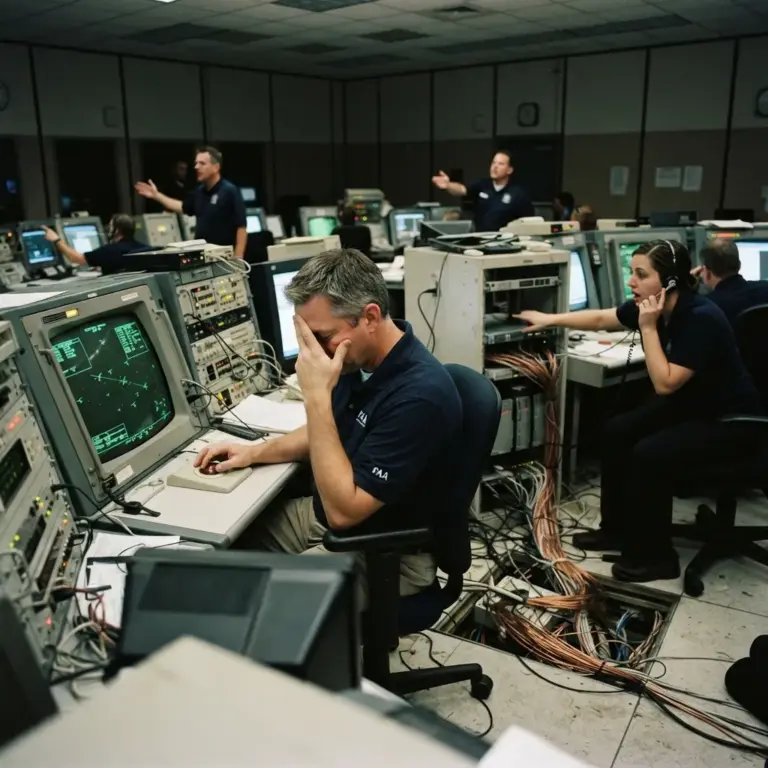
Transportation Secretary Sean Duffy is attributing a massive nationwide ground stop to the crumbling remnants of previous administrations, arguing that the United States is relying on dangerously outdated aviation systems. During a recent appearance on CNN, Duffy explained that the chaos began when a routine upgrade from copper wiring to fiber optics at a site in Arkansas triggered a cascading failure across the network. While acknowledging that the disruption occurred under his leadership, he insisted that he inherited a fragile patchwork of technology including floppy disks and paper flight strips that are simply no longer fit for purpose.

The crisis has quickly evolved into a high stakes political showdown on Capitol Hill. Duffy is calling for an additional 50 billion dollars to accelerate modernization, a request that has received firm backing from President Trump. However, Democratic lawmakers remain skeptical. While some have expressed a willingness to provide more funding, others point out that billions have already been allocated and want clear answers on why those existing resources failed to prevent such a systemic collapse. Senator Chris Van Hollen specifically criticized the secretary for shifting blame toward Congress rather than providing transparency regarding past spending.

Beyond the political finger pointing, the incident highlights a deeper struggle within the FAA to bridge the gap between legacy hardware and modern digital demands. Experts note that trying to integrate cutting edge technology into an ancient framework often creates instability, which appears to be exactly what happened during Friday’s meltdown. As flights slowly return to their normal schedules and cancellations dwindle, the focus shifts toward whether bipartisan cooperation can finally replace the aging infrastructure before another technical glitch freezes American airspace once again.

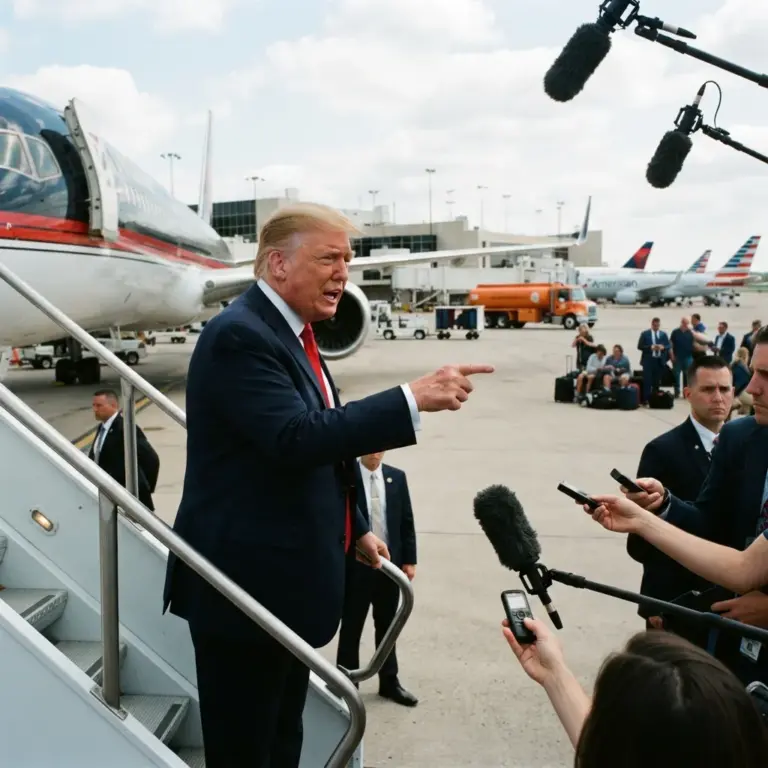
Former President Donald Trump has finally weighed in on the historic FAA ground stop that paralyzed air travel last Friday, using a tone and strategy that many observers found predictable. After remaining quiet for nearly thirty six hours while travelers faced chaos across the country, Trump took to social media to lay the blame squarely at the feet of Joe Biden. The outburst marks a sharp turn from his initial silence, which had already begun to draw scrutiny from critics and political opponents alike.

The delay in communication became a point of contention during recent interviews with administration officials. Transportation Secretary Sean Duffy stepped in to defend the president, telling CNN that while Trump had not spoken publicly, he was reportedly in constant contact with aviation officials behind the scenes as they scrambled to resolve the technical failure. Duffy attempted to shift the narrative away from current management, arguing that the disaster was the result of decaying infrastructure and ancient systems inherited from prior administrations.

Despite those defenses, the timing of Trump’s comments suggests a desire to pivot the conversation toward political rivalry rather than operational failures. By framing the systemic collapse of flight operations as a legacy of the Biden era, Trump is leaning into familiar rhetoric centered on government incompetence. This move comes as his team continues to navigate early friction within various departments, including ongoing disputes over national security labels and commerce regulations.

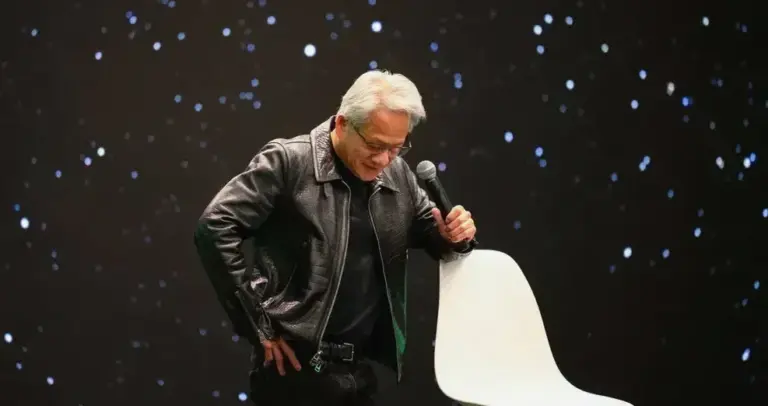
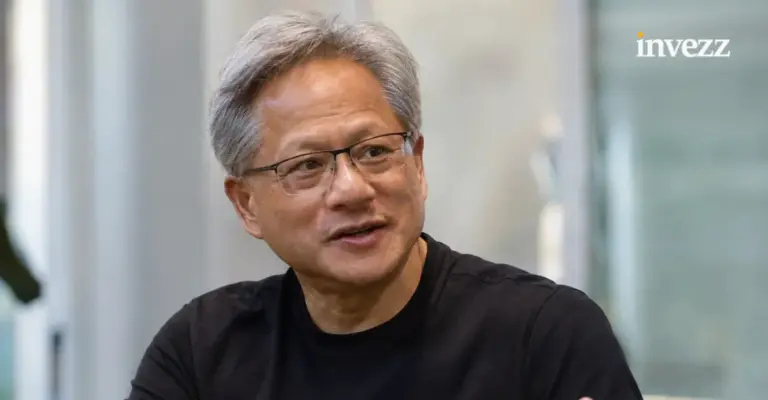
The carefully constructed image of Jensen Huang as the unflappable visionary behind Nvidia has shattered following revelations of systemic dishonesty and compromising personal ties. What began as a series of pointed inquiries from The New York Times regarding his connection to Alice Huang, the leader of Singaporean data center firm Megaspeed, eventually spiraled into a scandal that threatened the very foundation of the chip giant. For over a year, Huang and his inner circle fought a desperate battle to frame the relationship as purely professional, employing high priced crisis consultants and leveraging family connections to stifle any suggestion of impropriety.

The stakes grew exponentially higher when United States intelligence agencies reportedly linked Alice Huang to China’s premier spy network. Despite these alarming security implications, Jensen Huang maintained his denial for thirteen months, stubbornly insisting there was nothing more than business between them. It was only under the weight of insurmountable evidence that he finally admitted to Nvidia’s general counsel that he had been engaged in a clandestine affair with the executive, turning a corporate liability into a personal catastrophe.

As if one betrayal were not enough, further investigations have uncovered yet another layer of deception within the company walls. Reports now indicate that Huang carried out a separate extramarital affair with an executive who worked directly under him, raising serious questions about workplace ethics and conflicts of interest at the highest level of leadership. These overlapping secrets have transformed a narrative of technological triumph into one of moral failure, leaving shareholders and employees wondering how much other truth was sacrificed for the sake of appearances.

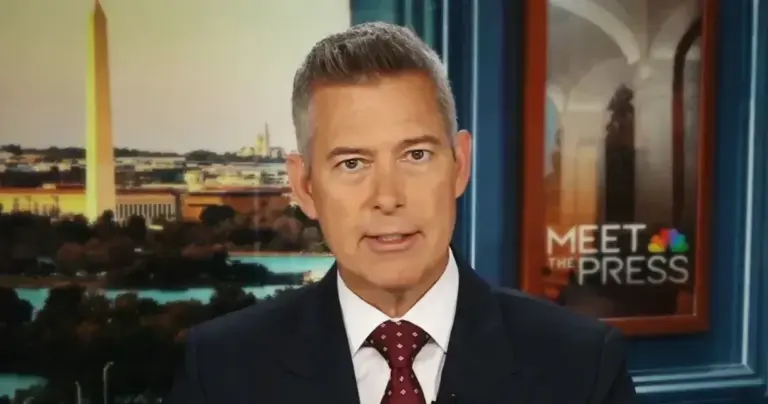
Transportation Secretary Sean Duffy is refusing to apologize for the massive nationwide ground stop that left hundreds of thousands of passengers stranded over the weekend. Speaking on Meet the Press, Duffy acknowledged that the chaos occurred under his leadership but insisted that the failure was the result of decades of neglect by previous presidential administrations and both political parties. He described the current state of the air traffic control system as a broken inheritance, claiming thirty years of underinvestment created a fragile environment prone to exactly this kind of collapse.

The disruptions began Friday when a routine effort by contractor L3Harris to replace a copper line with fiber optics triggered a router failure that overwhelmed the FAA’s telecommunications network. The resulting shutdown caused thousands of cancellations and forced many travelers to spend their Saturday nights sleeping in airport terminals. While Duffy expressed confidence that flights would return to normal by Monday morning as crews and planes were repositioned, he stopped short of guaranteeing that another systemic failure wouldn’t happen again until a full investigation into the root cause is completed.

Throughout his interview, Duffy framed the crisis as an urgent wake up call for Congress to provide more flexible funding. Although billions have already been allocated for radar and radio upgrades, he argued that those funds are too strictly earmarked and leave him without the resources needed for essential software updates and new telecom architecture. Along with OMB Director Russell Vought, Duffy has requested an additional 30.1 billion dollars to overhaul aging airports and create a more resilient digital backbone for the national airspace.

Calling on lawmakers to set aside partisanship, Duffy urged Congress to simply do it, arguing that providing these resources is the only way to prevent future disasters. The White House backed its transportation chief in a statement on Sunday, asserting that President Trump had installed the right leadership to manage the crisis and prioritize public safety. As investigators look into whether the outage was caused by faulty equipment or poor installation, the administration continues to push for a total modernization project intended to integrate traditional air traffic with emerging space industry demands.

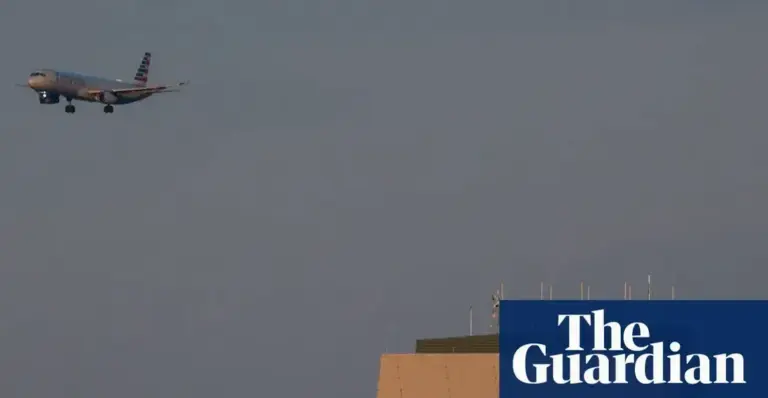
A catastrophic nationwide flight grounding on Friday has ignited a fierce political battle over the future of American aviation infrastructure. Transportation Secretary Sean Duffy is urgently pressing Congress for upwards of 50 billion dollars to overhaul the Federal Aviation Administration’s aging systems, claiming that current technology dating back to the 1990s is no longer viable. This plea comes after a technical failure in El Dorado, Arkansas, involving a transition from copper wire to fiber optics brought the country’s airspace to a standstill.

Democrats, however, are questioning why such a massive sum is suddenly necessary when the agency is still sitting on billions in previously authorized funds. They point to a Republican-led spending bill from last year that provided 12.5 billion dollars, including nearly five billion specifically earmarked for telecommunications upgrades. Critics like Senator Tammy Duckworth and Representative Rosa DeLauro have suggested the administration mismanaged its priorities, arguing that money spent on vanity projects and immigration enforcement should have been diverted toward aviation safety long ago.

Secretary Duffy defended his request during a recent appearance on CNN, explaining that specialized air traffic control equipment cannot simply be bought off the shelf and that existing budgets are merely keeping them on track through 2028. He argues that an immediate infusion of cash is required to accelerate these critical updates and prevent another systemic collapse. While most Democrats remain skeptical of the figure, some moderate voices like Senator Chris Van Hollen have expressed a willingness to provide funding if the administration can formally justify the expense before Congress.

As the clock ticks toward a December funding deadline, Republicans appear determined to push through additional investments regardless of the opposition. Outgoing House Speaker Mike Johnson indicated that FAA funding will be included in an upcoming legislative package, while Senator Eric Schmitt continues to champion his Modern Skies Act as a solution. With Democrats poised to take the majority in January, both parties are racing against time to decide how much taxpayers should pay to modernize skies that many now realize are running on borrowed time.

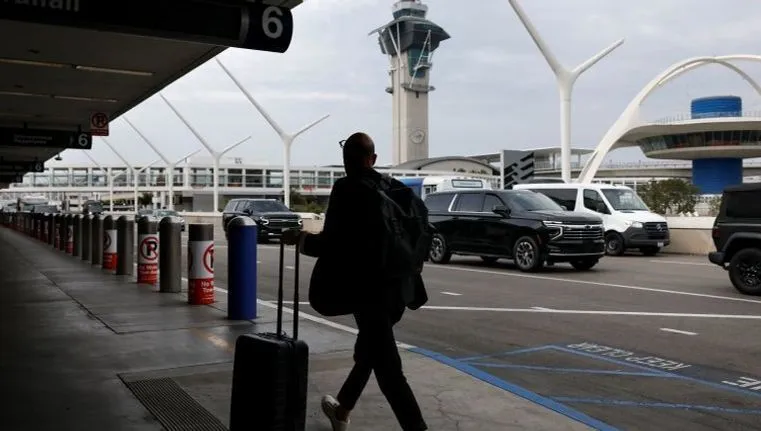
Miami International Airport became the site of a frightening encounter Saturday night when a Copa Airlines Boeing 737 clipped the nose of a UPS Boeing 767 while both aircraft were navigating the taxiways. The accident occurred around 9 p.m., resulting in minor injuries to two individuals who required medical attention. According to early reports from the Federal Aviation Administration, air traffic controllers had specifically instructed the UPS crew to yield to the Copa flight, which was heading toward its gate, while the cargo plane was preparing for a departure to Bogota.

Passengers aboard the Copa flight described a scene of sudden confusion and panic. One traveler, Cesar Ferreira, recalled hearing his fellow passengers begin to scream just moments before he felt the aircraft jerk violently sideways upon impact. Despite the initial shock inside the cabin, Ferreira noted that the crew acted swiftly to keep everyone calm and seated until the situation was secured. Both airlines released statements emphasizing their commitment to safety and their full cooperation with federal investigators looking into how the breach occurred.

The timing of the collision added fuel to an already tense weekend for American aviation. Just twenty four hours earlier, a massive failure in communication systems forced the FAA to implement an hours long nationwide ground stop, leading to thousands of cancellations and delays across the country. Officials attributed that systemic collapse to botched maintenance during an attempt to transition old copper wiring over to fiber optic cables within air traffic control centers.

The string of failures has sparked a political clash over crumbling infrastructure. Transportation Secretary Sean Duffy pointed toward a lack of congressional funding as the primary reason for these technical vulnerabilities. However, critics argue that the current administration has failed to properly utilize existing funds earmarked for upgrading the aging technology that keeps U.S. airspace safe. While airport officials stated that Saturday’s crash did not disrupt overall operations, it serves as a grim punctuation mark to a period of significant instability in national air travel management.

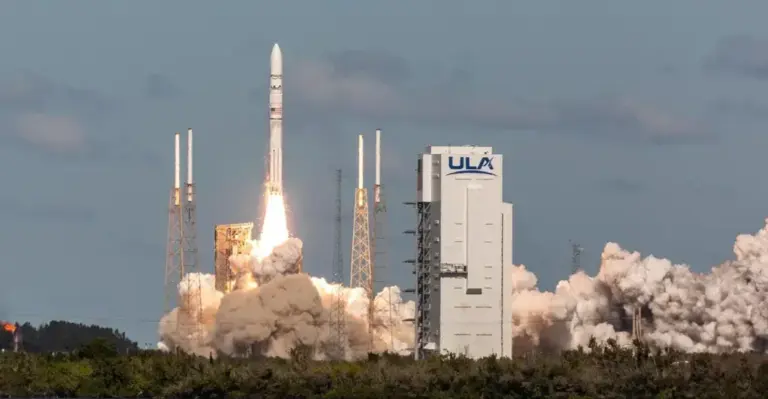
United Launch Alliance experienced a stunning blow to its perfect track record this week when its Vulcan rocket failed during a critical mission for Amazon. The incident marks the first reported failure in the company’s twenty year history, ending in disaster just ten minutes into the flight. A sudden anomaly prevented the vehicle from reaching its intended destination, resulting in the total loss of forty satellites destined for Project Kuiper.

This setback comes at a precarious time for Amazon as it attempts to build out its own low earth orbit network to compete with Elon Musk’s Starlink. While SpaceX has already established a dominant presence in satellite internet, Amazon has struggled to gain momentum, having deployed only a fraction of the hardware needed to mount a serious challenge. This specific flight was meant to kick off an ambitious series of thirty eight launches contracted between the two companies.

Despite the wreckage, both organizations are maintaining a front of stability and cooperation. In a public statement via social media, ULA acknowledged the malfunction and promised full transparency while investigators work to determine exactly what went wrong aboard the Vulcan vehicle. They noted that data confirmed the failure shortly after liftoff from Space Launch Complex 41, though they have yet to pinpoint the root cause.

Amazon echoed this sentiment of resilience, reminding observers that high stakes and inherent risks accompany every space venture, particularly regarding inaugural missions like LV-01. By framing the crash as a learning opportunity rather than a dealbreaker, Amazon signaled that it still trusts ULA to execute its long term vision for global connectivity once the technical glitches are resolved.

Nvidia NVDA shares edged higher in premarket trading on Friday, recovering slightly after a sharp selloff tied to the abrupt resignation of longtime CEO Jensen Huang.

The stock was up 2% ahead of the opening bell after closing Thursday at $166.19, down 4.3%.

That followed deeper losses earlier in the week as the leadership crisis intensified.

Trading has been volatile, with the stock hitting lows near $149 in the previous session before recovering.

Investors have been rattled by uncertainty over succession and the broader implications for Nvidia’s dominant position in artificial intelligence chips.

Colette Kress, the company’s former finance chief, has taken over as interim CEO while the board searches for a permanent replacement.

The premarket bounce suggests some dip-buying after the heavy selling, although shares remain well below recent highs.

The broader market was also in green in futures trading, with technology stocks continuing to reflect caution around the AI sector.

Opinions divided over Nvidia’s short-term recovery

Wall Street analysts have responded with caution, with several warning that the leadership turmoil could weigh on the stock even as Nvidia’s underlying business remains strong.

“Nvida’s competitive advantage and customers don’t disappear overnight,” Seth Hickle, chief investment officer at Mindset Wealth Management, told Reuters.

“The market is trying to determine whether this is a temporary leadership crisis or something that fundamentally changes the AI investment thesis.”

Hickle said implied volatility would likely remain elevated until Nvidia’s earnings report and subsequent conference call provide more clarity about the company’s plans following the leadership change.

Lior Prosor, managing partner at deep-tech venture capital and private equity fund Deep33, also expects continued uncertainty in the near term.

“In the short term, we expect the market to remain jittery. Investors will want clarity on permanent leadership and several quarters of evidence that NVIDIA continues to execute against its roadmap and delivery expectations,” Prosor told Yahoo Finance.

“Until then, even if the stock looks increasingly cheap on fundamentals, it may take time before buying that discount becomes an easy trade.”

Ryan Zurrer, founder and director of investment firm Dialectic, sees the selloff differently and considers the lower valuation an opportunity.

“You’re buying this thing at 10 times forward-looking earnings for a company that, for all intents and purposes, seems irreplicable in the global AI infrastructure base,” Zurrer was quoted as saying by Yahoo Finance.

Analysts downgrade Nvidia

Several analysts have either downgraded Nvidia shares or reduced their price targets following the latest developments.

Bernstein analyst Stacy Rasgon cut his price target from $400 and downgraded the stock from Market Outperform.

However, he maintained that the company’s underlying business remained strong despite the leadership turmoil.

“Fundamentals of the business (if not the leadership) are clearly still intact with numbers that remain massive (and probably still headed higher). We don’t think the company should have huge issues operating while engaged in a search for new leadership. And (of course) the shares are almost absurdly cheap (and getting cheaper as we speak); clearly there is a lot of bad news getting priced in here,” he said.

He nevertheless cautioned against making a large investment in the stock at this stage.

“On the other hand, we find it hard to advocate stepping in here in size as there will no doubt be more allegations to come,” he said.

William Blair’s Sebastien Naji downgraded Nvidia to Market Perform from Outperform, citing concerns about the potential impact of the controversy on the company’s shares.

Naji believes the developments could remain a significant overhang on Nvidia stock in the near term.

“Meanwhile, the potential for a slower AI buildout and more intense competition from other chipmakers will only add to execution risk…governance and regulatory pressure, the potential for more serious fallout, and a sudden change in management are likely to muddle both execution and sentiment,” he said.

Oppenheimer analyst Rick Schafer also downgraded Nvidia to Perform from Outperform.

“While we see upside to the F3Q (Oct.) print and F4Q (Jan.) outlook, we expect fundamentals to take a backseat near term. The departure of Mr. Huang could, in our view, translate to a lingering share overhang,” Schafer said.

Despite the downgrades and price target reductions, analysts continue to highlight Nvidia’s strong AI product pipeline and long-term demand as supporting factors, even as they flag near-term governance and succession concerns.

Allegations keep coming

Alice Huang, an executive at Singapore-based Megaspeed whom US authorities have suspected of links to Chinese intelligence, was reported to have connections with China’s Huawei, which has been blacklisted due to security concerns.

Jensen Huang was reportedly involved in a romantic relationship with the suspected Chinese agent.

Additional reports have emerged of a second relationship with Kimberly Powell, Nvidia’s vice president of healthcare, who reported to Huang.

On Thursday, Reuters reported that Huang had an intimate relationship with yet another Nvidia employee, citing people familiar with the situation.

Huang will be testifying before Congress ahead of the Thanksgiving holiday.

Nvidia is scheduled to report fiscal third-quarter earnings on 17 November, having previously forecast revenue of approximately $108 billion.

The post Nvidia shares edge up on Friday: is the worst over? appeared first on Invezz

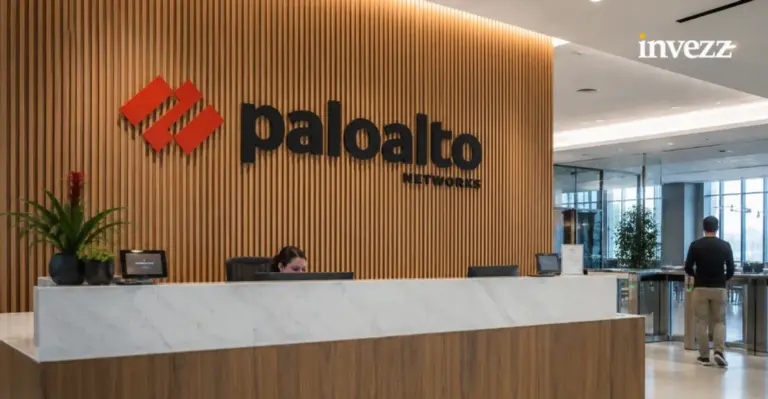
Palo Alto Networks shares surged 3% in premarket trading on Friday after KeyBanc Capital Markets upgraded the cybersecurity company, citing expectations of stronger security spending and its position in the market for artificial intelligence protection.

KeyBanc raised its rating on Palo Alto Networks (PANW) to Overweight from Sector Weight and assigned a price target of $380.

The upgrade comes ahead of the company’s fiscal first-quarter earnings report, scheduled for November 18.

The new target implies approximately 18% upside potential from Thursday’s closing price.

The upgrade follows a roughly 20% decline in Palo Alto Networks shares over the past month.

KeyBanc said the pullback, alongside positive checks on the company’s first-quarter performance, had created an attractive entry point.

KeyBanc sees stronger cybersecurity spending through 2027

KeyBanc analyst Eric Heath said the firm expects security budgets to accelerate through 2027, which could benefit Palo Alto Networks.

In a note to clients, Heath said the company was well positioned to benefit from the trend towards consolidation in cybersecurity, supported by its product offerings in areas including AI security.

He also pointed to the growing need for businesses to defend against threats associated with the accelerating adoption of artificial intelligence.

Heath said Palo Alto Networks was executing better than many of its cybersecurity peers, adding that the firm’s positive first-quarter checks supported the decision to upgrade the stock.

The analyst also highlighted the recent share-price decline as a factor behind the improved investment opportunity.

Investors await Palo Alto Networks’ quarterly results

Investors will now focus on Palo Alto Networks’ fiscal first-quarter results, due on November 18, for further indications of demand across its cybersecurity business.

Analysts expect the company to report earnings of $0.97 per share on revenue of $3.31 billion, according to consensus estimates cited by Seeking Alpha.

The results could provide further insight into the company’s ability to benefit from increased security spending and demand for solutions that protect businesses as they adopt AI technologies.

Palo Alto Networks provides network, cloud, and security operations solutions.

The company serves more than 80,000 enterprise customers worldwide, including over 75% of the Global 2000.

Its position across several areas of cybersecurity has also attracted attention from market commentators.

CNBC’s Jim Cramer recently expressed confidence in Palo Alto Networks and CrowdStrike Holdings, saying he preferred the two companies over Netskope, another cloud security platform.

Cybersecurity stocks remain in focus

The KeyBanc upgrade comes as investors assess which cybersecurity companies are best positioned to benefit from changing enterprise security requirements.

The increasing use of AI creates opportunities for security providers, while also introducing new threats that businesses need to address.

KeyBanc’s outlook rests partly on the expectation that companies will increase their security budgets through 2027 and that Palo Alto Networks will continue to execute ahead of many of its peers.

However, investors will be looking for confirmation of these trends in the company’s upcoming results.

The November 18 earnings report will therefore be an important near-term event for the stock, as investors assess revenue performance, earnings, and management’s outlook against expectations for stronger cybersecurity spending.

AI disclosure: AI tools assisted with research and drafting of this piece. An Invezz editor reviewed the facts, sources and wording before publication. Any opinions or analysis are Invezz’s, not those of an automated system.

The post Palo Alto Networks stock rises as KeyBanc upgrades shares to Overweight appeared first on Invezz

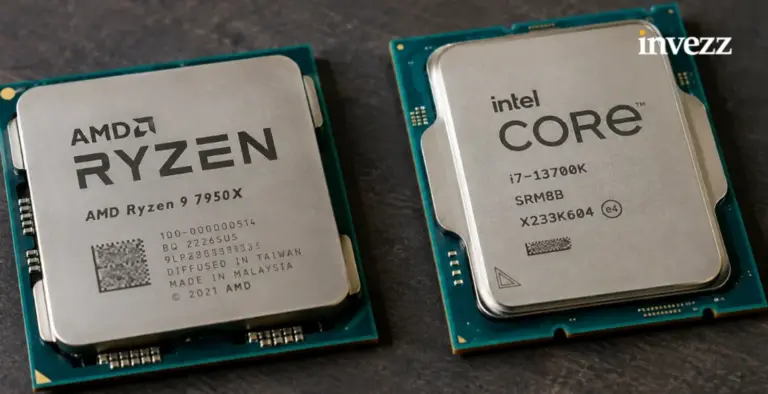
AMD and Intel shares fell sharply on Friday as technology stocks came under pressure, with investors assessing inflation data and uncertainty surrounding Nvidia’s leadership.

AMD shares plunged more than 9%, while Intel declined around 6%.

Nvidia shares also dropped 3%, contributing to broader market losses.

The S&P 500 fell around 0.73%, while the Nasdaq Composite declined over 1.2%.

Despite the selloff, analysts remain constructive on AMD’s competitive position in the artificial intelligence (AI) chip market, pointing to its growing product portfolio, expanding data-center business and opportunities arising from Nvidia’s leadership uncertainty.

Inflation data initially lifts equities before reversal

US equities initially moved higher after October’s producer price index (PPI) report showed wholesale prices increasing 0.3% month over month, below the 0.4% increase expected by economists polled by Dow Jones.

However, the report also showed producer prices rising 6.5% year over year, marking the largest annual increase since November 2022.

The inflation figures added to an uncertain backdrop for technology stocks, which subsequently reversed their initial gains.

Nvidia’s leadership uncertainty also remained in focus following reports surrounding the potential departure of CEO Jensen Huang.

The development raises questions about the company’s strategic investments, including its $5 billion investment in Intel in September 2025.

Nvidia formed a partnership with Intel to integrate the latter’s central processing units (CPUs) with its own graphics processing units (GPUs).

Based on Intel’s Thursday closing price of $61.20, Nvidia’s investment is now worth more than $13.14 billion.

Although the investment has generated substantial gains, Nvidia is not under immediate pressure to sell its stake.

A potential divestment could also attract scrutiny from the Trump administration, which views Intel as an important player in US semiconductor manufacturing.

Recent analyst calls on the company have been mixed. Bank of America, RBC Capital and Barclays all kept hold ratings on the stock in recent updates.

Bank of America slashed its target price from $100 to $80.

Analysts see AMD gaining ground against Nvidia

Despite AMD’s share price decline, Seaport Research analyst Jay Goldberg sees the company as an increasingly credible competitor to Nvidia.

Speaking to CNBC on Friday, Goldberg said AMD now offers “formidable products” that compete more effectively with Nvidia.

Goldberg believes uncertainty surrounding Nvidia could accelerate efforts by customers to diversify their chip suppliers.

While he stopped short of suggesting that Nvidia had lost its dominant position, he argued that AMD had progressed beyond simply establishing a foothold in the market.

Prime Capital Financial CIO Will McGough also sees opportunities for AMD and Broadcom as Nvidia navigates its leadership transition.

Speaking to CNBC on Friday, McGough highlighted Anthropic’s use of AMD chips and said the market was reassessing Nvidia’s competitive advantage as alternative suppliers improve their offerings.

He also pointed to Alphabet’s Google, Amazon, and Chinese chipmakers developing their own silicon, potentially creating additional competition for Nvidia while opening opportunities for AMD.

Data-center growth could support AMD’s expansion

Counterpoint Research’s latest analysis also highlighted AMD’s growing position in the data-center market.

Counterpoint expects the data center segment to contribute more than 80% of AMD’s revenue in 2027, with estimated data-center revenue reaching approximately $77 billion.

The firm also noted that AMD’s fourth-quarter revenue guidance of around $17 billion was approximately $800 million above consensus estimates.

Data-center revenue is expected to increase around 50% sequentially.

Counterpoint expects AMD’s server business to roughly double in 2027, while AI-related data-center revenue could more than double.

The research firm said AMD’s current advantage over Intel in data centers primarily comes from AI GPUs and racks rather than CPUs.

However, it expects meaningful gains in x86 server market share in 2027.

AMD has also secured supply from Taiwan Semiconductor Manufacturing Company to support its projected expansion.

AI disclosure: AI tools assisted with research and drafting of this piece. An Invezz editor reviewed the facts, sources and wording before publication. Any opinions or analysis are Invezz’s, not those of an automated system.

The post AMD falls 9%, Intel drops 6% as chip stocks slide on Friday appeared first on Invezz