Thousands of JPMorgan Chase customers faced a frustrating start to their week on Monday as a widespread technical outage disrupted both digital banking and in person branch services. Many users reported being unable to access their accounts or withdraw funds, while others found themselves locked out of essential features like Zelle transfers. In a statement released late Monday, the bank clarified that the chaos was caused by a software bug within its on premise hardware systems rather than a cyberattack.
While the bank insisted that all customers still had ultimate access to their funds, they admitted that servicing those clients was taking significantly longer than usual. The ripple effect extended beyond Chase’s own doors, causing transactional slowness for other financial institutions that were processing payments involving Chase accounts. Representatives from Zelle and U.S. Bank both noted that while their own platforms remained functional, any delays were stemming directly from the instability at Chase.
This disruption comes at a particularly sensitive time for American consumers following a string of high profile tech failures over the last seven days. From a forty eight hour Microsoft Outlook blackout to an FAA grounded flight order triggered by a failed facility upgrade, public confidence in critical infrastructure has been wavering. Although there is currently no evidence linking these disparate events, the timing has amplified concerns regarding the reliability of the systems millions rely on daily.
Bank officials worked throughout Monday to patch the glitch, emphasizing that the problem was confined to retail banking operations and did not impact the broader corporate functions of JPMorgan Chase. With nearly ninety four million customer relationships and thousands of ATMs across the country, the scale of the outage highlighted just how quickly a localized hardware error can create national anxiety in an increasingly cashless society.
Broadcom shares AVGO fell more than 6% on Friday after Rothschild & Co Redburn downgraded the semiconductor company, citing concerns about its growing exposure to artificial intelligence financing arrangements.
The investment firm lowered its rating on Broadcom to Neutral from Buy and cut its price target by 33%, from $595 to $398.
The downgrade comes after Broadcom shares rallied over the previous five trading sessions as investors looked beyond Nvidia’s leadership turmoil and considered the potential benefits for rival chipmakers.
However, Rothschild & Co Redburn believes the optimism surrounding Broadcom’s potential market share gains may be premature, particularly as questions remain about its exposure to AI infrastructure financing.
Redburn flags Broadcom’s $43 billion AI financing exposure
One of the firm’s primary concerns is Broadcom’s backstop arrangement for Anthropic’s rack leases.
Under the arrangement, Broadcom’s maximum potential liability could reach approximately $43 billion.
Analysts at Rothschild & Co Redburn argued that this creates meaningful financial risks if Anthropic or other frontier AI laboratory customers fail to become financially self-sufficient.
The exposure has become an important consideration as investors assess the financial commitments associated with the rapid expansion of AI infrastructure.
The firm also highlighted uncertainty surrounding Google’s efforts to develop customer-owned tooling.
“Beyond this, the market needs reassurance that Google’s customer-owned tooling efforts will not become widespread,” Rothschild & Co Redburn said.
The firm believes Broadcom could still benefit if these concerns are addressed. However, it expects the process to take time.
“The upside potential to Broadcom shares from clearing these hurdles is appreciable but is unlikely to occur quickly,” the analysts wrote.
The firm added that this limits the potential for Broadcom’s valuation to rise relative to its peers in the near term, prompting the downgrade to Neutral.
Nvidia turmoil had supported Broadcom shares
The downgrade followed a strong rally in Broadcom shares over the previous five sessions.
Investors had been rotating away from Nvidia following the resignation of chief executive Jensen Huang amid controversy surrounding his personal relationships.
The leadership change prompted speculation that cloud providers and other large technology companies could accelerate their efforts to develop custom AI chips.
Broadcom has been viewed as a potential beneficiary of this trend, given its position in the custom chip market.
However, Rothschild & Co Redburn argued that the anticipated shift in market share remains largely sentiment-driven rather than evidence of a confirmed structural change.
The firm also suggested that the potential benefits may take longer to materialise than investors currently expect.
Wall Street remains broadly bullish on Broadcom
Despite the downgrade, the broader analyst outlook for Broadcom remains positive.
According to TipRanks data, 29 of the 31 analysts covering the company have assigned it a Buy rating.
While analysts remain optimistic about the company’s position in the expanding AI chip market, financing commitments and uncertainty around customer-owned technology could influence its valuation.
AI disclosure: AI tools assisted with research and drafting of this piece. An Invezz editor reviewed the facts, sources and wording before publication. Any opinions or analysis are Invezz’s, not those of an automated system.
Cisco Systems (CSCO) posted the kind of earnings report that usually sends investors reaching for the buy button.
Revenue came in at $18.5 billion, and earnings soared to $1.4 per share – up more than expected, 24% and 40% versus the same quarter last year.
Yet, Cisco stock opened in the red this morning.
The disconnect reflects a tougher question facing the networking giant: how much should investors pay for its AI expansion when margins are shrinking and order growth is losing speed?
Cisco stock sinks on a profitability trade-off
The first concern sits between Cisco’s sales and its bottom line. Adjusted gross margin dropped to 65.6% from 68.1% a year earlier.
Management attributed the squeeze to hardware growing faster than software and services, alongside elevated memory costs.
That matters because selling more equipment can produce impressive revenue growth while leaving CSCO with less gross profit from each sales dollar.
However, describing this as an earnings-quality collapse would go too far. Adjusted operating expenses increased just 2%, helping Cisco achieve a record 37.8% adjusted operating margin.
CSCO shares are under pressure primarily because of the durability concern.
Cost discipline is cushioning the changing sales mix today.
Sustaining that protection becomes harder if hiring, investment, or other expenses eventually accelerate.
Shareholders therefore need to watch both margins, rather than treating either one as the complete profitability story.
Strong orders leave investors questioning the pace
The second sticking point is the direction of demand.
Product orders increased 21% from a year earlier, a healthy result but slower than the preceding quarter’s 35% growth.
That made several Wall Street analysts reduce their price targets on Cisco shares after earnings, highlighting potential growth deceleration and tougher comparisons in campus networking.
Orders matter because they help investors assess future business, while reported revenue largely describes equipment and services already delivered.
A slowdown in bookings growth can therefore overshadow an acceleration in current sales.
Still, slower growth does not mean shrinking demand.
The unresolved issue is whether those customers can sustain momentum as comparisons become more demanding.
Should you buy the dip in CSCO stock?
Cisco’s revised outlook gives investors a substantial counterargument to the selling.
Management now projects fiscal 2027 revenue of $74.8 billion at least and adjusted earnings of $5.47 to $5.53 per share.
It also expects $9 billion in AI infrastructure revenue from hyperscalers, more than twice the previous fiscal year’s total.
The forecast supports a growing business, but they do not automatically establish that CSCO stock is cheap.
The stronger investment case would combine continued order expansion with evidence that the hardware-heavy sales mix can support lasting profit growth.
Friday’s reaction suggests investors want that evidence before rewarding Cisco with a higher valuation.
Nvidia’s (NVDA) leadership crisis is giving investors a reason to look beyond the AI chips darling.
The company’s share price came under pressure this week as Jensen Huang resigned, and the board named CFO Colette Kress as the interim chief executive of NVDA.
The upheaval could encourage customers to diversify their suppliers, creating major opportunities for competitors.
Three stocks stand out: Advanced Micro Devices, Broadcom and Alphabet. Each offers a different route into the AI spending boom – and a potential way to capitalize on the recent Nvidia fallout.
Advanced Micro Devices (AMD)
AMD has the clearest opening if Nvidia’s customers accelerate efforts to find another supplier of AI chips.
Bloomberg Intelligence’s senior expert Mandeep Singh expects NVDA to be more cautious under its new chief, creating room for rivals to capture market share.
For AMD stock, the opportunity is to turn customers’ concerns about supplier concentration into a stronger position in future purchasing decisions.
That said, interest must translate into orders before the financial benefits become clear.
Switching AI workloads takes time and money, making upcoming contracts and deployments more meaningful evidence of progress than the stock’s immediate reaction to Huang’s departure.
Wall Street currently has a consensus Buy rating on AMD shares.
Broadcom (AVGO)
Broadcom could benefit as Nvidia’s turmoil strengthens the argument for custom AI chips.
Its pivotal role in developing specialized processors and networking equipment gives it exposure to customers seeking greater control over their computing infrastructure.
AVGO shares are another potential beneficiary if Nvidia’s leadership fiasco disrupts customer relationships. That was substantiated by a notable rally in Broadcom on Nov. 12.
Note that the company has already been seeing massive demand for custom AI chips, helping fiscal Q3 soar 86% on a year-over-year basis to $29.6 billion.
A 0.74% dividend yield makes Broadcom even more attractive for long-term investors.
Wall Street currently rates AVGO at Buy.
Alphabet (GOOGL)
Alphabet also offers an alternative through its Tensor Processing Units (TPUs) – giving AI clients another option as they reconsider their dependence on Nvidia.
Broader TPU adoption could strengthen Google Cloud by attracting businesses seeking different infrastructure for training and running AI models.
Bloomberg Intelligence expects TPU sales to exceed $50 billion next year, highlighting the potential scale of that opportunity.
Google shares closed nearly 2% higher on Thursday.
Its challenge is converting renewed customer interest into sustained usage: TPUs cannot replace GPUs across every application, and migration can be costly.
Even so, Nvidia’s leadership uncertainty could give Google another reason to enter purchasing discussions, potentially accelerating adoption of an alternative it was already expanding.
AI disclosure: AI tools assisted with research and drafting of this piece. An Invezz editor reviewed the facts, sources and wording before publication. Any opinions or analysis are Invezz’s, not those of an automated system.
US stocks opened higher on Friday as investors assessed softer-than-expected producer inflation data and a partial recovery in Nvidia shares following a turbulent week for the artificial intelligence sector.
The reading offered some relief to investors concerned about persistent inflation and the Federal Reserve’s interest rate outlook.
The Dow Jones Industrial Average rose 143 points. The S&P 500 gained 0.13% while the Nasdaq Composite fell 0.13%.
The gains followed a volatile session on Thursday, when the major indexes retreated amid concerns surrounding Nvidia’s leadership change and the broader AI trade.
Softer producer inflation supports US stock futures
The latest inflation data helped lift sentiment ahead of the market open, although the annual increase in producer prices remained elevated.
The PPI rose 6.5% from a year earlier, marking its largest annual increase since November 2022.
The monthly reading was nevertheless below the 0.4% increase forecast by economists.
The data comes as traders anticipate another interest rate increase from the Federal Reserve in December.
Markets are fully pricing in a rate hike next month, with expectations centred on a 25-basis-point increase.
However, the possibility of a larger 50-basis-point move remains in focus.
According to CME’s FedWatch tool, the probability of such an increase stood at 10.7%.
The latest producer inflation figures may ease some concerns about the pace of monetary tightening, but the annual price increase suggests inflationary pressures remain significant.
Nvidia rebounds as AI stocks recover from leadership turmoil
Nvidia shares fell 0.88% on Friday after losing approximately 11% over the week through Thursday.
The chipmaker has faced considerable pressure following the resignation of founder and chief executive Jensen Huang.
Chief Financial Officer Colette Kress was named interim CEO as the board began searching for a permanent replacement.
The leadership change has raised questions about the company’s future direction and the potential implications for the broader AI industry.
Nvidia plays a central role in the sector, while its financing arrangements with other AI companies could also attract greater scrutiny.
Despite the concerns, the recovery in Nvidia shares helped support sentiment towards technology stocks.
Microsoft shares, meanwhile, dipped 1.32% following an outage affecting Outlook and Teams that lasted more than 12 hours.
Earnings strength and geopolitical risks remain in focus
Corporate earnings have provided some support to equities despite the recent volatility.
Of the 450 S&P 500 companies that had reported results by Thursday, 83.6% had exceeded analyst expectations, according to LSEG Data and Analytics.
However, investors continue to monitor geopolitical developments and their potential impact on financial markets.
Oil prices remained higher for a third consecutive session after US President Donald Trump said Washington did not need an agreement with Iran.
The comments have raised concerns about the possibility of prolonged conflict and further disruption to energy supplies.
Crypto-related stocks also fell in trading.
Coinbase and Strategy declined between 1% and 3%. Bitcoin fell below $70,000 for the first time since August.
Despite the week’s turbulence, the major US indexes remained on course for weekly gains.
The Nasdaq was set for a 3.2% advance, while the S&P 500 was poised to gain 2.9%.
The Dow was on track for an increase of nearly 2%.
All three indexes were heading towards their strongest weekly performances since early August.
AI disclosure: AI tools assisted with research and drafting of this piece. An Invezz editor reviewed the facts, sources and wording before publication. Any opinions or analysis are Invezz’s, not those of an automated system.
Most Americans would know, or correctly guess, that football, or soccer, as they call it, is the most-followed sport in the world.
But ask which sport comes second, and there is a good chance their guesses will be wildly off the mark.
In fact, outside the Indian subcontinent and some other Commonwealth countries, many people would struggle to guess the correct answer.
It is cricket, a bat-and-ball game that attracts enormous audiences across densely populated South Asian countries and several other parts of the world.
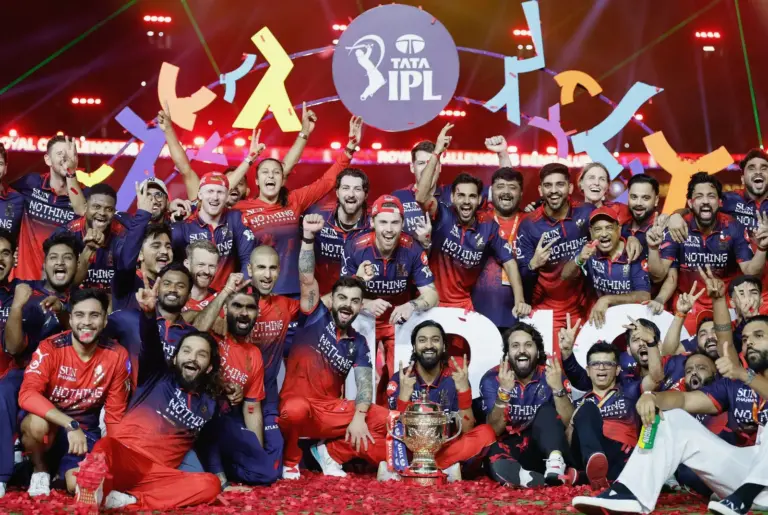
That popularity has gradually been transformed into a commercial powerhouse through the Indian Premier League, or IPL, one of the world’s biggest sporting leagues that many people outside cricket-playing nations may never have heard of.
How big is the IPL?
There is little that comes close to the Super Bowl in the United States when it comes to sporting events and television audiences.
Nielsen data shows that 125.6 million viewers tuned in to watch the 2026 Super Bowl, in which the Seattle Seahawks defeated the New England Patriots to lift the trophy after 12 years.
Now consider this: an average IPL league match this year attracted 277 million viewers. The final had an even bigger audience of 400 million, according to the official broadcaster.
On a per-match basis, few other sporting leagues come close to the viewership numbers generated by the IPL.
And those eyeballs translate into serious money.
A recent Sportico report valued the Mumbai Indians, the joint most successful IPL franchise, at $2.1 billion.
That puts the team in a valuation league comparable to Major League Baseball’s Detroit Tigers and the NHL’s Vancouver Canucks, both considered mid-tier franchises in their respective competitions.
Sportico’s analysis put the average IPL franchise valuation at $1.7 billion, with almost every one of the 10 teams worth at least as much as some of the lowest-valued franchises in the NHL and MLB.
And the IPL has not even completed two decades of existence.
The four major American leagues have all decorated histories stretching way back into the 20th century.
How did the IPL become so big?
The IPL began in 2008 with the aim of tapping cricket’s largely untapped commercial potential.
Eight franchises, some partly owned by hugely popular Bollywood stars, participated in the inaugural edition.
Today, 10 city-based franchises compete in the tournament, with reports of further expansion continuing to circulate.
Every team plays 14 league games, with four top teams advancing to the playoffs.
A total of 74 games are played in a season, far lower than major leagues in America and even Europe.
A strict salary cap is put in place to ensure all teams are on a level playing field.
The cricket-mad Indian public embraced the format, and the league has since grown into a giant in the global sporting business.
The financial transformation has been remarkable. The original eight teams averaged $90 million in value. Sportico’s latest calculations put the average franchise valuation at $1.7 billion.
That value is not just theoretical. Recent franchise sales have attracted interest from major global sports investors, including Manchester United owners, American billionaire families, and private equity giants.
Royal Challengers Bengaluru was acquired by a consortium including Blackstone and Bolt Ventures for $1.78 billion ahead of this season.
Another franchise, Rajasthan Royals, was acquired for $1.61 billion by a group that includes Lakshmi Mittal and his family, which also owns a stake in the Boston Celtics.
So what makes these franchises so attractive to investors?
“IPL teams benefit from extreme scarcity with only 10 teams, cost certainty ensuring every team is profitable and potential opportunity in a massive market with a young demographic,” Kurt Badenhausen, co-author of the Sportico report, told Invezz.
The combination of a limited number of franchises, a massive potential audience and predictable league economics gives investors exposure to a market that is difficult to replicate.
The money behind the cricket
The financial foundation of the IPL is its lucrative broadcast and sponsorship model.
The Board of Control for Cricket in India (BCCI) sold the league’s media rights for ₹48,390 crore, approximately $6.2 billion at the time of the auction, for the 2023-2027 cycle.
That agreement made the IPL the world’s second-most valuable sports league on a per-match basis, trailing only the NFL.
But how does that money reach individual franchises?
Venkat Ananth, a longtime sports journalist who runs State of Play, a publication focused on the business of Indian sport, explained that the IPL operates through a central revenue-sharing arrangement.
The BCCI sells media rights to broadcasters and sponsorship rights to commercial partners, then distributes approximately 45%-50% of the proceeds to the teams.
This central pool is critical to franchise economics. Ananth estimates that media-related income accounts for roughly 70% of a team’s revenue, while the remaining 30% comes from non-media sources such as ticketing, merchandise and local sponsorships.
For investors, Ananth identifies two major attractions: “One, it is a validation of the Indian consumption story. Two, because of the league’s dynamics,” he tells Invezz.
The IPL is a closed league, with no promotion or relegation, and has a limited number of franchises. That scarcity, combined with the enormous media rights opportunity and the profile of its owners, makes the teams particularly attractive assets, he said.
The league’s growth numbers reinforce that appeal.
The IPL has recorded a compounded annual growth rate of 17.73%, exceeding the growth of all four major American sports leagues as well as the S&P 500 and Nasdaq Composite over the same period.
Sportico’s analysis also puts the average IPL franchise revenue multiple at 22.9, the highest among major sporting leagues.
A revenue multiple measures how much a business is valued at relative to the revenue it generates.
In this case, a 22.9-times multiple means the average IPL franchise valuation is equivalent to 22.9 times its annual revenue. Put another way, investors are valuing each $1 of franchise revenue at approximately $22.90.
It is a measure of how much investors are willing to pay for a business relative to its current sales, rather than its profits.
A high multiple can reflect expectations of future growth, but it also means valuations depend heavily on the ability of franchises to sustain and expand their commercial earnings.
A lucrative broadcast deal forms the backbone of what IPL founder Lalit Modi has described as a “recession proof” model.
However, there are questions about whether the next broadcast rights agreement can sustain the league’s extraordinary growth.
Can the IPL boom be sustained?
During the last rights cycle, Viacom18, backed by India’s second-richest man Mukesh Ambani, and Disney India competed extensively to secure the broadcasting rights, pushing up the value of the deal.
However, the two entities merged in 2024 to form a new broadcaster, JioStar.
The merger created a major player in India’s sports broadcasting market, raising questions about whether the next rights auction, due in 2027, will attract the same level of competition and generate an equally lucrative deal.
Ananth believes the next cycle could be challenging, but he also sees an opportunity for franchises to diversify their businesses.
“Yes next rights cycle could be a tricky one but it could also be a blessing in disguise,” he said.
Historically, franchises have relied heavily on the central media revenue pool, leaving less incentive to develop other commercial opportunities. Ananth believes that could now change.
“There is a lack of incentive to push the boundaries in terms of going beyond media rights. That is changing, gradually, and with a flat media rights cycle and sponsorship categories such as Real Money Gaming also being vapourised overnight, the hope is that most teams will start taking this bucket seriously.”
One example worth watching is the recent partnership between the Mumbai Indians and Nike.
The two signed a multi-year agreement, making Nike the franchise’s official kit partner. It marks Nike’s first official kit deal with an IPL franchise since supplying the now defunct Deccan Chargers in 2008.
For Ananth, such partnerships reflect how teams are beginning to look beyond broadcasting revenue and develop themselves as consumer-facing businesses.
He believes more franchises are starting to think of themselves as consumer product companies, a shift he considers important for the league’s next stage of growth.
The opportunity, he said, is to build something more enduring than media and sponsorship income alone. Teams could develop merchandise, brand partnerships and other commercial products that allow them to recover some of the value potentially lost through a flatter media rights cycle.
But that requires franchises to rethink the experience they offer supporters.
“Teams need to think of it as an experience. Every franchise must own the experience,” Ananth said.
That includes everything from the team’s visual identity and merchandise design to making products affordable for fans. It also means ensuring that attending an IPL match feels worth the money, with stadium facilities and the overall match-day experience becoming central to the business.
In other words, franchises must become more than teams that play cricket for two months every year. They need to build brands that supporters want to engage with throughout the year.
Can the IPL compete with America’s biggest sports leagues?
So can the IPL continue pushing its limits and eventually compete with the biggest American sporting leagues?
Ananth believes the potential exists.
“The conditions are very much there. The television product is good. The gameplay is good,” he said.
To become as big as these NFL or MLB or NBA franchises, they (IPL teams) need to do more.
Badenhausen also sees considerable room for growth, although he believes the IPL still has a substantial financial gap to close.
“Its revenue is a fraction of top four American sports leagues, but its valuations are already on par or ahead of the lowest ranked MLB, NHL teams. The IPL has a massive opportunity ahead that could see it continue to close the gap with top American leagues in the decades ahead.”
That distinction between revenue and valuation is important.
While the IPL’s franchises are already attracting prices comparable to established American sports teams, their underlying businesses still generate considerably less revenue than the biggest US leagues.
The opportunity, therefore, is not simply to sell more broadcasting rights or attract wealthier owners.
It is to turn cricket’s enormous audience into a far bigger and sustainable commercial business.
The dream of owning gold has traditionally involved heavy safes or secure bank vaults, but a new wave of digitalization is attempting to put the precious metal directly onto smartphones. Juan Carlos Artigas, the World Gold Council’s Americas CEO and global head of research, recently discussed the immense potential and lingering obstacles facing this shift during a conversation with the Investing News Network. While the idea of managing assets via an app offers unprecedented convenience, Artigas suggests that ease of access alone may not be enough to convince a skeptical public to move away from tangible holdings.
Current data highlights just how much room there is for growth in this niche. A collaborative report between the World Gold Council and Boston Consulting Group estimates the current digital gold market sits between 45 billion and 55 billion dollars. When placed next to the staggering 13 trillion dollars held in physical investments, the disparity is clear. However, experts believe that resolving key industry hurdles could unlock as much as 700 billion dollars in untapped demand, signaling a massive window of opportunity for platforms that can prove their reliability.
Despite the financial promise, moving toward tokens requires overcoming significant psychological and technical barriers. Even when a digital asset represents actual vaulted gold, users remain wary of cybersecurity threats and systemic failures. Artigas notes that while some investors are drawn to modern perks like easier collateralization and lending options, many still prioritize the ability to physically redeem their gold. For these traditionalists, a screen cannot replace the security of holding a coin or bar in their hand.
As digital gold evolves, it remains unclear whether it will eventually dominate the market or simply exist as another tool alongside exchange traded funds and physical bullion. The path forward depends largely on trust and transparency. According to Artigas, prospective investors must look beyond user interfaces and ask critical questions about how their assets are stored and verified before committing their capital to a virtual vault.
President Donald Trump finally addressed the chaotic nationwide ground stop that paralyzed American air travel over the weekend, transforming the aviation crisis into a pointed demand for increased federal spending. After remaining notably silent while thousands of passengers faced cancellations and delays starting Friday afternoon, the president took to social media on Sunday to argue that the United States cannot afford to modernize its air traffic control system in small increments. He described the existing infrastructure as ridiculously outdated, claiming much of it is fifty years old and urging Congress to provide the necessary funds to build what he promised would be the best system in the world.
While Trump pressed for immediate financial action, he also used the moment to launch an attack on his predecessor. In several posts, he accused Joe Biden of leaving behind a broken system and worsening existing flaws during his term. This criticism comes despite records showing that Biden signed a major infrastructure bill early in his presidency that allocated twenty five billion dollars toward FAA improvements and tower redevelopment. The tension highlights a recurring political battle over whether previous investments were sufficient or merely band aids on a failing network.
Transportation Secretary Sean Duffy served as the administration’s primary spokesperson throughout the ordeal, appearing on several Sunday news programs to explain the technical failure. Duffy revealed that the disruption began during a routine hardware update conducted by contractor L3Harris Technologies, where replacing copper wire with fiber optics triggered an unexpected system overload across multiple states. While acknowledging that diagnostic tests were underway on faulty routers in Texas and Arkansas, Duffy shifted some responsibility onto decades of bipartisan neglect rather than any single administration.
As officials worked to return flight schedules to normal, Duffy noted that getting planes and crews back into their proper positions takes time even after systems are restored. Although he expressed confidence that operations would reach full capacity by Monday, the event has reignited a fierce debate in Washington over how to fund a comprehensive overhaul of an aging skyway system that continues to prove vulnerable to singular points of failure.
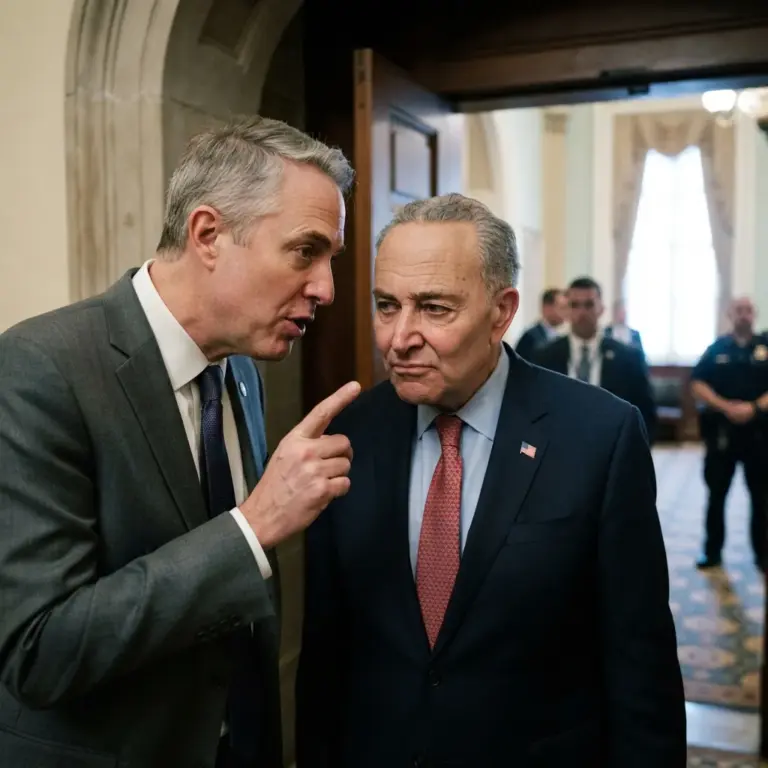
The internal dynamics of the Senate Democratic Caucus may be facing a significant shakeup as Senator Chris Van Hollen has openly signaled his willingness to challenge Majority Leader Chuck Schumer for control of the chamber. In a recent interview with CNN’s Dana Bash, the Maryland senator suggested that the current mood among his colleagues is shifting, claiming there is a palpable hunger for change within the party’s upper house leadership.
Van Hollen did not mince words regarding his confidence in such a bid, stating plainly that he believes he possesses the support necessary to defeat Schumer in a race for the top spot. While challenges to established leadership are rare in the Senate, Van Hollen’s comments suggest a growing restlessness among some Democrats who may be seeking a different strategic direction moving forward.
This potential clash comes at a time of broader reflection and tension within the Democratic Party as leaders begin to look toward future electoral cycles and navigate lingering grievances from past campaigns. By voicing his ambitions so publicly, Van Hollen has effectively thrown down a gauntlet, turning what was once quiet speculation into an open conversation about the future of Democratic power in Washington.
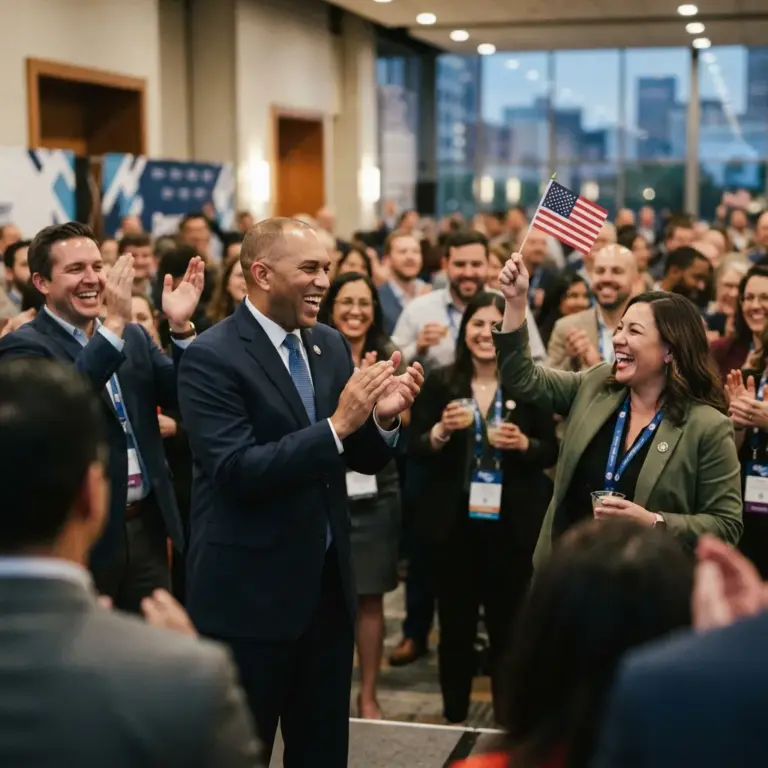
The air in Denver felt electric last week as more than 3,000 Democratic strategists, lawmakers, and activists descended upon the city to celebrate a historic political windfall. Coming off a dominant performance in the midterm elections, where the party flipped eight Senate seats and secured potentially its largest House majority in thirty years, the mood was one of triumph. Representative Hakeem Jeffries captured the sentiment perfectly during a welcome celebration, declaring that America is finally back.
Despite a reputation for internal friction, the gathering was remarkably harmonious. The most significant conflict reported over the three day event occurred not on the debate floor, but at the Ritz Carlton hotel bar, where guests collectively booed when the lights dimmed to signal closing time. This sense of unity provided a backdrop for an ambitious crowd looking to translate their recent electoral success into a long term roadmap for governance.
While official campaigns have not yet launched, the atmosphere was thick with presidential aspiration. A half dozen potential contenders used the summit as an unofficial audition, positioning themselves as leaders ready to steer the nation forward. In a single afternoon, figures like Governor Josh Shapiro of Pennsylvania and Senators Elissa Slotkin and Ruben Gallego were seen vying for attention from reporters and crowds alike, each signaling that they are ready to step onto the national stage.