Archive

October 20, 2026

Browsing

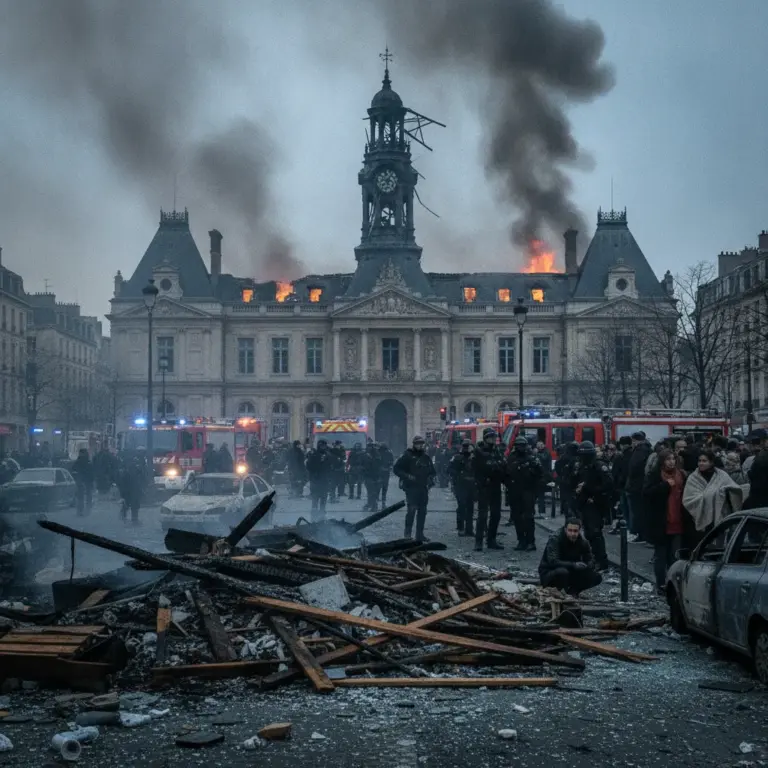
French Prime Minister Sebastien Lecornu admitted on Monday that the nation is facing a complete mess, though many believe that description barely scratches the surface. Widespread rioting over the weekend left major cities like Paris, Marseille, and Bordeaux scarred by looting and arson, including the collapse of a historic clock spire at the city hall in Limoges. With roughly 2,400 arrests made during this latest wave of violence, the chaos follows weeks of student protests fueled by crumbling infrastructure and bleak job prospects. As Interior Minister Laurent Nuñez offered his resignation over the security failure, the atmosphere in France has shifted from mere civil unrest to a palpable sense that the state has lost control.

The volatility on the streets mirrors a deeper political paralysis within the halls of power. President Emmanuel Macron recently condemned the violence in a televised address, yet he failed to provide a concrete roadmap for recovery before departing for a diplomatic trip to the Gulf states. This perceived vacuum of leadership has ignited a fierce blame game among political rivals. While far-left leader Jean-Luc Mélenchon accuses the government of inviting chaos through poor policing, far-right frontrunner Marine Le Pen has seized on the moment to frame the violence as a consequence of uncontrolled migration from impoverished urban suburbs. With Le Pen currently leading in the polls ahead of next spring’s presidential election, many fear that France is sliding toward an era of hardline governance born out of desperation.

Beyond the smoke and sirens lies a systemic economic rot that leaves whoever wins the next election with almost no room to maneuver. An overwhelming majority of citizens now view their country as being in decline, reflecting a mood of national defeatism exacerbated by stagnant growth and skyrocketing inflation. The financial outlook is particularly grim; France is grappling with one of Europe’s heaviest debt burdens, with government debt hitting 119 percent of GDP. Investors are increasingly jittery as political deadlocks prevent any meaningful budget reform, driving up bond yields and threatening further instability.

Analysts warn that this intersection of social rage and fiscal fragility creates a dangerous cycle where neither side can find common ground. The evaporation of the political center has allowed extremists on both ends to feast on public frustration, turning every protest into a campaign rally and every policy debate into a cultural war. For a nation defined by its historical pursuit of grandeur, France now finds itself trapped between an ungovernable street and an insolvent treasury, wondering if it possesses any remaining tools to mend its fractured republic before another winter of discontent arrives.
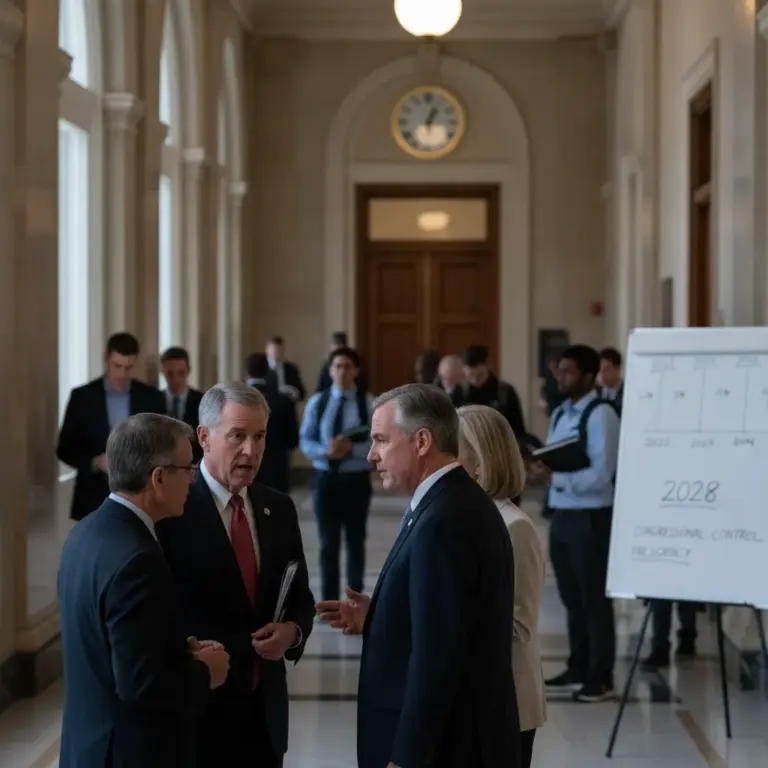
While much of the current political conversation focuses on the immediate fallout of the upcoming midterms, the real story lies in how these results will ripple across the next decade. For those looking past the horizon of Donald Trump’s second term, the stakes are incredibly high. Control of Congress determines more than just which bills pass in the short term; it sets a structural foundation that could either empower or paralyze whoever enters the Oval Office in 2029. Because Senators serve six year terms, the victors of this cycle will remain in power until 2033, potentially acting as a permanent roadblock for a future president from the opposing party.

The Senate map reveals a precarious situation for Republicans, particularly if they struggle to hold ground in traditionally deep red territory. If Democrats manage to flip seats in states like Texas or Alaska, they create a lasting barrier that persists well into the next administration. Conversely, should Republicans maintain their grip on these strongholds or secure upsets in swing states like Michigan, they could leave any incoming Democratic president facing a nightmare scenario of divided government. History shows that since 1989, it has been rare for a new president to start their tenure without their own party controlling both houses of Congress, and doing so often puts an early dagger through their legislative goals and judicial appointments.

Meanwhile, the battle for the House offers a shorter but equally critical lesson in momentum. Historically, opposition parties tend to peak during midterms and see their gains erode during presidential cycles. This means Democrats cannot afford a narrow victory; they need a significant cushion now to avoid losing their footing by 2028. Even small shifts in membership can signal broader trends about voter appetite for specific ideologies heading into a general election year.

Nowhere is this tension more visible than in places like Kansas, where long standing GOP streaks are suddenly under threat. With candidates like Pastor Adam Hamilton attempting to break decades of Republican dominance inruby red territory, there is evidence that traditional partisan boundaries are shifting. Whether it is due to frustrations over agricultural costs or immigration enforcement, these localized battles reflect a larger national volatility. Ultimately every single seat defended or flipped serves as a building block for whichever party hopes to dominate American politics leading toward 2030 and beyond.

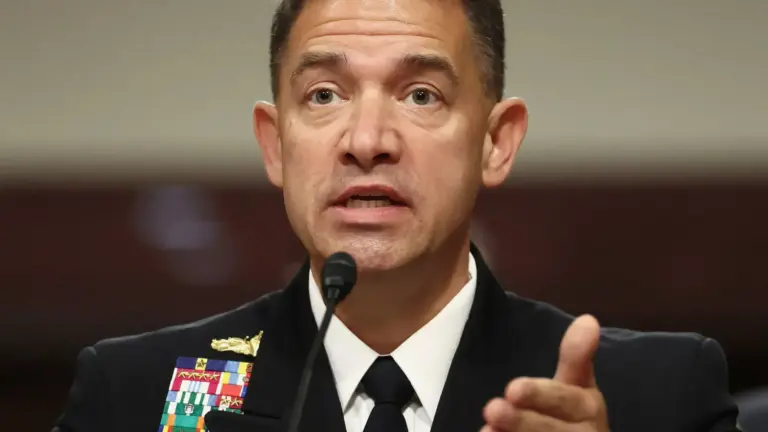
A group of Democratic senators is accusing the Trump administration of deliberately concealing the financial wreckage left behind by the war in Iran. In a pointed letter addressed to Admiral Brad Cooper, the head of U.S. Central Command, five members of the Senate Armed Services Committee argued that keeping the costs of damaged military infrastructure secret from the public is both outrageous and unacceptable. While the military previously cited a price tag of 43.6 billion dollars for the conflict as of early September, lawmakers say that number is misleading because it ignores the massive expenses tied to repairing bases across the region.

Led by Senator Elizabeth Warren, the group is demanding transparency regarding how much money has been spent adapting new facilities and when repairs will actually begin on devastated sites. The senators expressed frustration that while these figures were shared during a closed door classified briefing, they remain hidden from taxpayers. They argue there is no logical reason to classify these estimates, especially since foreign allies and adversaries are already well aware of how heavily the conflict has impacted U.S. military readiness.

The physical toll of the fighting has been severe, with over 50,000 service members deployed and nearly 900 wounded alongside 21 deaths. Reports from the Pentagons own watchdog confirm that strikes have crippled facilities in countries ranging from Kuwait and Qatar to Saudi Arabia and Jordan. One of the most striking examples was at Naval Support Activity Bahrain, where acting Navy Secretary Hung Cao admitted that Iranian attacks essentially blew the hell out of the base, creating a logistical nightmare that hampered resupply efforts for the USS Abraham Lincoln and worsened living conditions for sailors onboard.

By refusing to disclose a final bill for these damages, officials claim they are still deciding which structures are worth rebuilding. However, Senators Warren and her colleagues maintain that this lack of clarity puts more troops at risk and obscures the true scale of what they describe as a reckless debacle. For these lawmakers, revealing the full financial burden is not just about accounting but about holding an unauthorized war accountable to those paying for it through their taxes and their lives.

The atmosphere at Netflix has turned cold following a wave of layoffs that claimed roughly one thousand jobs, but the real shockwave hitting Hollywood was the sudden dismissal of chief content officer Bela Bajaria. While cutting six percent of a global workforce is significant, losing the woman who steered the platform’s creative direction for a decade felt like a targeted strike. Industry insiders suggest the purge may have less to do with artistic failure and more to do with optics for Wall Street. With stocks fluctuating and an earnings report looming, observers note that someone often has to take the fall to appease investors when growth plateaus.

Bajaria leaves behind a complicated legacy characterized by her gourmet cheeseburger philosophy, a strategy focused on delivering broad, accessible hits rather than niche prestige pieces. Under her watch, Netflix saw massive success with franchises like Wednesday and various international breakouts. However, critics argue that the platform has lacked a genuine cultural phenomenon on the scale of Stranger Things in years. The shift toward recruiting YouTubers and podcasters suggests a desperate search for new ways to capture attention as traditional scripted series struggle to maintain long term buzz in an era of rapid binging and immediate cancellations.

As Peter Rice steps into the void, bringing a pedigree from the Oscar winning days of Fox Searchlight, questions remain about whether Netflix will pivot back toward high brow cinema or lean further into efficient, mass market consumption. There is also a growing concern regarding diversity in leadership across the industry, as Bajaria becomes one of several female content chiefs recently ousted from major streaming services. Ultimately, these moves signal a company transitioning from its disruptive youth into a mature corporate entity where maintaining subscriber loyalty is far more important than chasing critical acclaim.

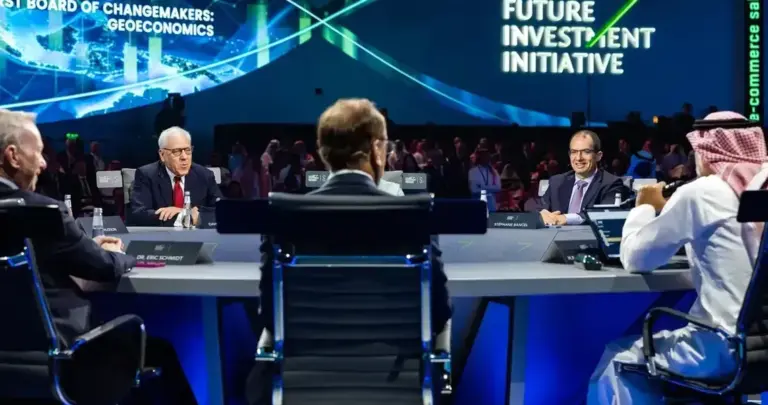
Saudi Arabia has decided to postpone its flagship Future Investment Initiative in person following intense pressure from Wall Street executives and escalating regional instability. While the kingdom has long used the summit as a showcase for its economic transformation, several indicators now point toward a retreat. Most tellingly, rooms at the Ritz Carlton in Riyadh, typically reserved exclusively for the event’s elite attendees, have suddenly become available for public booking. This shift comes alongside the cancellation of other major gatherings, including Riyadh Fashion Week and various charity events tied to the crown prince, as Houthi attacks continue to threaten stability within the kingdom.

The decision reflects a growing logistical nightmare fueled by severe security warnings. With the Riyadh airport facing disruptions and many businesses instructing employees to work from home, hosting thousands of international financiers became nearly impossible. Major Western governments currently advise against non-essential travel to the region, creating significant hurdles for corporate risk management teams and skyrocketing travel insurance premiums. Reports suggest that organizers had spent days debating virtual alternatives after high profile executives began canceling their trips en masse.

For Saudi leadership, however, this postponement carries more than just logistical weight; it represents a diplomatic challenge. The kingdom has historically viewed presence at these summits as a litmus test for loyalty among global business titans. In the eyes of Riyadh, those willing to land in a conflict zone are seen as true partners worthy of lucrative contracts, while those who stay away are labeled fair weather friends. By delaying the gathering, Saudi Arabia must now navigate how to maintain its image as a safe harbor for trillion dollar investments while dealing with an increasingly volatile security landscape.

Federal prosecutors have detailed a high stakes espionage plot involving a former OpenAI engineer who allegedly turned his technical expertise toward spying on his own employers. Abdulrahman Alfozan, a Saudi national and permanent U.S. resident, is accused of installing a sophisticated listening device in an executive conference room where some of the world most sensitive AI strategies and government partnerships were discussed. According to court documents, Alfozan used AI chatbots to refine the device, ensuring it could capture compressed audio and remain encrypted to avoid detection while plugged into the back of a television.

The investigation reveals that Alfozan was not acting alone or without incentive. He was reportedly in constant contact via WhatsApp with a member of the Saudi royal family who urged him to abandon the United States to support a burgeoning AI initiative in the Kingdom. The recruitment effort grew personal and urgent, with the royal figure telling Alfozan that Saudi Arabia needed him more than America did. While tempted by the offer, Alfozan allegedly delayed his departure until his millions in company equity had fully vested.

Authorities believe the breach posed a significant threat to national security, given that government officials frequently visited the compromised room to discuss proprietary research and strategic capabilities. Evidence suggests this may not have been an isolated incident; investigators found photos on Alfozan’s phone showing other potential surveillance targets within the office, indicating a broader plan to map out and monitor internal communications before making his exit.

The scheme came crashing down just days before Alfozan was set to flee San Francisco on a one way ticket to Riyadh with his wife and infant son. Arrested on October 9, he watched as his family departed shortly after on flights funded by a Saudi military official. Now facing severe charges and terminated from his position at OpenAI, Alfozan remains under heavy judicial scrutiny as prosecutors argue that his deep financial ties and foreign connections make him an extreme flight risk pending trial.

Saudi Arabia has pushed back its premier global investment gathering until 2027, citing a dangerous surge in militant activity within the region. The Future Investment Initiative, which was slated to begin on October 26 in Riyadh, serves as a cornerstone for the kingdom’s efforts to move away from an oil dependent economy. Organizers announced the delay shortly after a series of devastating attacks carried out by Iran backed Houthi rebels, including a strike on King Khalid International Airport that left twelve people dead and hundreds more wounded.

The postponement represents a significant blow to the event’s prestige, as it was set to host some of the most powerful figures in global finance. Industry titans such as JPMorgan Chase CEO Jamie Dimon and BlackRock’s Larry Fink were among those scheduled to speak. The volatility of the current environment became so acute that some attendees had reportedly arranged complicated travel itineraries involving flights into neighboring Bahrain followed by long drives to reach the capital safely.

Military officials say they continue to intercept missiles and drones targeting critical infrastructure, ranging from regional airports to Saudi Aramco oil facilities along the Red Sea coast. While the Saudi military claims several successful interceptions over the weekend, Houthi militants maintain they are continuing their campaign against strategic sites across the country. This escalating violence reflects a broader deterioration of stability in the Middle East as tensions between US and Iranian interests spill over into surrounding territories.

Since its inception in 2017 under Crown Prince Mohammed bin Salman, the summit has been used as a stage to unveil massive projects like NEOM and attract foreign capital. By delaying the event for nearly three years, Riyadh is acknowledging that international investors may be unwilling to enter a zone where high profile targets remain under constant threat. For now, organizers have promised that new dates for 2027 will be released soon once conditions improve.