Archive

October 16, 2026

Browsing

Minnesota’s seventh congressional district is preparing for a political clash tonight as incumbent Republican Representative Michelle Fischbach takes the stage against Democratic challenger Erik Osberg. The two candidates are scheduled to meet for a televised debate starting at 8 p.m. EDT, providing voters with a rare opportunity to see the opposing visions for the region side by side. Viewers can tune into the event via a live stream hosted by Prairie Public.

Representative Fischbach enters the discussion fighting for her fourth term in office, leaning on her experience in Washington to maintain her seat. Her opponent, Osberg, brings a different perspective to the race as a local small business owner looking to flip one of the most challenging districts for Democrats in the country. While Osberg hopes to mobilize a new coalition of voters, current projections suggest an uphill battle given the leanings of the constituency.

The contest centers on a massive geographic area that defines much of Western Minnesota, stretching from the borders of North Dakota and South Dakota all the way up to Canada. Because it remains the most conservative stronghold in the state, analysts like Amy Walter of the Cook Political Report currently categorize the race as solid Republican territory. Despite those odds, both candidates view this debate as a critical moment to define their priorities for the people living across this vast rural expanse.


Representative Alexandria Ocasio-Cortez recently took her campaign trail to the rugged terrain of Michigan’s Upper Peninsula, accompanying Democratic Senate nominee Abdul El-Sayed on a tour of a region typically defined by its deep red leanings. On the surface, the trip looked like a standard effort to boost a running mate ahead of November, but according to analyst Jonathan Allen, the visit was actually rooted in a much larger strategic gamble regarding the future of the Democratic Party.

Ocasio-Cortez is attempting to dismantle the long held belief within her own party that progressive candidates are liabilities in swing districts. For years, centrist Democrats have argued that moving too far left alienates moderate voters and hands victories to Republicans. By venturing into the rural north, Ocasio-Cortez wants to prove that socialists and progressives can be just as effective at persuasion as moderates, potentially clearing a smoother path for her own eventual aspirations for the presidency in 2028.

The logic behind visiting the Upper Peninsula is partly based on existing data rather than blind optimism. Despite its overall conservative reputation, El-Sayed performed strongly in several northern counties during his primary, beating out more centrist opponents. Even Kamala Harris found success in Marquette County. Rather than focusing solely on converting lifelong Republicans, the goal is to energize these pockets of isolated progressives and ensure every potential blue vote turns out on election day.

If El-Sayed manages a victory in such challenging territory, it provides Ocasio-Cortez with powerful leverage against the party establishment. She has already suggested that winning in places like Michigan could fundamentally change how campaigns are run across the country. To her and her allies, a win in the heartland would serve as definitive proof that ideology does not have to be sacrificed for electability, effectively rewriting the political calculus for any aspiring leftist leader.

Millions of retirees are preparing for a welcome bump in their monthly checks, but the announcement of a 3.6 percent cost-of-living adjustment for 2027 has reignited an urgent conversation about the solvency of the nation’s social safety net. For the average retired worker, this means a monthly increase of roughly 75 dollars, bringing their typical payment up to 2,170 dollars. While these funds provide critical relief against rising costs for healthcare and groceries, they arrive alongside a sobering warning from the Committee for a Responsible Federal Budget regarding a looming financial cliff.

The tension lies in the gap between immediate needs and future stability. Analysts warn that unless Congress takes decisive action, beneficiaries could face a staggering 22 percent cut across all benefits by 2032 when the retirement trust fund is projected to run dry. Without legislative intervention, incoming tax revenue would only cover about 78 percent of scheduled payments, creating a precarious situation for those relying on the program for survival. This fiscal deadline puts immense pressure on lawmakers to find a balance between maintaining current promises and ensuring the system does not collapse entirely.

Adding complexity to the debate is a growing economic divide between generations. While older adults generally report greater financial comfort, many young adults are struggling to make ends meet even as their payroll taxes sustain today’s retirees. This friction has led some advocates to suggest capping cost-of-living increases for high-income earners—some of whom may see annual boosts exceeding 2,200 dollars—to stretch available funds further. However, organizations like AARP argue that any such caps would unfairly penalize seniors who are already struggling to keep pace with actual inflation.

Ultimately, the latest adjustment serves as both a lifeline and a reminder of the systemic fragility within Social Security. With Medicare premiums also expected to climb next year, the modest increase provides temporary breathing room but fails to resolve the underlying math problem facing the trust fund. As the 2032 exhaustion date draws closer, the clash between those demanding protected benefits and those calling for structural reform continues to intensify in Washington.

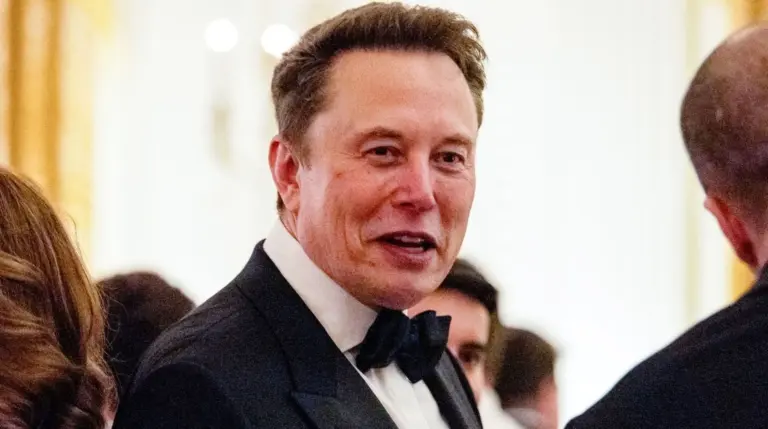
After nearly ten years of anticipation and a string of missed deadlines, Tesla is finally preparing to pull back the curtain on its next generation Roadster. The highly anticipated reveal is scheduled for Thursday morning at a SpaceX test site in McGregor, Texas, with the event being livestreamed to fans worldwide. This latest attempt comes after years of teasing and delayed promises that have left some early adopters frustrated.

The new sports car aims to push boundaries far beyond traditional automotive engineering by incorporating aerospace technology from Musk’s other venture. Most notably, the vehicle is rumored to feature cold gas thrusters intended to assist with acceleration and braking, potentially even allowing the car to hover. While these ambitious claims have energized loyalists on social media, industry analysts suggest that the low volume of this luxury model will likely provide little more than symbolic value rather than a significant financial boost for Tesla.

The road to this unveiling has been fraught with setbacks since deposits were first accepted in 2017. For years, potential buyers paid fifty thousand dollars just for the chance to reserve a spot, only to see target dates slip further into the distance. Even prominent figures like OpenAI co founder Sam Altman joined the chorus of critics, publicly mocking the length of the delay before eventually requesting a refund for his own reservation.

As part of the build up toward Thursday’s event, Tesla recently reopened reservations across North America and China. Company executives are expected to use the presentation to clarify final pricing and establish concrete production timelines. To ensure everything goes according to plan, Tesla has coordinated with the Federal Aviation Administration to establish a strict no fly zone around the Texas facility, avoiding another cancellation like the weather related setback experienced earlier this month.

A sophisticated operation using the machinery of online advertising to deploy invisible spyware has been uncovered by researchers at the University of Toronto. The investigation by Citizen Lab reveals that an Israeli agency called Discover-Tech has been utilizing its proprietary platform, Controlium, to mass profile millions of internet users and selectively infect specific targets. This method represents a dangerous evolution in cyber warfare because it employs zero click technology, meaning victims can have their devices fully compromised without ever clicking a link or downloading a suspicious file.

The process begins within the chaotic, split second auctions that power most modern web ads. As users browse the internet, their personal data is auctioned off to bidders who want to display tailored advertisements. Researchers found that Discover-Tech used these innocuous looking ads for things like mobile games or telecom services to harvest identities and IP addresses. Once a high value target was identified, such as a journalist or government official, malicious code could be sent directly to their device in seconds, granting hackers total access to encrypted messages, emails, photos, and even live microphone feeds.

The scale of the operation appears vast and indiscriminate in its reach. While dozens of devices at the broadcaster Al Jazeera were specifically flagged as compromised, evidence suggests millions of people across Brazil, Mexico, Yemen, and Czechia were served these profiling ads. Further analysis indicates that users on networks belonging to NATO, the United Nations and various European government entities may have also been exposed. This widespread infiltration highlights a critical vulnerability in how the global ad tech ecosystem operates with almost no regulatory oversight.

Security experts are now calling for urgent intervention from lawmakers and cybersecurity agencies to close these systemic loopholes. Because the infrastructure relies on legitimate advertising channels already trusted by browsers and operating systems, detecting these attacks is incredibly difficult for traditional security software. According to those at Citizen Lab, this discovery provides the first concrete technical proof that the opacity of programmatic advertising can be weaponized with pinpoint precision to conduct state level surveillance on a global scale.

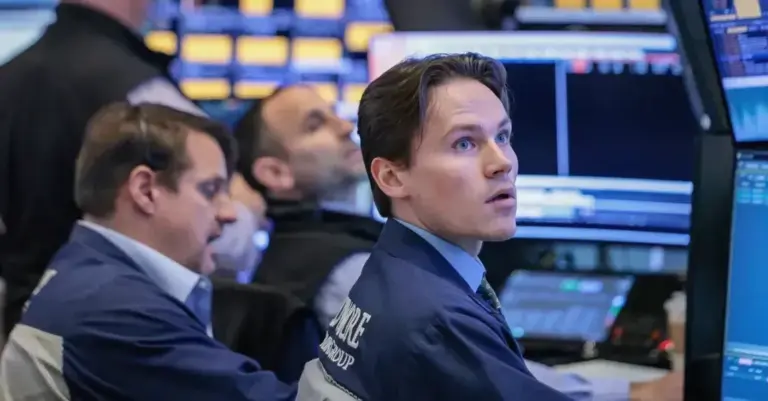
The euphoria surrounding artificial intelligence is meeting a cold dose of reality as U.S. stocks begin to slide just one week after reaching historic peaks. Investors who previously poured trillions into the sector are now questioning when those massive bets will actually pay off. This shift in sentiment is visible in the numbers, with the Nasdaq dropping more than three percent from its recent high and the S&P 500 slipping as well. Much of this anxiety stems from reports that revenue growth at industry heavyweight Anthropic has started to slow, signaling that even the most successful players in the space might be hitting a plateau.

Beyond individual company performance, geopolitical tensions are adding fuel to the fire. There is growing apprehension that memory chip producers in China could outpace their Western counterparts, potentially flooding the market with an oversupply of hardware and crashing prices. At the same time, lenders are becoming nervous about the debt used to fund sprawling AI data centers. Some investors have already begun selling off bonds tied to these facilities, fearing that future AI revenues simply won’t be enough to cover the staggering costs of construction.

This volatility is starting to ripple beyond Wall Street and into the wider economy. While many average Americans do not hold tech portfolios, they are tethered to this boom because nearly half of this year’s U.S. economic growth has been driven by tech spending. This surge created a wealth effect that kept consumer spending steady even as middle and low income families struggled with inflation. Now, prominent voices like economist Ed Yardeni are lowering their targets for the S&P 500, citing a combination of cautious investors and persistent worries over high interest rates.

The stakes for the general public remain high because any prolonged decline in tech valuations could jeopardize overall national growth. With business inflation recently hitting its highest level since late 2022, consumers are already feeling squeezed by rising costs and slowing job prospects in certain sectors. Analysts warn that if the equity sell off continues alongside elevated energy prices and stagnant hiring, the fragile balance supporting American consumer spending could finally break, turning a market correction into a broader economic headache.

Porsche is fighting back against a brutal financial downturn with a daring new weapon known as the Mission S. After seeing profits plummet by a staggering ninety three percent last year, the German automaker is pivoting away from its recent struggle to balance electric ambitions with petrol crossovers. Instead of releasing another limited edition toy for billionaires, Porsche has unveiled a full production supercar designed to sit atop the entire brand hierarchy, effectively positioning itself even higher than the legendary 911.

Visually, the Mission S is a masterclass in heritage blending. While it maintains the unmistakable face of a Porsche with those iconic headlights and torpedo wings, its silhouette draws inspiration from some of the most revered names in racing history. From nods to the Carrera GT and 959 in its sweeping roofline to a center radiator fan that recalls the dominant 917 endurance racer, the car manages to feel aggressive yet refined. Design chief Tobias Sühlmann describes it as a holistic approach to the future, though looking at it feels like a love letter to everything that made Porsche famous.

Inside, the company has taken a defiant stand against the modern trend of oversized tablets. The cabin is an analog sanctuary inspired by the spartan layouts of the 550 Spyder and 356, featuring tactile rotary switches and deep sports seats that wrap around the driver. In place of a massive infotainment screen, owners will find a simple mount for their smartphones, ensuring that nothing distracts from the act of driving.

While official powertrain details remain under wraps, speculation is swirling about whether Porsche will introduce a flat eight cylinder engine to differentiate it from the nine eleven’s flat six. Some industry insiders point toward potential collaborations or inspirations similar to recent high horsepower prototypes seen from tuning legends like RUF. To cement this connection between past and future, Porsche chose New York for the reveal—the same city where the groundbreaking 550 Spyder debuted over seven decades ago—signaling that while they are chasing recovery, they aren’t forgetting who they are.