Archive

November 2026

Browsing

For many American families, holiday gatherings have become tactical exercises in avoidance. With political tensions at an all time high, dinner table conversations are often carefully curated to exclude any topic that might spark a confrontation. This atmosphere creates a prevailing sense that the country is split down the middle, divided by irreconcilable differences and fundamentally different visions for the future of society.

However, recent research suggests that this perception of total fragmentation may be an illusion. Data analyzing over one hundred different policy issues reveals that Americans actually agree on far more than they realize. While the rhetoric coming from political leaders emphasizes conflict, the actual preferences of citizens across the spectrum frequently align when stripped of party labels. It appears that while we are fighting over who represents us, we often want the same outcomes.

The discrepancy lies in the gap between identity politics and specific policy goals. According to experts interviewed by Lisa Desjardins, much of the national friction is rooted in tribalism rather than genuine disagreement over how to solve problems. People are increasingly identifying with their political teams first and their beliefs second, meaning they may oppose a policy simply because it is associated with the opposing side, even if they personally support its core objective.

Ultimately, these findings offer a glimmer of hope for a nation feeling pushed to its limits. If the divide is based on branding rather than belief, there is significant room for bipartisan cooperation and social healing. By shifting the focus away from partisan loyalty and back toward shared practical needs, it becomes clear that Americans are often speaking in one voice, even if they are shouting through different microphones.

Argentina’s legislature has taken a decisive step toward implementing President Javier Milei’s radical economic vision by passing a bill that forbids the Central Bank from printing money to finance government spending. The Chamber of Deputies gave final approval to the measure on Thursday, officially redefining the bank’s core mission as the preservation of the national currency’s value. For years, previous administrations relied on the central bank as a piggy bank to cover budget deficits, a practice that fueled an inflationary spiral reaching over 200 percent last year.

In a celebratory statement, Milei’s office described the move as an end to two decades of political interference and systemic plunder within an institution founded in 1935. While the president has seen some success in bringing down inflation since taking office, his aggressive austerity measures have come at a steep cost. Poverty rates have climbed significantly and many economists warn that the country is sliding into a deep recession as overall economic activity continues to shrink.

Beyond monetary policy, Milei is pushing for significant changes to how Argentina conducts its elections. The Senate recently advanced a controversial proposal to suspend primary elections ahead of the 2027 presidential race, while also seeking to cut public funding for political parties and scrap mandatory presidential debates. Supporters argue these moves simplify the electoral process, but critics claim they are designed to shield Milei from early campaign setbacks that could destabilize his momentum or trigger market volatility.

Opponents of these reforms suggest that altering democratic norms serves only to protect the incumbent from accountability. Governor Axel Kicillof expressed concerns that changing the rules mid-game is an attempt to cheat for easier reelection. As the legislative battle unfolds, Argentina remains caught between a high-stakes gamble on libertarian economics and growing public unrest over the daily hardships caused by severe state spending cuts.

The Federal Reserve is facing a challenging balancing act as the latest government data shows inflation climbing once again. According to the Personal Consumption Expenditures price index released Wednesday, annual inflation rose to 3.8 percent in October, up from 3.6 percent in September. This marks the highest reading in five months and leaves inflation nearly two percentage points above the central bank’s long term goal of 2 percent. While the numbers aligned with what economists expected, they add another layer of complexity for policymakers who are currently debating whether to raise interest rates early next month.

Much of the upward pressure has been driven by fuel costs following global oil supply shortages triggered by conflict in Iran earlier this year. Although motorists have seen some relief at the pump recently, with AAA reporting a significant drop in gas prices since the midterms, those savings weren’t reflected in this specific report because it focuses on October figures. The timing of this data is particularly sensitive as officials try to curb rising prices without accidentally stifling job growth or triggering an economic slowdown.

Despite these concerns, there are signs that the economy can handle more tightening. A robust jobs report from earlier this month suggests the labor market remains strong, while recent GDP data indicates that overall economic growth has stayed surprisingly resilient. These factors may give federal officials more confidence to move forward with a rate hike despite the inherent risks to employment. If they decide to pull the trigger in December, it would be their second increase in just four months after a lengthy period of stability.

Market participants seem convinced that action is imminent, with betting tools showing a near certainty that a quarter point hike is coming. Fed Chair Kevin Warsh has remained firm on his commitment to bringing prices under control, emphasizing that cooling off inflation is a primary responsibility of the board. Meanwhile, Wall Street continues to ride a wave of volatility, reacting not only to these macroeconomic signals but also to high profile leadership changes within major artificial intelligence firms like Nvidia and Anthropic.

The Bank of Korea closed out the year with a decisive move on Thursday, pushing benchmark lending rates to 3.25 percent. This latest increase of 25 basis points brings borrowing costs to their highest level in two years, a step taken as policymakers grapple with persistent inflation that refuses to dip toward the government’s two percent target. With October inflation sitting at 2.8 percent, officials warned that price pressures stemming from both supply costs and growing consumer demand are likely to linger for some time.

This aggressive tightening comes amid an unexpected surge in economic momentum. The central bank significantly revised its long term outlook upward, now projecting growth of 3.9 percent for 2026 and 4.1 percent for 2027. Much of this optimism is rooted in the explosive success of the IT sector, particularly semiconductors, which have become the primary engine driving the national economy. Governor Shin Hyun song noted that operating profits in the chip industry alone could hit 700 trillion won, providing the fiscal cushion necessary to weather higher interest rates.

Despite the hike, market reaction remained positive as the Kospi index climbed nearly two percent following the announcement. While Governor Shin suggested that further increases remain possible until inflation stabilizes, some analysts believe the peak may be near. Experts point to a strengthening won and robust growth as factors that could eventually cool price spikes without needing further rate jumps. There is a sense among economists that rather than continuing to raise rates indefinitely, the bank may turn toward targeted regulatory tools to manage risks like skyrocketing property prices.

A high stakes gamble to seize control of Russian energy infrastructure has sparked a firestorm on Capitol Hill after billionaire Todd Boehly and his firm Eldridge Industries announced a plan to acquire the global subsidiaries of Lukoil. The proposed deal involves a complex consortium that includes the U.S. International Development Finance Corporation along with partners from the UAE and Xtellus Partners. At the center of the acquisition is Lukoil International GmbH, the Austrian based arm of Russia’s largest private oil producer, which has been under intense pressure since Western allies imposed sanctions following the invasion of Ukraine.

To navigate strict legal barriers, the group plans to execute a share swap rather than sending liquid capital into Moscow. Under the terms disclosed by Eldridge, Lukoil would trade its total equity in the international subsidiary for restricted shares in various Russian firms. To ensure no immediate funds benefit the Kremlin, any sale considerations would be locked in a restricted custodial account for five years or until current sanctions are officially lifted, effectively severing the parent company from its overseas operations once the deal closes.

Despite these safeguards, the announcement has drawn sharp condemnation from political figures who view the move as an implicit lifeline to Russia. Representative Gregory Meeks expressed outrage over a federal agency taking an ownership stake in such a portfolio while conflict persists in Ukraine, suggesting that the administration is undermining its own strategic goals. This sentiment was echoed across social media by strategists like Jessica Tarlov, highlighting a growing divide over whether such acquisitions represent tactical brilliance or moral failure.

The future of the transaction now rests entirely with regulators at the U.S. Treasury Department’s Office of Foreign Assets Control. While proponents likely argue that removing these assets from Russian influence strengthens Western security, critics maintain that any association with Lukoil during wartime is unacceptable. As OFAC reviews the proposal, the debate reflects a broader tension between corporate opportunism and the geopolitical necessity of maintaining economic isolation against Moscow.

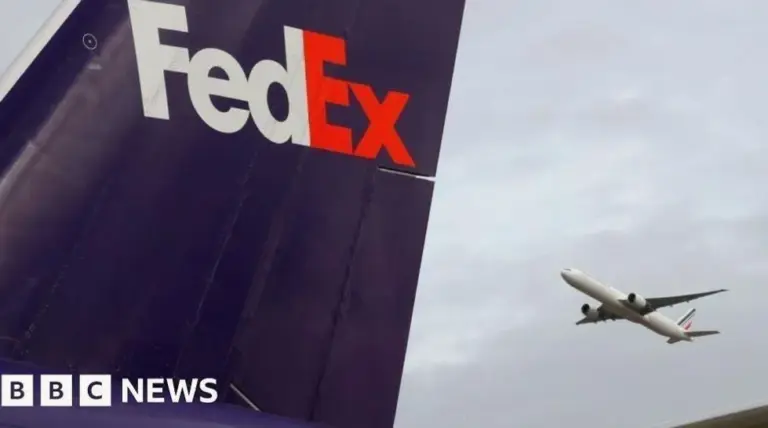
Travelers heading home for the Thanksgiving holiday faced unexpected delays Wednesday night after a FedEx cargo plane slid off the runway at Miami International Airport. The aircraft, a McDonnell Douglas MD-11 arriving from Memphis, veered into the grass around 8:40 p.m. amid heavy rain and gusty winds. While the incident caused significant disruption to air traffic, officials confirmed that neither of the two crew members on board suffered any injuries, and emergency responders found no evidence of fire or smoke at the scene.

The mishap triggered an immediate ground stop for flights bound for Miami, forcing many passengers to wait on tarmacs across the country while airport authorities managed the crisis. With most runways shuttered except for one, the timing proved particularly stressful given the massive volume of holiday travelers moving through South Florida. Some stranded passengers expressed frustration over how a single delivery aircraft could paralyze such a major hub during one of the busiest travel windows of the year.

Witnesses at the airport described a harrowing scene where the pilots seemingly struggled to gain traction on the slick pavement. One employee who saw the aftermath suggested that despite the crew’s best efforts to brake, the combination of poor visibility and wet conditions pushed the plane past its stopping point. This particular overrun occurred on one of the facility’s shorter runways, reigniting local conversations regarding safety standards following a fatal Amazon cargo crash earlier this September.

FedEx released a brief statement expressing gratitude that their crew remained safe and noting that they are working closely with investigators to determine what went wrong. The Federal Aviation Administration has officially opened an investigation into Flight 910, focusing on whether the thirteen mile per hour tailwinds and rainy weather played a primary role in the excursion. Operations eventually returned to normal late Wednesday night once officials cleared the area surrounding Runway 26R.

Travelers heading to South Florida faced an unexpected hurdle on the eve of Thanksgiving when a FedEx cargo plane overshot its runway at Miami International Airport on Wednesday evening. The incident occurred shortly after 8 p.m., forcing the Federal Aviation Administration to implement a temporary ground stop for incoming flights. With nearly every runway shuttered during the chaos, the disruption hit at one of the most stressful moments of the yearly travel calendar.

The aircraft had arrived from Memphis, and while the overshoot caused significant operational delays, officials confirmed that there were no injuries reported among those on board. For roughly ninety minutes, arrivals were frozen and departures stalled, leading to average delays of about an hour for frustrated passengers navigating one of the nation’s busiest holiday hubs. By late Wednesday night, however, the FAA announced that operations were returning to normal.

Adding to the tension was a backdrop of inclement weather, as the Miami Dade area remained under a flood watch with heavy rains sweeping through the region. This logistical nightmare comes on the heels of a massive nationwide system failure earlier this month that paralyzed U.S. airspace for hours. While airport spokesperson Greg Chin thanked travelers for their patience, many spent their pre holiday evening checking airline apps and waiting out the storm in terminals.

US stocks have experienced a meaningful rebound in recent sessions as buyers returned to names that had given them the most trouble.

Nasdaq 100 is up significantly at writing versus its low early on Nov. 25. The bounce demonstrated that investors remain willing to aggressively load up on AI stocks after a steep decline.

But the sustainability of the latest surge depends on whether artificial intelligence companies can turn their spending on chips and data centers into enough profit to justify premium multiples.

And recent research gives investors reason to question how much they are paying.

A sharp bounce can leave most of the damage intact

Nvidia gained 4.7% in Friday’s premarket, but its last closing price was still more than 37% below its October record. A stock down that far needs to rise roughly 60% just to get back to its old high.

That gap helps explain how a rally can look dramatic on a trading screen while leaving the broader selloff largely intact.

The S&P 500 and Nasdaq were still on course for their worst November since 2008, even as both headed for their best week since August.

“The questions that caused the market panic are still unanswered,” XTB research director Kathleen Brooks told Reuters.

Friday’s shortened session could also mean lighter trading, leaving the rebound to face a fuller test next week.

The bubble study’s most telling finding goes beyond 97%

Researchers at “London Business School” and the “University of Cambridge” used nearly 796,000 articles from The Economist to build a gauge of speculative excess.

One model put the odds that AI shares were in a bubble at 97%, while two others put them near 40%.

The wide gap shows how much the estimate depends on the model. The finding that matters more for the rebound is what happened after the gauge rose historically.

Nasdaq returns tended to be weaker over the following year, even after accounting for valuations.

That leaves room for sharp rallies along the way. But it also suggests that shares can look cheap compared with their October highs while still offering disappointing returns from here.

The next test is whether AI spending pays for itself

A data center can be valuable to customers while delivering a thin return to the company that paid to build it.

The amounts that cloud providers spend on chips, electricity and financing will matter alongside how much customers actually pay for AI services.

If usage grows but providers have to cut prices to fill capacity, revenue can climb while profit margins shrink.

Borrowing adds pressure, especially with traders already pricing in a December Federal Reserve rate hike. That makes the next round of earnings a more consequential test than Friday’s rebound.

Investors will get to see whether the companies committing billions to AI are generating enough cash from it to support that spending.

AI disclosure: AI tools assisted with research and drafting of this piece. An Invezz editor reviewed the facts, sources and wording before publication. Any opinions or analysis are Invezz’s, not those of an automated system.

The post Why the recent market rebound may only be temporary appeared first on Invezz

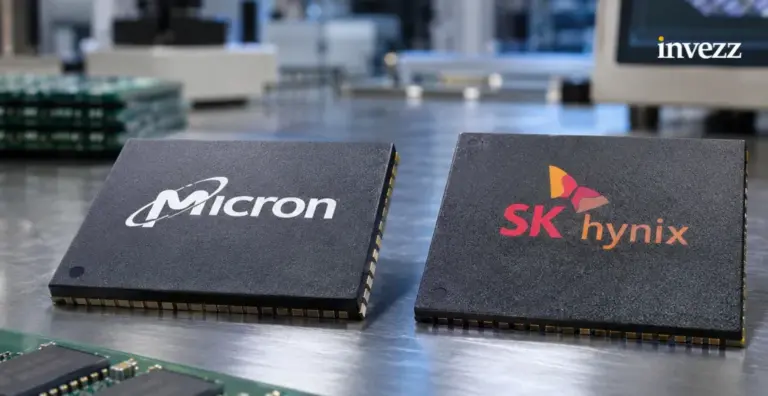
Micron Technology, SK Hynix and SanDisk shares rebounded on Friday as investors returned to technology and artificial intelligence-linked stocks, bringing some relief after a volatile week for the semiconductor sector.

Micron shares MU rose about 1.2% in early trading, while South Korea’s SK Hynix gained around 6% and SanDisk advanced nearly 5.3%.

The recovery extended across the AI trade, with Nvidia, Intel and Advanced Micro Devices (AMD) all climbing higher at open.

Nasdaq opened over 1.5% higher.

However, Friday’s gains came after a steep monthly decline.

Micron has lost more than 35% over the past month, while SK Hynix is down about 24% and SanDisk has fallen 55%.

The recent weakness reflects growing investor anxiety over whether the enormous investment in AI infrastructure will generate sufficient revenue and profits to justify the spending.

Concerns about a Democratic sweep of Congress and the possibility of tighter scrutiny of data centre construction have added to uncertainty around future chip demand.

For memory manufacturers, the central question is whether the current supply shortage and elevated prices can persist as data centre projects face potential delays and customers reconsider how much memory they need.

Analysts warn of mounting memory oversupply risks

BNP Paribas downgraded Micron to Neutral from Outperform earlier this week, warning that the risk of an “oversupply scenario is mounting” in the memory market.

Analyst Karl Ackerman also slashed his price target to $775 from $1,700.

Ackerman expects memory demand to peak earlier than previously anticipated, potentially setting the stage for excess supply as manufacturers bring additional capacity online.

He highlighted permitting delays affecting data centre construction as a significant risk.

The memory and storage industry is “heavily reliant” on data centre projects, with servers accounting for at least half of demand for dynamic random-access memory (DRAM) and NAND flash memory.

If construction is delayed, spending on servers and associated memory could also be postponed.

That would give manufacturers more time to increase supply, potentially narrowing the gap between demand and available capacity.

Another concern is that rising memory prices are prompting technology vendors to reduce the amount of memory used in their products.

Ackerman pointed to Nvidia’s decision to reduce high-bandwidth memory content in its new Vera Rubin Ultra architecture, as well as reductions in memory specifications across personal computers and mobile devices.

The consumer market presents an additional challenge because long-term volume and price agreements are uncommon in the PC and mobile segments.

That makes it harder for memory manufacturers to secure favourable pricing and protect margins when demand weakens.

GF Securities cuts 2027 DRAM price forecasts

Fresh concerns emerged on Friday after GF Securities lowered its forecast for DRAM contract prices in 2027, citing order reductions among Chinese customers.

The Hong Kong-based investment firm now expects quarterly contract price increases of 6%, 3%, 0% and 0% across the four quarters of 2027.

Its previous estimates were 10%, 7%, 5% and 3%, respectively.

The revision reflects weaker demand signals from Chinese cloud service providers, according to data from TrendForce.

In a report published on Friday, TrendForce warned that uncertainty surrounding data centre investment could weigh on DRAM demand over the next two years.

Its base-case scenario sees conventional DRAM contract price increases narrowing throughout 2027, with prices potentially stabilising in the second half before declining in 2028.

A more pessimistic scenario suggests prices could begin falling as early as the fourth quarter of 2027 if server manufacturers reduce procurement and inventories.

TrendForce cited lower server DRAM demand from Chinese cloud providers, potential restrictions on data centre development and expanding production capacity among memory manufacturers.

“The shortage of GPU has led to the server DRAM order cut from Chinese CSPs, affecting ~1% of total DRAM demand, which can be absorbed by US [cloud service providers],” GF analysts wrote in a note to clients.

“Besides, consumer DRAM demand is softer due to the order cut of eSSD and spec downgrade of consumer electronics, which will place downward pressure on consumer DRAM pricing, especially for DDR4.”

Supply constraints could support Micron and SK Hynix

Despite the downward revisions, GF Securities does not expect the memory market to move immediately into a prolonged supply glut.

The firm believes DRAM supply could remain tight until 2028, partly because manufacturers are allocating more capacity towards high-bandwidth memory used in AI systems.

That could encourage major suppliers, including Micron, SK Hynix and Samsung Electronics, to remain cautious about expanding conventional memory production.

“If demand weakness persists and prices roll over, the potential production cut is under consideration, which can better support the LTA floor price,” the analysts added.

“We remain constructive on main DRAM vendors including Micron, SK Hynix and Samsung Electronics, as we see the downward revision more limited and potential production cut to maintain price,” the analysts explained.

The contrasting outlooks leave memory investors weighing near-term demand risks against the possibility that disciplined production and continued AI infrastructure spending will keep supply constrained.

Friday’s rebound suggests buyers are still willing to return to the sector, but the durability of the recovery will depend on whether memory prices and data centre investment can withstand the emerging headwinds.

AI disclosure: AI tools assisted with research and drafting of this piece. An Invezz editor reviewed the facts, sources and wording before publication. Any opinions or analysis are Invezz’s, not those of an automated system.

The post Micron, SK Hynix, SanDisk stocks rise but what’s the verdict on demand outlook? appeared first on Invezz


US stocks opened sharply higher on Friday as investors returned from the Thanksgiving holiday and bought beaten-down technology and artificial intelligence shares.

The Dow Jones Industrial Average rose 507 points, or 1%, at the opening bell. The S&P 500 gained 1.2%, while the Nasdaq Composite jumped 1.5% to kick off a shortened trading day.

All three major benchmarks were headed for strong weekly gains, despite mid-week volatility.

Technology stocks led the advance, with Nvidia rising 3% at the opening bell. Anthropic kicked up 5% in early trading.

AMD, Broadcom and other major AI-linked companies are also sharply recovering some of their recent losses.

The rebound follows a turbulent week on Wall Street, with the Nasdaq 100 briefly touching bear-market territory on Wednesday before recovering.

The week began with a strong rally, with Jensen Huang returning as the CEO of Nvidia. However, the gains soon fizzled as the AI trade continued to unravel.

Concerns about the enormous cost of AI infrastructure, rising borrowing requirements and the ability of companies to generate sufficient returns have weighed on investor sentiment.

“The recovery in stocks seems technical. The questions that caused the market panic are still unanswered,” Kathleen Brooks, research director at XTB, told Reuters. “If these gains can be sustained on Friday, it would suggest that enthusiasm for the AI trade is back.”

“(Investors) felt that the selloff that we saw going into last Friday was overdone. It would be more of a steady push up from here, possibly,” said David Morrison, senior market analyst at Trade Nation.

Asian tech stocks lead global recovery

The buying interest was already visible across international markets before Wall Street reopened.

South Korea’s Kospi surged 4.3% on Friday, supported by strong gains in semiconductor stocks.

Japan’s Nikkei 225 added 2.1%, while China’s Shanghai Composite rose 3.7%.

European markets were also trading higher, with the FTSE 100 up around 0.7%.

The global recovery has offered some encouragement to US investors, although the shortened Black Friday trading session could result in relatively thin volumes.

Fed rate hike bets remain a concern

Meanwhile, markets are still contending with the prospect of another Federal Reserve interest rate increase.

Fed funds futures are pricing in approximately 99% odds of a 25-basis-point hike at the December 9-10 meeting, which would take the target range to 4%-4.25%.

Persistent inflation and stronger-than-expected economic growth have strengthened expectations of further monetary tightening, potentially limiting the scope for a sustained stock market recovery.

Torsten Slok, chief economist at Apollo Global Management, believes the market turmoil provides a strong argument for caution.

“If they look at inflation, they should be hiking. But if you look at the outlook for AI, they should maybe be cutting,” Slok told the Financial Times.

Oil prices are another concern.

Brent crude was trading around a three-week high in the session before paring some gains to reach $95.88 a barrel, while West Texas Intermediate was up over 1% near $84.54.

Prices have gained over several sessions amid attacks on tankers in the Strait of Hormuz and energy infrastructure in Saudi Arabia.

Investors are also assessing the implications of fresh tariff proposals from the Trump administration.

The US has proposed additional duties on imports from 14 trading partners, including China, Japan, India and the European Union, citing concerns over excess industrial capacity.

AI disclosure: AI tools assisted with research and drafting of this piece. An Invezz editor reviewed the facts, sources and wording before publication. Any opinions or analysis are Invezz’s, not those of an automated system.

The post Nasdaq opens 1.5% higher as US equities head for weekly gains despite volatility appeared first on Invezz