Archive

November 24, 2026

Browsing

President Donald Trump is facing significant backlash after taking the extraordinary step of pressuring Nvidia’s board to reinstate Jensen Huang as CEO. Coming on the heels of a bruising midterm election cycle that left Democrats poised for historic congressional majorities, the intervention sees the president spending precious political capital on a gamble involving one of the world’s most influential tech leaders. The decision follows a period of turmoil for Huang, whose tenure was marred by reports of multiple affairs, including one with a woman suspected by U.S. officials of having ties to Chinese intelligence.

In a candid interview with CNBC, Trump admitted he spoke directly with Nvidia’s board to facilitate Huang’s return, asserting that current evidence suggests the executive is not a national security risk. This move highlights several hallmarks of Trump’s governance, specifically his obsession with stock market performance and his tendency to sympathize with powerful figures embroiled in personal scandals. However, critics argue that using government influence to steer corporate personnel decisions contradicts his own party’s rhetoric against socialist-style state interference in private business.

The reinstatement has sparked immediate friction within the Republican party, as senators express confusion over the haste of the decision. Some GOP lawmakers pointed out that just days prior, Nvidia’s board had expressed no intention of bringing Huang back, citing a lack of candor and inappropriate relationships with subordinates. Senator Pete Ricketts noted that such behavior typically warrants termination rather than restoration, suggesting that the pressure from the White House may have overridden standard corporate governance and ethical considerations.

The risks extend beyond politics into matters of global security. With reports surfacing that Huang’s associate maintained contacts with China’s civilian spy agency, members of Trump’s own cabinet are reportedly uneasy about potential leaks regarding advanced semiconductor technology. By shielding Huang now, Trump may have inadvertently invited intense scrutiny from the incoming Congress and created deep rifts within his own administration between those prioritizing market stability and those focused on counterintelligence. If future investigations reveal that Huang was indeed compromised, the president will find himself defending an appointment tied to a massive breach of national security at a moment when his allies are less inclined to protect him.
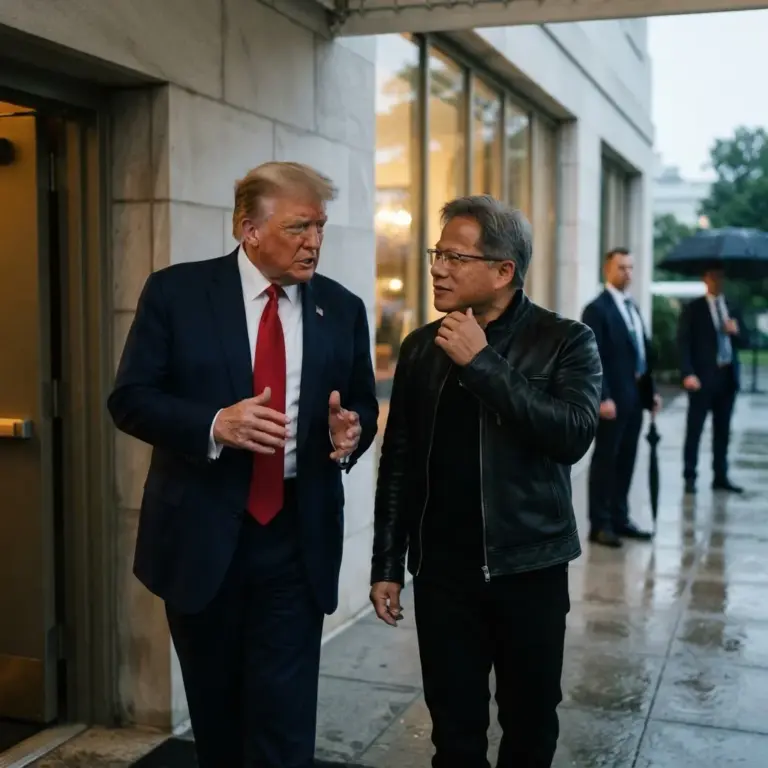
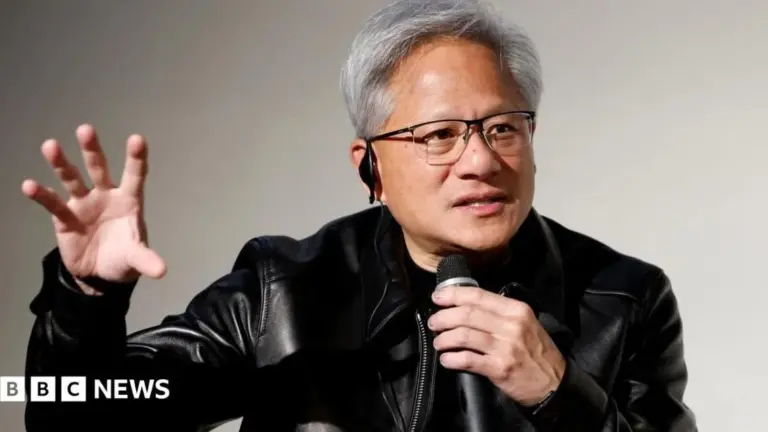
President Donald Trump orchestrated a sweeping and secretive pressure campaign over a single weekend to ensure Jensen Huang was reinstated as the CEO of Nvidia, according to sources familiar with the matter. The intervention came after a deepening stock market sell-off left the president convinced that only Huang’s leadership could stabilize the economy. Just eleven days after resigning amid a scandal involving alleged links to Chinese intelligence through a personal relationship, Huang was placed back at the helm of the AI giant following an unprecedented series of directives from the West Wing.

The operation was led by Vice President JD Vance, who utilized his connections in Silicon Valley to lean on Nvidia’s board of directors. While intelligence agencies had raised concerns regarding Huang’s association with Alice Huang, an executive linked to Chinese interests, top administration officials worked quickly to dismiss these risks. In a direct breach of traditional corporate boundaries, President Trump personally phoned the board to vouch for Huang, framing him as an indispensable asset whose presence was vital for American economic dominance and the ongoing artificial intelligence boom.

This sudden reversal follows a period of intense volatility for Nvidia and the broader markets. After promoting CFO Colette Kress to the top spot, investors remained uneasy, leading Trump to briefly consider pushing for former Apple CEO Tim Cook to step in. However, upon returning from a trip to Asia where he noted that Chinese leader Xi Jinping held Huang in high regard, Trump decided that bringing back his ally was the only viable path forward to avoid what he feared could be another historic financial collapse reminiscent of the Great Depression.

Despite previous public statements from Nvidia’s board claiming that Huang’s conduct violated company norms and ethics, they capitulated Sunday night after receiving heavy input from senior government levels. The restoration of Huang has been celebrated by allies such as Elon Musk but continues to fuel criticism among lawmakers who are investigating whether national security protocols were ignored for the sake of stock prices. For now, however, the administration considers the mission accomplished, viewing Huang as one of America’s great stars returned to play.

Jensen Huang has been reinstated as the CEO of Nvidia following a high profile period of turmoil and a direct push from President Donald Trump. The move comes after a whirlwind few weeks that saw Huang resign amid allegations of poor judgment regarding personal relationships and lingering concerns over national security. In a conversation with CNBC, President Trump described the reinstatement as exciting news, admitting he spoke with the company’s board both directly and indirectly to advocate for Huang’s return. While acknowledging that some lapses in judgment occurred, the president emphasized that those incidents were largely unrelated to the core mission of the company and insisted that Huang is a genius whose contributions are invaluable to the country.

The path back to leadership was not without significant friction, particularly given previous warnings from Secretary of State Marco Rubio concerning Huang’s ties to an individual alleged to be a Chinese spy. Despite these red flags and reports of inappropriate workplace conduct, Trump dismissed the intelligence threats as unproven and claimed to have provided the necessary assurances to the board. This intervention sparked immediate backlash from political opponents, including Senator Elizabeth Warren, who labeled the decision reckless. Warren argued that reinstating Huang underscores an urgent need for stricter bipartisan export controls to ensure that critical artificial intelligence technology does not end up in the hands of foreign adversaries.

Internal divisions within the Republican party further complicated the narrative, with some lawmakers arguing that Nvidia should have simply moved forward without its founder rather than succumbing to presidential pressure. Critics suggest that prioritizing one man’s career over stringent security protocols could jeopardize the United States’ lead in the global AI race. However, market reactions tell a different story, as Nvidia shares surged following the announcement. For many investors, the sheer amount of capital tied up in AI infrastructure makes Huang’s technical expertise more important than his personal controversies.

Beyond the boardroom drama, this reversal occurs against a backdrop of broader instability in the tech sector and shifting political winds following recent midterm elections. With trillions of dollars projected for AI investment over the coming years, there is growing skepticism among economists about whether these massive bets will eventually yield real profits. While Huang expressed honor at returning to serve his shareholders and employees, his comeback leaves several open questions regarding how Nvidia will navigate increasingly strict U_S government licensing requirements for selling advanced chips to Chinese firms moving forward.

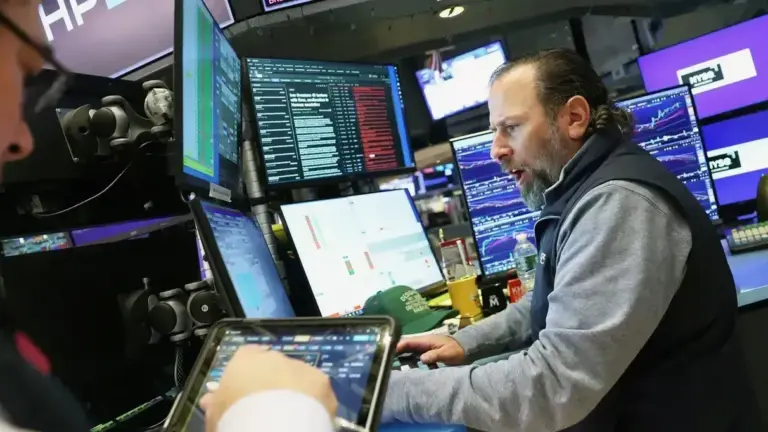
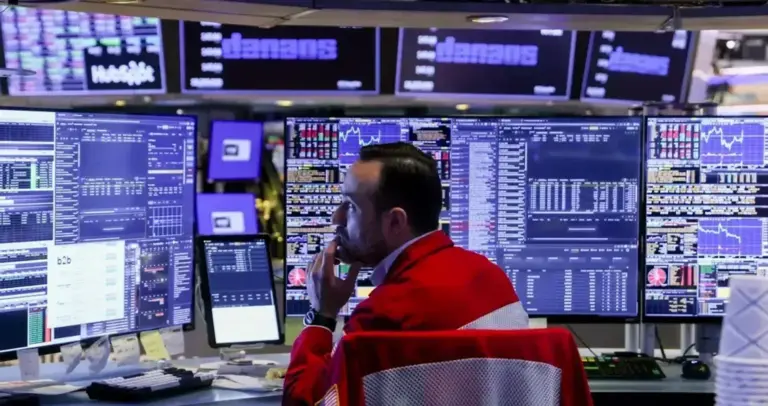
Wall Street staged a dramatic recovery on Monday as investors rushed back into artificial intelligence and data center stocks, effectively erasing much of the panic from a devastating previous week. The rally was ignited by an unexpected announcement from Nvidia, where the board officially reinstated Jensen Huang as CEO. This move sent shockwaves through the market in the best way possible, propelling Nvidia shares upward by 35 percent and lifting other semiconductor giants like AMD and Broadcom along with it.

The surge provided a necessary lifeline to major benchmarks that had just spiraled into correction territory. Only days prior, the Nasdaq Composite had suffered its worst weekly performance since March 2020, while the S&P 500 plummeted more than eight percent in five days. On Monday, however, the mood shifted entirely. The Dow Jones Industrial Average leaped over 1,600 points and the Nasdaq 100 jumped more than seven percent as traders abandoned their caution and bet heavily once again on the future of AI hardware.

This optimism extended beyond chipmakers to include neocloud providers and data center operators such as CoreWeave and IREN, both of which saw double digit gains during early trading. While some volatility lingered around Anthropic following its record breaking debut on the Nasdaq, the overall sentiment turned bullish overnight. Investors seemed convinced that Huang’s return provides the stability needed to steer the industry through recent scandals and uncertainty.

Despite the celebratory atmosphere on trading floors, analysts warn that there are still significant hurdles ahead this week. Markets remain on edge awaiting critical inflation data from the Bureau of Economic Analysis this Wednesday. With traders anticipating a potential interest rate hike in December, today’s explosive growth may be tested by whether actual economic indicators can support these soaring valuations in the long term.

Wall Street experienced a massive relief rally on Monday as investor confidence surged following the unexpected announcement that Jensen Huang has been reinstated as CEO of Nvidia. The move sent major indices skyrocketing, with the S&P 500 climbing as much as 5.6 percent and the Nasdaq 100 leaping nearly 8 percent. Even the Dow Jones Industrial Average joined the frenzy, surging by as many as 1,600 points. The reaction was so intense during premarket trading that the Nasdaq briefly triggered a volatility halt, signaling just how desperate traders were to pivot away from last week’s dismal performance.

The sudden reversal comes after a brutal stretch for AI-linked stocks that had pushed several major benchmarks into correction territory. Just days ago, markets were reeling from a combination of poor debuts for emerging AI firms and a leadership crisis at Nvidia involving personal scandals and national security concerns surrounding Huang. Those worries had wiped billions in value off the tech sector, leaving Nvidia shares down significantly from their peaks. However, Monday’s reinstatement acted as a catalyst for optimism, pushing Nvidia’s stock up roughly 30 percent and adding nearly one trillion dollars in market value in a single session.

This wave of enthusiasm extended far beyond Nvidia itself, lifting an entire ecosystem of hardware and infrastructure providers. Companies like Dell Technologies and various semiconductor manufacturers saw double digit gains as investors bet that Huang’s return would stabilize the industry and reignite growth in data center expansion. This ripple effect reached global shores as well, sparking gains across European markets in Germany, France, and the United Kingdom, while helping Asian indexes recover from earlier lows.

Despite the celebratory mood on Trading floors, some veteran analysts are urging caution. While figures like Ed Yardeni believe we are seeing a healthy correction rather than the start of a full scale bear market, others warn that volatility could persist for weeks before a true floor is established. With investigations by the Securities and Exchange Commission reportedly looming over Nvidia due to previous leadership turmoil, some observers suggest that while the immediate panic has subsided, the road to total stability remains uncertain.

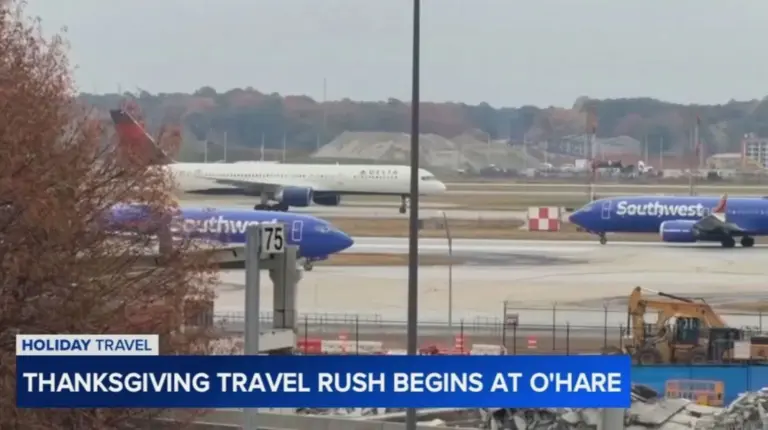
The annual Thanksgiving scramble has officially arrived at O’Hare and Midway airports, bringing a surge of passengers and a spike in ticket prices. Travelers arriving early on Monday found terminals bustling as thousands began their journeys home. Despite domestic fares climbing by roughly 17 percent this year, families insist that the emotional reward of reuniting with loved ones far outweighs the financial sting and the general stress of navigating crowded gates.

The start of the holiday window hasn’t been without its hiccups. A staffing shortage at the Chicago Terminal Radar Approach Control triggered a temporary ground stop at O’Hare earlier this week, though operations resumed shortly after midday. Meanwhile, a separate national technical failure at Delta Air Lines left over 1,600 flights delayed across the country. While systems have since stabilized, these disruptions served as an early reminder of how fragile air travel can be during peak seasons.

For many passengers, the goal is simply to escape the Midwestern chill for warmer climates or special events. Some families are trading traditional turkey for seafood feasts in sunny Florida, while others are heading east to witness milestones like children performing in the Macy’s Thanksgiving Day Parade. To dodge potential delays, several savvy travelers opted for airport hotels to ensure they could reach their boarding gates without any last minute traffic scares.

Looking ahead, aviation officials warn that the heaviest volume is yet to come, with projections suggesting over 103,000 people will pass through O’Hare alone next Sunday. For those choosing to drive instead of fly, experts advise avoiding the roads on Tuesday evening and Wednesday afternoon to bypass the worst congestion. Local authorities also remind those greeting returning relatives to utilize designated cell phone lots rather than idling on highway shoulders to avoid steep fines from state police.

The Trump administration took decisive action on Monday by adding Megaspeed, the Singaporean firm central to a swirling political and corporate scandal, to the Commerce Department’s restrictive entity list. This move effectively bars United States companies from selling critical semiconductor technology or other sensitive hardware to Megaspeed and its foreign affiliates unless they secure a specific government license. According to official filings from the Bureau of Industry and Security, several other firms across Malaysia and Thailand were also swept up in the crackdown due to risks that advanced computing tools could be diverted toward unauthorized users.

The timing of the ban coincides with a chaotic period for industry giant Nvidia, whose board voted Monday to reinstate Jensen Huang as CEO following direct encouragement from President Donald Trump. Huang had stepped down just two weeks prior amidst intense scrutiny regarding personal scandals, most notably an alleged affair with Alice Huang, a Megaspeed executive suspected of spying for China. While shipments already in transit may still reach their destinations, any future deals now face what officials describe as a presumption of denial during the licensing process.

This decision follows months of internal friction within the administration. While Treasury Secretary Scott Bessent noted that the Pentagon and State Department had supported blacklisting Megaspeed for some time, Commerce Secretary Howard Lutnick previously held sole authority over the final call. Now facing bipartisan pressure from lawmakers demanding transparency regarding chip export controls, Lutnick has finally moved forward with the restrictions while the Justice Department continues to investigate whether Megaspeed illegally shipped Nvidia chips into China.