Archive

November 16, 2026

Browsing

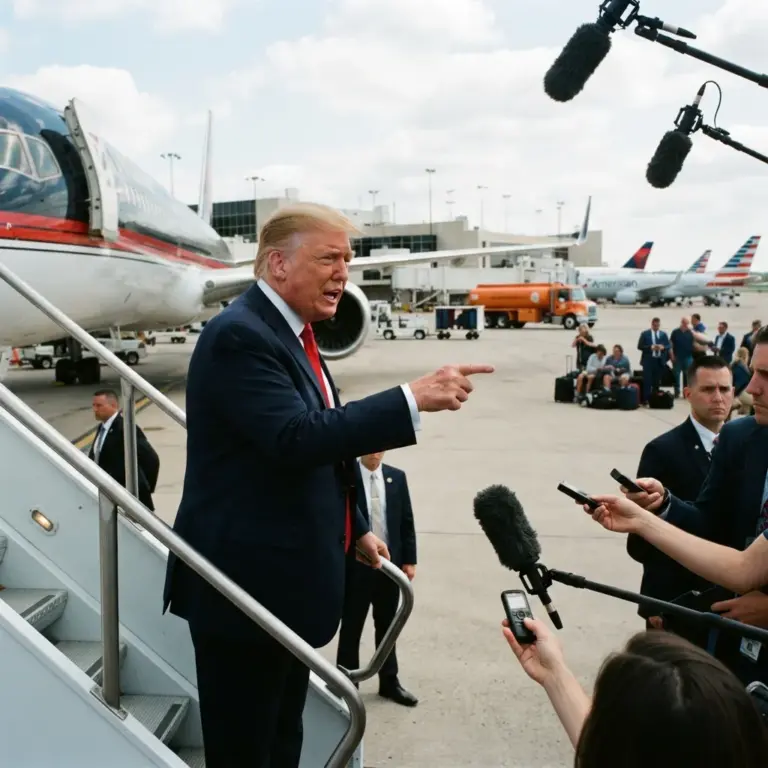
Former President Donald Trump has finally weighed in on the historic FAA ground stop that paralyzed air travel last Friday, using a tone and strategy that many observers found predictable. After remaining quiet for nearly thirty six hours while travelers faced chaos across the country, Trump took to social media to lay the blame squarely at the feet of Joe Biden. The outburst marks a sharp turn from his initial silence, which had already begun to draw scrutiny from critics and political opponents alike.

The delay in communication became a point of contention during recent interviews with administration officials. Transportation Secretary Sean Duffy stepped in to defend the president, telling CNN that while Trump had not spoken publicly, he was reportedly in constant contact with aviation officials behind the scenes as they scrambled to resolve the technical failure. Duffy attempted to shift the narrative away from current management, arguing that the disaster was the result of decaying infrastructure and ancient systems inherited from prior administrations.

Despite those defenses, the timing of Trump’s comments suggests a desire to pivot the conversation toward political rivalry rather than operational failures. By framing the systemic collapse of flight operations as a legacy of the Biden era, Trump is leaning into familiar rhetoric centered on government incompetence. This move comes as his team continues to navigate early friction within various departments, including ongoing disputes over national security labels and commerce regulations.

The carefully constructed image of Jensen Huang as the unflappable visionary behind Nvidia has shattered following revelations of systemic dishonesty and compromising personal ties. What began as a series of pointed inquiries from The New York Times regarding his connection to Alice Huang, the leader of Singaporean data center firm Megaspeed, eventually spiraled into a scandal that threatened the very foundation of the chip giant. For over a year, Huang and his inner circle fought a desperate battle to frame the relationship as purely professional, employing high priced crisis consultants and leveraging family connections to stifle any suggestion of impropriety.

The stakes grew exponentially higher when United States intelligence agencies reportedly linked Alice Huang to China’s premier spy network. Despite these alarming security implications, Jensen Huang maintained his denial for thirteen months, stubbornly insisting there was nothing more than business between them. It was only under the weight of insurmountable evidence that he finally admitted to Nvidia’s general counsel that he had been engaged in a clandestine affair with the executive, turning a corporate liability into a personal catastrophe.

As if one betrayal were not enough, further investigations have uncovered yet another layer of deception within the company walls. Reports now indicate that Huang carried out a separate extramarital affair with an executive who worked directly under him, raising serious questions about workplace ethics and conflicts of interest at the highest level of leadership. These overlapping secrets have transformed a narrative of technological triumph into one of moral failure, leaving shareholders and employees wondering how much other truth was sacrificed for the sake of appearances.

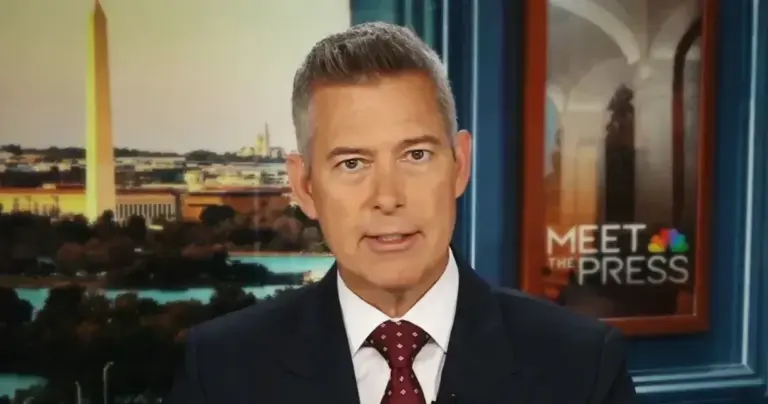
Transportation Secretary Sean Duffy is refusing to apologize for the massive nationwide ground stop that left hundreds of thousands of passengers stranded over the weekend. Speaking on Meet the Press, Duffy acknowledged that the chaos occurred under his leadership but insisted that the failure was the result of decades of neglect by previous presidential administrations and both political parties. He described the current state of the air traffic control system as a broken inheritance, claiming thirty years of underinvestment created a fragile environment prone to exactly this kind of collapse.

The disruptions began Friday when a routine effort by contractor L3Harris to replace a copper line with fiber optics triggered a router failure that overwhelmed the FAA’s telecommunications network. The resulting shutdown caused thousands of cancellations and forced many travelers to spend their Saturday nights sleeping in airport terminals. While Duffy expressed confidence that flights would return to normal by Monday morning as crews and planes were repositioned, he stopped short of guaranteeing that another systemic failure wouldn’t happen again until a full investigation into the root cause is completed.

Throughout his interview, Duffy framed the crisis as an urgent wake up call for Congress to provide more flexible funding. Although billions have already been allocated for radar and radio upgrades, he argued that those funds are too strictly earmarked and leave him without the resources needed for essential software updates and new telecom architecture. Along with OMB Director Russell Vought, Duffy has requested an additional 30.1 billion dollars to overhaul aging airports and create a more resilient digital backbone for the national airspace.

Calling on lawmakers to set aside partisanship, Duffy urged Congress to simply do it, arguing that providing these resources is the only way to prevent future disasters. The White House backed its transportation chief in a statement on Sunday, asserting that President Trump had installed the right leadership to manage the crisis and prioritize public safety. As investigators look into whether the outage was caused by faulty equipment or poor installation, the administration continues to push for a total modernization project intended to integrate traditional air traffic with emerging space industry demands.

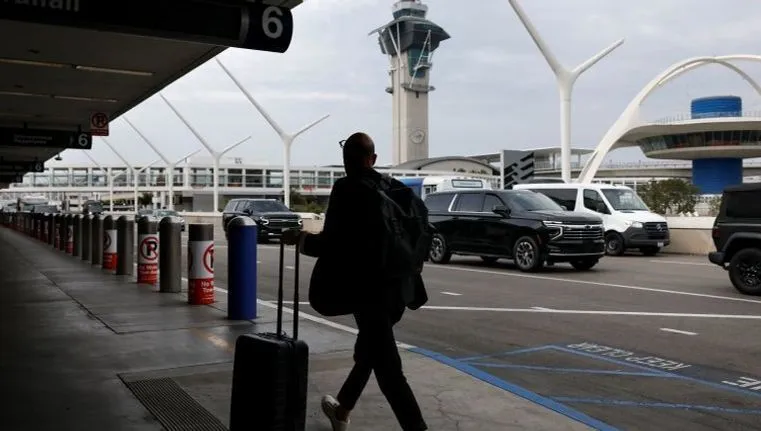
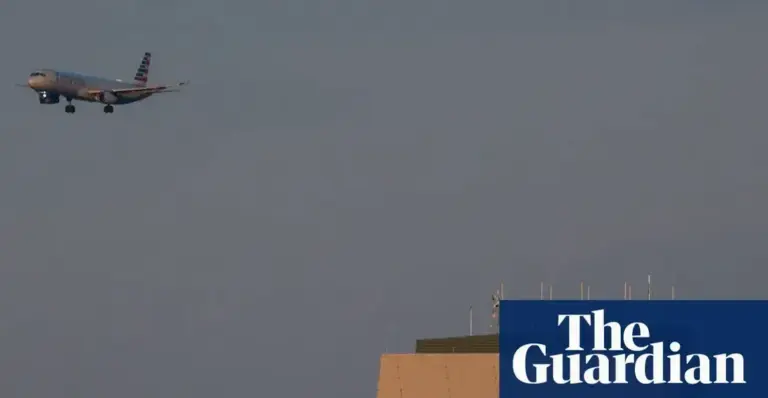
A catastrophic nationwide flight grounding on Friday has ignited a fierce political battle over the future of American aviation infrastructure. Transportation Secretary Sean Duffy is urgently pressing Congress for upwards of 50 billion dollars to overhaul the Federal Aviation Administration’s aging systems, claiming that current technology dating back to the 1990s is no longer viable. This plea comes after a technical failure in El Dorado, Arkansas, involving a transition from copper wire to fiber optics brought the country’s airspace to a standstill.

Democrats, however, are questioning why such a massive sum is suddenly necessary when the agency is still sitting on billions in previously authorized funds. They point to a Republican-led spending bill from last year that provided 12.5 billion dollars, including nearly five billion specifically earmarked for telecommunications upgrades. Critics like Senator Tammy Duckworth and Representative Rosa DeLauro have suggested the administration mismanaged its priorities, arguing that money spent on vanity projects and immigration enforcement should have been diverted toward aviation safety long ago.

Secretary Duffy defended his request during a recent appearance on CNN, explaining that specialized air traffic control equipment cannot simply be bought off the shelf and that existing budgets are merely keeping them on track through 2028. He argues that an immediate infusion of cash is required to accelerate these critical updates and prevent another systemic collapse. While most Democrats remain skeptical of the figure, some moderate voices like Senator Chris Van Hollen have expressed a willingness to provide funding if the administration can formally justify the expense before Congress.

As the clock ticks toward a December funding deadline, Republicans appear determined to push through additional investments regardless of the opposition. Outgoing House Speaker Mike Johnson indicated that FAA funding will be included in an upcoming legislative package, while Senator Eric Schmitt continues to champion his Modern Skies Act as a solution. With Democrats poised to take the majority in January, both parties are racing against time to decide how much taxpayers should pay to modernize skies that many now realize are running on borrowed time.

Miami International Airport became the site of a frightening encounter Saturday night when a Copa Airlines Boeing 737 clipped the nose of a UPS Boeing 767 while both aircraft were navigating the taxiways. The accident occurred around 9 p.m., resulting in minor injuries to two individuals who required medical attention. According to early reports from the Federal Aviation Administration, air traffic controllers had specifically instructed the UPS crew to yield to the Copa flight, which was heading toward its gate, while the cargo plane was preparing for a departure to Bogota.

Passengers aboard the Copa flight described a scene of sudden confusion and panic. One traveler, Cesar Ferreira, recalled hearing his fellow passengers begin to scream just moments before he felt the aircraft jerk violently sideways upon impact. Despite the initial shock inside the cabin, Ferreira noted that the crew acted swiftly to keep everyone calm and seated until the situation was secured. Both airlines released statements emphasizing their commitment to safety and their full cooperation with federal investigators looking into how the breach occurred.

The timing of the collision added fuel to an already tense weekend for American aviation. Just twenty four hours earlier, a massive failure in communication systems forced the FAA to implement an hours long nationwide ground stop, leading to thousands of cancellations and delays across the country. Officials attributed that systemic collapse to botched maintenance during an attempt to transition old copper wiring over to fiber optic cables within air traffic control centers.

The string of failures has sparked a political clash over crumbling infrastructure. Transportation Secretary Sean Duffy pointed toward a lack of congressional funding as the primary reason for these technical vulnerabilities. However, critics argue that the current administration has failed to properly utilize existing funds earmarked for upgrading the aging technology that keeps U.S. airspace safe. While airport officials stated that Saturday’s crash did not disrupt overall operations, it serves as a grim punctuation mark to a period of significant instability in national air travel management.

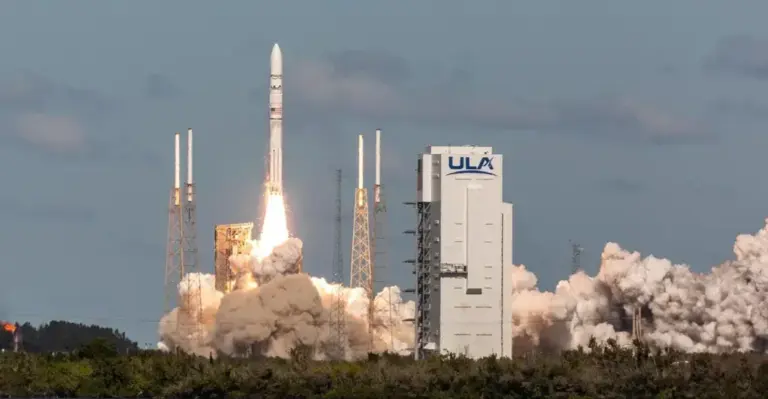
United Launch Alliance experienced a stunning blow to its perfect track record this week when its Vulcan rocket failed during a critical mission for Amazon. The incident marks the first reported failure in the company’s twenty year history, ending in disaster just ten minutes into the flight. A sudden anomaly prevented the vehicle from reaching its intended destination, resulting in the total loss of forty satellites destined for Project Kuiper.

This setback comes at a precarious time for Amazon as it attempts to build out its own low earth orbit network to compete with Elon Musk’s Starlink. While SpaceX has already established a dominant presence in satellite internet, Amazon has struggled to gain momentum, having deployed only a fraction of the hardware needed to mount a serious challenge. This specific flight was meant to kick off an ambitious series of thirty eight launches contracted between the two companies.

Despite the wreckage, both organizations are maintaining a front of stability and cooperation. In a public statement via social media, ULA acknowledged the malfunction and promised full transparency while investigators work to determine exactly what went wrong aboard the Vulcan vehicle. They noted that data confirmed the failure shortly after liftoff from Space Launch Complex 41, though they have yet to pinpoint the root cause.

Amazon echoed this sentiment of resilience, reminding observers that high stakes and inherent risks accompany every space venture, particularly regarding inaugural missions like LV-01. By framing the crash as a learning opportunity rather than a dealbreaker, Amazon signaled that it still trusts ULA to execute its long term vision for global connectivity once the technical glitches are resolved.