Archive

November 14, 2026

Browsing

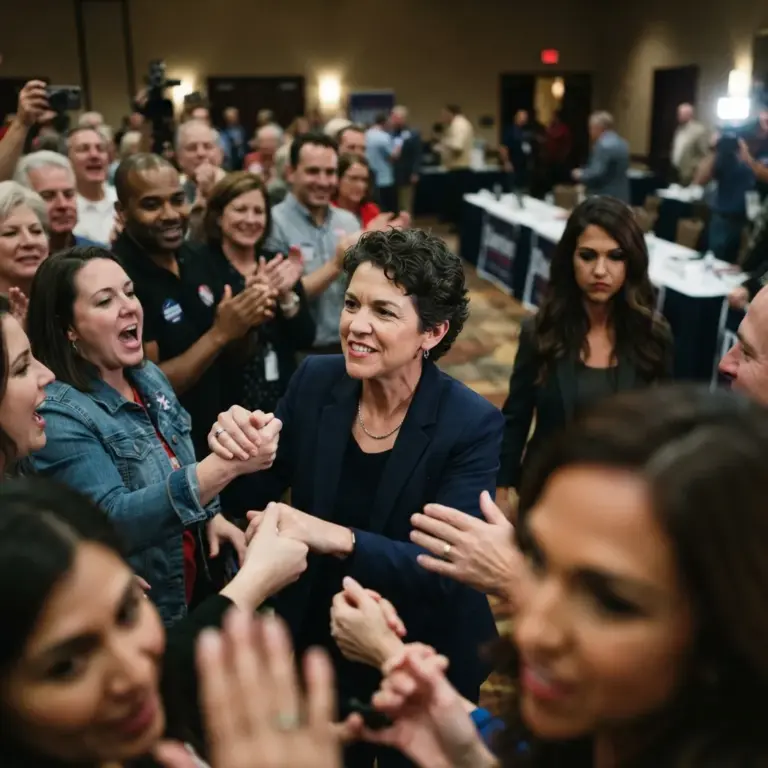
The political trajectory of Lauren Boebert came to an abrupt halt this week as NBC News projected her defeat in Colorado’s Fourth Congressional District. The conservative firebrand, known for her provocative presence in Washington and high profile clashes with colleagues, lost her seat to Democratic challenger Eileen Laubacher. Laubacher, a retired Navy rear admiral and Afghanistan war veteran who previously served on the National Security Council under the Biden administration, framed her victory as a win for character and integrity over self interest during an emotional election night speech to her supporters.

Boebert entered the race having already made a strategic move from the Third District to the deeper red Fourth District following a razor thin victory in 2022. However, that geographic shift provided little protection against a broader national trend that saw numerous GOP incumbents swept away by a wave of anti Trump sentiment. Following the results, Boebert attributed her loss to an onslaught of campaign spending directed at her opponents and criticized the Senate for blocking House approved legislation, suggesting those factors undermined her efforts.

Her tenure in Congress was often defined more by viral moments than policy wins. From heckling President Joe Biden at the State of the Union alongside Marjorie Taylor Greene to being escorted out of a Beetlejuice musical in Denver for disruptive behavior, Boebert remained a constant fixture in the headlines. Her relationship with former President Donald Trump also grew strained toward the end of her term after she broke ranks to support the release of Justice Department files regarding Jeffrey Epstein, prompting Trump to publicly label her weak minded.

Before entering politics as a gun rights activist and owner of Shooters Grill, Boebert rose through the party ranks by upsetting established Republicans like Scott Tipton. While she built a brand as a fierce defender of MAGA values, her legacy remains clouded by frequent interpersonal conflicts on Capitol Hill and highly publicized disputes with both allies and enemies alike. For now, voters in Colorado decided they were ready for a different approach to leadership embodied by Laubacher’s military background and focus on public service.
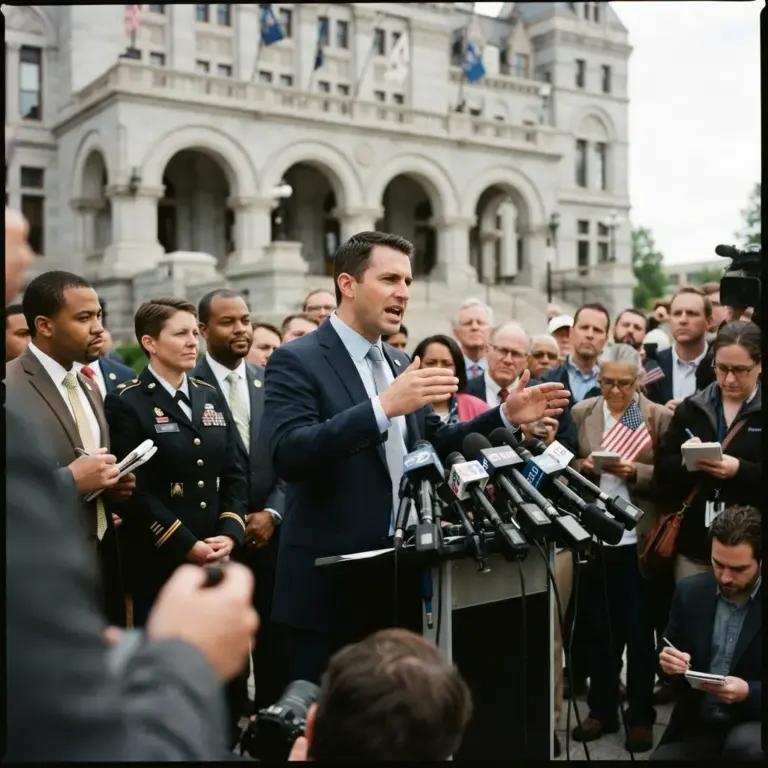

Fresh off his midterm election victory, Luke Bronin is wasting no time in tackling government corruption. He has joined a growing coalition of newly elected members urging House Democratic leadership to implement a strict ban on stock trading for members of Congress and their spouses. Under the proposed rules, lawmakers would be prohibited from dealing in commodities, futures, and derivatives, though exceptions would remain for diversified mutual funds and qualified blind trusts. The movement reflects a broader desire to prevent self enrichment among those holding public office as the party prepares for its upcoming majority.

Meanwhile, Connecticut’s entire Democratic congressional delegation recently backed legislation designed to provide critical financial relief to combat injured veterans. The Major Richard Star Act aims to remove current restrictions that prevent medically retired veterans with fewer than twenty years of service from collecting both full retirement benefits and disability compensation simultaneously. While Senator Richard Blumenthal has attempted to fast track the bill through unanimous consent, single objections have repeatedly stalled progress. Blumenthal remains optimistic that Congress can finalize the measure before the calendar year ends.

In agricultural news, the state has opened a second window for farmers to apply for a fifty three million dollar federal disaster relief program. Eligible applicants have until December ninth to seek funding for damages resulting from extreme weather events throughout 2023 and 2024. The demand is expected to be high; during the first round of applications, nearly one hundred and forty five farmers requested sixty seven million dollars, already exceeding the total available allocation for the state run initiative.

Local tensions have also risen in West Hartford where striking union workers at Triumph Group gathered on Veterans Day to demand better pay and benefits. Members of UAW Local 405 argue that while the aerospace component manufacturer has seen significant profits, those gains haven’t reached the workforce. They were joined by state officials and local legislators in calls for the company to return to the negotiating table, noting that many of the affected employees are themselves veterans who feel abandoned by their employer.

SpaceX is preparing for one of its most daring tests yet as the massive Starship rocket aims to lift off from South Texas, circle the globe, and touch back down on its own landing pad in less than a day. While the spectacle highlights Elon Musk’s ambitions for Martian colonization, the success of this behemoth may create a logistical nightmare for NASA. As SpaceX shifts its focus toward this next generation of space travel, it plans to phase out the Falcon 9, the reliable workhorse that currently serves as the primary taxi for American astronauts heading to the International Space Station.

The transition creates a precarious gap in orbital access. For years, the Dragon capsule atop a Falcon 9 rocket has been the gold standard for reliability, but SpaceX executives now view that hardware as outdated technology. Company president Gwynne Shotwell recently likened the Dragon to a minivan, arguing that while it works for short trips, it is entirely unsuitable for a six month journey to Mars. However, since there is little commercial profit in ferry services for government astronauts compared to high margin ventures like Starlink and AI, SpaceX appears ready to abandon the minivan regardless of whether NASA has another ride lined up.

This shifting dynamic represents a complete reversal of fortunes from two decades ago. In 2008, SpaceX was nearly bankrupt and survived only thanks to a critical lifeline from NASA that allowed them to keep developing their early rockets. Today, those roles are flipped. With billions in revenue pouring in from satellite internet subscriptions and artificial intelligence projects, NASA’s contracts have become small potatoes in comparison. The agency is no longer the benefactor but rather a client dependent on a partner whose priorities have moved far beyond low Earth orbit.

Beyond human flight, the decision to wind down Falcon operations threatens to leave both civilian and military payloads stranded on the ground. Analysts suggest thousands of planned launches could vanish by 2030, leaving the Pentagon scrambling for alternative providers who can match SpaceX’s scale and speed. While officials claim confidence that other suppliers can fill the void, history suggests that once Starship becomes operational several times a day, there will be no looking back toward the era of smaller rockets.

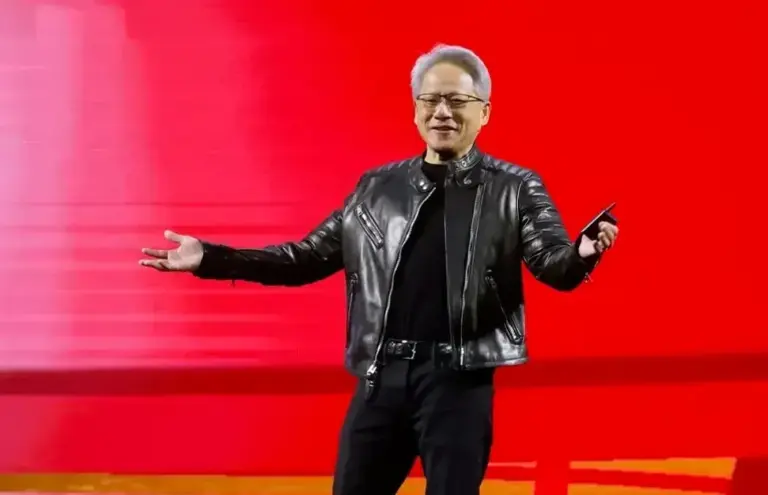
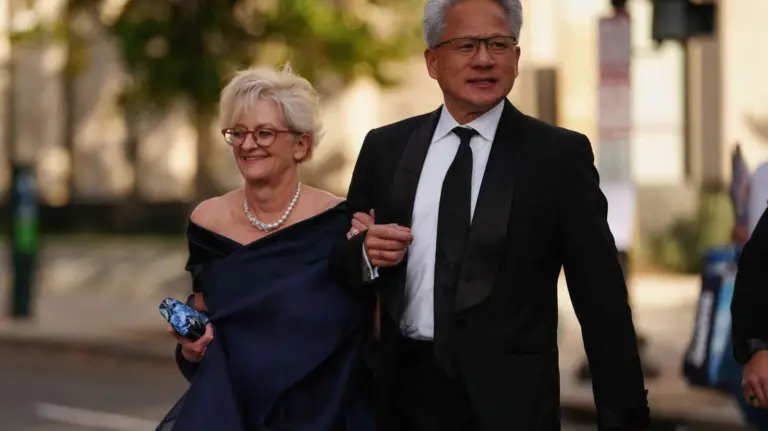
The tech world has been shaken by the rapid collapse of Jensen Huang’s tenure as CEO of Nvidia, a downfall triggered by a series of scandals that blend private infidelity with grave national security concerns. While Huang once stood apart from the volatile public personas of other AI pioneers, he now finds himself at the center of a federal firestorm. At the heart of the crisis is an admission of multiple extramarital affairs, including one with Alice Huang, an executive at Singaporean firm Megaspeed. U.S. officials suspect Alice Huang acted as a Chinese spy, potentially leveraging her relationship with the Nvidia chief to funnel sensitive information back to Beijing.

The implications extend far beyond a broken marriage, as investigators scrutinize whether these personal ties compromised American interests in the global AI arms race. Reports suggest that Megaspeed may have used its massive purchases of Nvidia chips to illegally supply China, leading to a Justice Department probe. Adding fuel to the fire are allegations from lawmakers that the Trump administration ignored warnings about Huang’s compromising relationship in exchange for financial cuts from export sales. This revelation has prompted Democratic leaders to launch formal investigations and summon both Huang and Commerce Secretary Howard Lutnick to testify before Congress.

Inside Nvidia, the situation was equally chaotic, characterized by systemic boundary violations and internal friction. In addition to the external security risk, revelations emerged regarding Huang’s relationships with subordinates, including Vice President of Healthcare Kimberly Powell and another unnamed employee. By Wednesday night, a visibly defeated Huang stepped down from the company he co-founded 33 years ago. Sources describe him as appearing shattered during his exit, while simultaneously expressing deep skepticism toward his successor, interim CEO Colette Kress, whom he reportedly viewed as incapable of steering the company’s strategic vision.

Now facing potential legal repercussions and public disgrace, Huang has agreed to testify before Congress ahead of Thanksgiving. As Nvidia attempts to stabilize under new leadership and navigate strict government restrictions on chip exports, the industry is left grappling with how such immense power was concentrated in a man whose personal lapses may have endangered U.S. technological superiority. For now, the focus remains on what secrets were shared in those private moments and how much damage was done to national security before the house of cards finally fell.

The tech world is currently buzzing with chaotic reports regarding Nvidia CEO Jensen Huang, though the conversation has shifted from graphics cards to a dizzying series of personal allegations. Observers are jokingly questioning whether the speed at which new romantic entanglements are surfacing suggests some kind of social singularity, where the drama accelerates faster than the hardware the company produces. While these rumors provide plenty of fodder for internet speculation, they have begun to overlap with far more serious concerns involving international espionage.

At the center of the storm is Alice Huang, whose alleged relationship with the CEO has drawn scrutiny from government officials. Reports suggest that Donald Trump received warnings last year about her potential ties to Chinese intelligence services, specifically concerning her business dealings. The situation took a turn toward the bureaucratic when it was revealed that Nvidia allegedly stepped in during a Commerce Department investigation into her company, raising questions about where corporate loyalty ends and national security begins.

This intersection of private luxury and geopolitical tension leaves many wondering how such distractions fit into the leadership of one of the most influential companies in AI history. As critics joke about whether high productivity tools were actually designed to free up time for multiple affairs, the real focus remains on chips and China. For now, the public is left weighing whether this is simply a case of celebrity gossip or a genuine liability for a firm sitting at the heart of global technological warfare.

OpenAI has officially dissolved its independent robotics division, redistributing those researchers into the company’s broader research and applied organizations. While such a move might look like a retreat to outside observers, the company insists it is actually a strategic evolution. According to a spokesperson, robotics remains central to the firm’s long-term goals, but the internal structure is changing because the nature of the technology has shifted. The shift was made evident this week at a major academic robotics conference in Austin, where OpenAI had reserved a booth that ultimately remained empty and unmarked.

The decision marks a pivot away from creating niche AI specifically designed for machines and toward a belief in embodied AI. Essentially, OpenAI believes that the massive general purpose models they are already building for language, vision, and code can simply be plugged into hardware to act as its brain. Recent tests involving GPT 6 Astra suggest this theory holds water, with the general model outperforming specialized robotic software in simulated tasks. By treating robotics as a downstream application of general intelligence rather than a unique engineering problem, OpenAI hopes to streamline its development process and avoid duplicating effort across different teams.

This reorganization also aligns with an urgent push by CEO Sam Altman to eliminate side quests and curb staggering operational losses. With quarterly losses reportedly hitting nearly eleven billion dollars, the company is under immense pressure to focus on core products as it eyes future funding rounds and a potential public offering in 2027. Moving robotics under the leadership of Mark Chen and Greg Brockman allows the company to concentrate its computing power on frontier models that serve multiple purposes simultaneously rather than maintaining expensive, siloed departments.

However not everyone agrees that specialized robotics brains are obsolete. Some experts argue that while general models provide great reasoning, they lack the real world deployment data gathered by robots working on actual factory floors. Despite these debates over methodology, OpenAI continues to aim for a public demonstration of its own humanoid robot by 2027. For now, the company is betting that once you solve general intelligence, solving the physical movement of a machine becomes a relatively simple extension of that knowledge.

The sudden resignation of Jensen Huang from Nvidia has sent shockwaves through both Silicon Valley and the halls of power in Washington, marking a dramatic end for the leather jacket clad visionary who built the world’s most pivotal chipmaking empire. Huang stepped down on Thursday following explosive allegations that he engaged in an affair with Alice Huang, an executive at the Singaporean firm Megaspeed who is suspected of being a Chinese spy. While the corporate transition sees Colette Kress stepping in as interim chief, the political storm surrounding the former CEO is only just beginning to intensify.

Lawmakers on both sides of the aisle are now scrambling to determine if this personal entanglement compromised U.S. artificial intelligence dominance or leaked critical national security secrets. Republicans, currently holding control of Congress for a few remaining weeks, have moved quickly to summon Huang to Capitol Hill, with Senate Banking Committee Chair Tim Scott threatening subpoenas to ensure the ex-CEO provides answers regarding protected technology. The scrutiny extends beyond Huang himself, reaching deep into the Trump administration as questions arise about why Commerce Secretary Howard Lutnick may have stalled crackdowns on firms smuggling Nvidia chips into China.

The timing of the scandal creates a volatile political landscape, as Democrats prepare to seize control of the House and Senate in January. Figures like Senator Elizabeth Warren and Minority Leader Chuck Schumer are already signaling that Nvidia will be a primary target for oversight once they take power. They are demanding full transparency concerning export control compliance and have ordered federal officials to preserve all communications related to advanced AI shipments destined for China or diverted entities.

As the legal pressure mounts, Huang appears to be coordinating his initial responses with House committees led by Representative Brian Mast, including panels focused on intelligence and China relations. These upcoming testimonies, conducted under oath, aim to uncover whether the intimacy between a titan of industry and an alleged foreign agent created a backdoor for adversaries to bypass strict trade restrictions. For now, what began as a tabloid scandal has evolved into a sweeping probe into the intersection of private profit and global security.