Archive

October 2026

Browsing

Donald Trump arrived in San Antonio this week to shore up support for Republican candidates, but the atmosphere suggests a party deeply divided over its leadership. During a rally frequently interrupted by protesters, the former president continued to champion figures like Attorney General Ken Paxton, even as leaked audio reveals a much colder reality behind closed doors. In those recordings, Paxton reportedly lamented that Trump’s influence had dragged down his own polling numbers, citing inflation and the conflict in Iran as primary hurdles rather than the president’s agenda.

The tension extends far beyond Texas. A recent analysis indicates that two thirds of Republican candidates in competitive House and Senate races are actively distancing themselves from Trump to appeal to independent voters. From Susan Collins in Maine to Ashley Hinson in Iowa, GOP nominees are quietly breaking ranks on key policies or playing down their ties to the president as his approval ratings hit new lows. This strategic pivot highlights a growing desperation among candidates who fear that loyalty to the top of the ticket may cost them their seats.

While Trump continues to lash out at ungrateful former allies and double down on endorsements of scandal plagued figures, legal battles are mounting back in Washington. Democrats have filed lawsuits alleging that the administration is using taxpayer funds for illegal propaganda through pro Trump advertising campaigns. With critical debates heating up across swing states like Iowa, the Republican party appears to be fighting a two front war: one against Democratic challengers and another against the gravity of its own leader’s unpopularity.

Jaguar has finally pulled back the curtain on the Type 01, marking a high stakes transition into an all electric future that is already sparking intense debate. While the automotive world focuses on the aesthetics, the machine beneath the skin is a powerhouse of engineering. Boasting a massive 1,015 horsepower and 1,007 pound feet of torque, the luxury brand is leveraging its success in Formula E to bring race track efficiency to the open road. With all wheel drive and precision steering, the vehicle aims to redefine performance for a new era of sustainable luxury.

The technical specifications suggest a car designed for long distance capability without sacrificing speed. Equipped with a usable 118 kilowatt hour battery pack and an advanced 850 volt architecture, Jaguar expects a range of roughly 400 miles per charge. For those worried about downtime, a high speed charger can push the battery from ten to eighty percent in just twenty two minutes. These innovations were honed through years of competition and factory refinement in the English Midlands, resulting in a highly aerodynamic frame with a drag coefficient of 0.23.

Despite these impressive numbers and an expected price tag between 120 thousand and 130 thousand dollars, the conversation surrounding the Type 01 has shifted away from performance toward pure controversy. Early reactions have been sharply divided, with critics questioning whether the daring new look abandons the timeless elegance associated with the Jaguar legacy. Some observers have gone so far as to call it devoid of personality, while others find it refreshing compared to other futuristic rivals like Tesla’s Cybertruck.

As Jaguar prepares to roll these vehicles into United States dealerships by mid 2027, they face a challenging balancing act. They must convince traditionalists that this radical departure is progress rather than an identity crisis. Whether buyers will embrace this provocative vision or mourn the loss of classic styling remains to be seen, but there is no denying that Jaguar has ensured everyone is talking about their return to the market.

Federal Reserve officials are preparing the public for one final interest rate increase before the year concludes, though they remain pointedly vague about exactly when that move will happen. According to meeting minutes released Wednesday, a vast majority of policymakers believe another hike is necessary to combat inflation that has stubbornly remained above target for over half a decade. This cautious stance comes as the central bank balances a resilient labor market against the persistent threat of rising prices.

While sixteen of eighteen forecasting officials expect another bump in rates, the committee is avoiding any firm commitment to a specific date. Decisions regarding upcoming meetings on October 28 and December 9 will be driven entirely by incoming data rather than a preset schedule. This flexible approach follows a period of intense speculation from Wall Street, where many traders initially bet on an October increase following hawkish remarks from Chairman Kevin Warsh about removing accommodation from monetary policy.

Recent economic indicators suggest the Fed might not feel pressured to rush into its next move. The latest personal consumption expenditures price index showed core inflation at 3 percent for August, which remains above the desired 2 percent goal but fell below general expectations. Despite these slightly cooling numbers, officials expressed concern during their September discussions that inflation could prove sticky given strong economic growth and an employment market operating near maximum capacity.

Beyond domestic rates, the Fed is keeping a close eye on surging Treasury yields, which have reached heights not seen since 2002. Officials attributed this spike to a combination of anticipated rate hikes and massive investments in artificial intelligence. Even efforts by Treasury Secretary Scott Bessent to stabilize markets through debt buyback programs have yet to significantly dampen those yields, leaving investors uneasy even as the Fed suggests it may hold steady throughout much of 2027 after this final projected push.

McDonald’s is facing a federal lawsuit in Chicago following allegations that it used an artificial intelligence tool to orchestrate pricing across its network of independent franchises. The legal action, proposed as a nationwide class-action suit, claims that the company violated antitrust laws by creating an information-sharing platform that effectively fixed prices for consumers. While most U.S. stores are independently owned and technically responsible for their own pricing, prosecutors argue that the corporate office used transaction data to inflate menu costs through a process disguised as optimization.

The case was sparked by Michael Thomas, an Illinois resident who noticed inconsistent pricing for his standard order even within his own neighborhood. His experience mirrors frustrations felt by other customers in cities like New York, where patrons report significant price gaps between different boroughs. These discrepancies have fueled concerns that the company uses location-based data to hike prices in high-traffic areas, leaving budget-conscious diners feeling squeezed during a period of widespread inflation.

McDonald’s has pushed back strongly against these accusations, stating that the complaint is riddled with inaccuracies. A company spokesperson clarified that while optional digital tools exist to provide business insights to franchisees, the actual decision on what to charge remains entirely with the local owners. They have dismissed reports suggesting that franchise owners were pressured into using specific AI recommendations as speculative and uninformed.

This legal battle arrives amid a broader national debate over how algorithms influence the cost of living. With dozens of legislative efforts currently targeting algorithmic price fixing across various industries, experts warn that such technology could worsen the current affordability crisis. For McDonald’s, this scrutiny follows several years of public backlash over rising costs, including a widely shared story of an eighteen dollar Big Mac meal that highlighted just how volatile fast food pricing has become since 2019.

Constellation Brands managed to outperform Wall Street expectations in its most recent quarterly report, but the numbers tell a story of cautious optimism amid a tightening economy. Despite beating revenue and earnings targets through the success of staples like Modelo Especial and Corona, the company is grappling with a dip in actual consumer demand. High fuel and food prices have left many shoppers feeling the pinch, leading to a slight decline in beer depletions as people become more selective about their purchases.

To counter these headwinds, Chief Executive Officer Nicholas Fink is shifting the company’s approach toward experiential marketing. Rather than relying on beer as a default habit, Constellation is focusing on tying its brands to specific events such as sporting matches, concerts, and beach outings to attract younger drinkers. This strategic pivot is paired with a conservative pricing model designed to keep loyal customers from switching brands during an inflationary period, reflecting a belief that retaining current drinkers is far cheaper than trying to win them back later.

This economic sensitivity is particularly acute within the Hispanic community, which accounts for roughly forty percent of Constellation’s beer spending compared to fifteen percent for the general market. The company has acknowledged that demand has softened in regions with large Hispanic populations due to broader macroeconomic pressures and labor market volatility. In response, the firm has seen surprising strength in club stores where budget-conscious consumers often flock for bulk deals on essentials and discounted gasoline.

Looking beyond the brewery, Constellation is aggressively diversifying its portfolio to ensure long term relevance. The company recently announced the acquisition of SpikedAde, a spirit-based ready-to-drink beverage brand, in a deal potentially worth hundreds of millions of dollars. By entering the rapidly growing premixed cocktail segment, Constellation hopes to capture new demographics and satisfy distributors who are eager for products outside traditional beer categories, providing a necessary hedge against any further stagnation in alcohol consumption habits.

Lululemon is making an aggressive play for market dominance by raiding its competition, announcing Wednesday that it has hired Athleta CEO Maggie Gauger as its new president and chief product officer. The appointment comes via a newly created role designed to put design and innovation at the core of the company’s operations. In a striking example of the volatility within the athleisure industry, Gauger had only stepped into her leadership role at Athleta last year after moving over from Nike.

The hiring is part of a broader organizational overhaul led by Lululemon CEO Heidi O’Neill, who took control just last month following a period of stagnant sales and public friction with founder Chip Wilson. Along with bringing Gauger on board, O’Neill named Joseph Godsey as the new chief operating officer while confirming that two other high ranking executives, Nikki Neuburger and Ted Dagnese, will depart in November. This restructuring appears aimed at streamlining how the brand develops products and reaches its customers during a time of intense rivalry in the fitness apparel space.

Gap, the parent company of Athleta, confirmed Gauger’s departure and noted that Chief Marketing Officer Erika Everett will lead the brand on an interim basis. While Gap framed the transition as an opportunity to accelerate Athleta’s own growth strategies and better connect with its customer base, the loss of a top executive to a primary competitor highlights the ongoing talent war between these retail giants.

As Lululemon looks to regain its momentum, it isn’t stopping with one hire. The company revealed it is currently searching for several other key leaders, including new chiefs for technology, communications, and branding. By rebuilding its leadership team from the ground up, O’Neill is signaling a shift toward a more coordinated strategy intended to deliver highly differentiated products across both digital platforms and physical storefronts.

Seagate Technology and Western Digital shares fell on Tuesday as investors assessed Toshiba’s potential expansion in the hard-disk drive market and a reported bidding contest for TDK’s magnetic-heads business.

Bloomberg reported that Seagate and Toshiba are competing to acquire the hard-drive magnetic-heads unit of TDK, the only independent manufacturer of magnetic-recording heads.

The deal could be worth several billion dollars, according to people familiar with the matter cited by Bloomberg.

The report follows a Nikkei report that Toshiba plans to double production capacity for data-centre hard drives during its fiscal 2027.

Seagate and Western Digital shares fell 10% on Friday following that report before recovering some of those losses on Monday.

Seagate, Western Digital shares decline

Seagate shares were down 8.9% at $808.08 on Tuesday, leaving the stock roughly 14% lower since Thursday’s close. Western Digital shares fell more than 6.4% to $413.16.

Both companies are major players in the global hard-disk drive market, while Toshiba remains a distant third.

Seagate and Western Digital have benefited from growing demand for storage linked to the expansion of artificial intelligence data centres.

Hard-disk drives remain a primary storage option for cloud providers in hyperscale data centres, as AI applications generate increasing volumes of data that need to be stored over longer periods.

Wedbush analyst Matt Bryson said in an Investor’s Business Daily report that Seagate would never receive antitrust approval to acquire TDK’s magnetic-head business because such a deal could leave the third-largest HDD vendor dependent on Seagate.

TDK shares rose as much as 7.3% in Tokyo on Tuesday, while Seagate and Western Digital declined more than 1% in premarket trading.

TDK deal could reshape HDD supply chain

TDK’s magnetic-head business is strategically important because the company supplies the component to Seagate, Western Digital and Toshiba.

Seagate and Western Digital both manufacture magnetic heads internally but also rely on TDK to manage increases in demand.

Toshiba, meanwhile, depends entirely on TDK for the component.

Toshiba also needs access to TDK’s technology as it works to mass-produce high-capacity heat-assisted magnetic recording hard drives.

The technology is considered important to the company’s efforts to narrow the gap with its larger competitors.

The winning bidder could gain greater control over an important part of the HDD supply chain, potentially increasing pricing power and affecting competitors’ ability to expand production.

A Toshiba spokesperson said the Bloomberg report was inconsistent with the company’s understanding and that of its principal backer, Japan Industrial Partners, without elaborating.

AI storage demand drives competition

The potential transaction comes as demand for hard drives rises alongside AI data-centre investment.

The companies are competing for a larger share of a market where storage capacity has become increasingly important as AI workloads generate large volumes of data.

According to TrendForce, Seagate and Western Digital each account for around 45% of the HDD market based on bits supplied, while Toshiba has about 10%.

The reported bidding process could also face antitrust scrutiny because of the concentration in the HDD market and the growing importance of data-centre storage capacity.

Representatives of the three companies also discussed ways to maintain access to magnetic heads, including a possible joint venture, according to people familiar with the matter cited by Bloomberg.

The talks remain preliminary and could fall apart.

TDK is also considering selling the HDD head business as it shifts resources towards batteries, passive components and sensors.

A sale could provide additional funds for investment in areas where the company expects stronger AI-related demand, including wearable devices such as smart glasses.

The post Seagate, Western Digital stocks are falling again on Tuesday: here’s why appeared first on Invezz

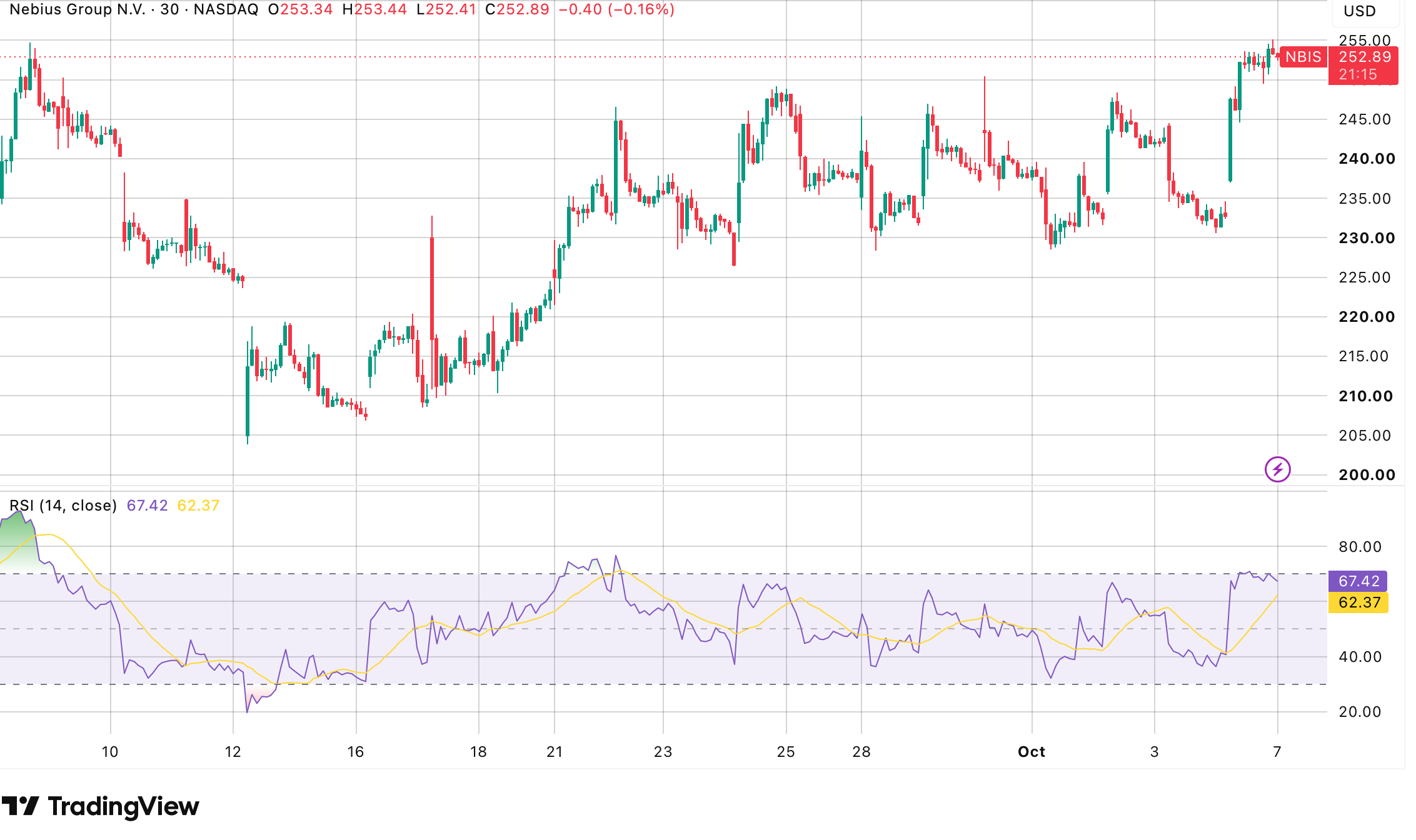
Nebius Group shares jumped about 8% to around $253.25 on Tuesday, reversing the previous session’s 4.22% decline and breaking above the $250 resistance zone.

The move followed a period of consolidation during which the stock repeatedly faced selling pressure around the $250 level.

Trading volume also pointed to strong participation, with about 16.52 million shares changing hands compared with an average trading volume of 19.99 million according to Yahoo Finance data.

Technical indicators also turned more supportive.

The moving average convergence divergence (MACD) moved above its signal line on the one-month chart, while the histogram turned positive, pointing to stronger bullish momentum.

The relative strength index (RSI) climbed to about 67.83, indicating strong buying pressure but also placing the stock close to overbought territory.

Nebius stock breaks above key resistance

The latest rally came a day after several insider-sale filings dated October 5. Nebius Chief Technology Officer Danila Shtan reported selling 14,550 shares at $234.16 on October 1.

The reported sale was linked to automatic withholding for restricted stock unit taxes. Ophir Nave’s proposed sale of 500,000 shares was made under a Rule 10b5-1 trading plan.

No new fundamental catalyst was cited for Tuesday’s move, making the technical breakout the clearest explanation for the gain.

The key level for investors now is whether Nebius can remain above $250 and establish the former resistance level as new support.

AI infrastructure expansion supports growth outlook

Nebius has continued expanding its AI infrastructure footprint as demand for cloud computing and inference capacity grows.

The company recently acquired Inferize to strengthen its Token Factory inference platform.

Inferize develops technology designed to reduce model launch times, lower idle GPU capacity, and reduce inference costs.

The Inferize team joined Nebius Token Factory to help integrate the technology into its production inference stack.

The acquisition follows Nebius’ earlier additions of Eigen AI and technology from Clarifai.

Nebius has also signed a binding agreement with AIB Data Centers for 50 megawatts of critical IT capacity at a southeastern US facility.

AIB plans to deliver the capacity across two data halls under an initial 12-year term.

The additional capacity is intended to support AI workloads as demand for computing infrastructure increases.

Higher GPU prices add to revenue opportunity

Nebius has reportedly raised GPU cloud prices by about 20% across several Nvidia models, including the H100, H200, B200 and B300 chips.

The price increases point to continued demand for high-end AI computing capacity and the company’s ability to charge more amid constrained GPU supply.

Nebius has also benefited from capacity expansion and its relationship with Nvidia, which previously invested $2 billion in the company to support its hyperscale AI cloud buildout.

BNP Paribas recently upgraded Nebius to Outperform from Neutral and raised its price forecast to $399 from $260.

The bank said its outlook for the company had meaningfully improved since initiating coverage in June.

BNP Paribas estimates Nebius could approach $22 billion in annual recurring revenue by the end of 2027 and said the company’s 2027 guidance could lead to a material reset in current estimates.

Nebius shares have gained almost 200% in 2026, compared with nearly 30% for CoreWeave and 9% for IREN.

AI cloud demand, higher GPU pricing, infrastructure expansion, and inference services remain key drivers of the company’s growth outlook.

The post Nebius stock jumps as technical breakout puts $250 level in focus appeared first on Invezz

Anthropic is expanding access to its most advanced AI models to selected organisations for high-risk cybersecurity testing in collaboration with the US government.

Oil prices were little changed as rising Middle Eastern exports and planned emergency stockpile releases eased supply concerns.

Gold prices rose as Treasury yields and the US dollar moved lower ahead of the Federal Reserve’s September meeting minutes.

US Treasury yields also declined after reaching multi-decade highs in the previous session.

Anthropic expands AI model access to cyber firms

Anthropic said Tuesday that verified organisations will be able to access its most capable AI models, including Claude Opus 5.5, Claude Sonnet 5.5 and Claude Mythos 5.1, as well as new models released in the future.

The selected organisations will be able to conduct high-risk offensive testing of safety systems protecting critical infrastructure, including power grids, banks and flight operating systems.

The latest programme expands Project Glasswing, under which Anthropic previously gave limited access to its Mythos model to US government agencies, financial institutions and major software providers.

Anthropic said every member of Project Glasswing would receive access under the latest programme, while new organisations will require review in partnership with the US government.

Different cybersecurity teams will receive different levels of access.

Red teams conducting authorised hacking tests will receive broader permissions, including for offensive testing, although Anthropic said it would continue blocking behaviour that could cause physical harm or mass disruption.

Verified defence cybersecurity teams will receive a lower level of access but will be able to perform tasks such as malware reverse engineering and incident response.

The expansion comes after concerns about the cybersecurity risks posed by increasingly capable AI models.

JPMorgan Chase CEO Jamie Dimon said Tuesday that Anthropic’s Mythos model had increased global cybersecurity risks tenfold.

Oil prices remain near $100 as supply concerns ease

Oil prices were little changed as markets weighed increased Middle Eastern crude exports and the planned release of emergency diesel and crude stockpiles by the Group of Seven.

Brent crude gained 0.66%, at $100.98 a barrel, while US West Texas Intermediate futures rose 16 cents, or 0.36%, to $89.75.

The higher flow of crude from the Middle East has eased some concerns about supply shortages.

Vitol’s CEO said around 12 million barrels per day of crude and 2 million barrels per day of refined products had left the region on tankers over the previous seven to 10 days.

Saudi Arabia’s East-West Pipeline had also transported 5.8 million barrels to the kingdom’s Red Sea export hub of Yanbu as of Tuesday morning, according to Saudi Energy Minister Prince Abdulaziz bin Salman.

However, concerns about further disruptions remained after attacks on two Saudi airports and continued fighting involving Yemen’s Iran-backed Houthis.

The G7 has agreed to release 100 million barrels of diesel and crude oil from emergency reserves, although details on the breakdown and participating countries have not yet been provided.

Gold rises as Treasury yields and dollar ease

Gold prices advanced as the rally in Treasury yields paused and the US dollar weakened.

Spot gold rose 0.66% to $4,166.65 an ounce, while US gold futures for December delivery settled 0.97% higher at $4,197.30.

The decline in 10-year Treasury yields and the weaker dollar provided support for the precious metal.

Gold can face pressure from higher interest rates because investors may favour yield-bearing assets.

Markets have reduced expectations for an October Federal Reserve rate increase following weaker-than-expected September job growth.

Traders now see a 22% chance of a rate hike this month and an 84% probability of an increase in December, according to CME’s FedWatch Tool.

Treasury yields retreat from multi-year highs

US Treasury yields declined on Tuesday after reaching their highest levels in more than two decades during the previous session.

The 10-year Treasury yield fell more than four basis points to 5.281%, while the 30-year yield declined about three basis points to 5.651%. The two-year yield fell three basis points to 4.802%.

The 10-year and 30-year yields had reached 24-year highs on Monday after data showed slower services growth, although the services PMI remained in expansion territory.

Investors are now focused on Wednesday’s release of the Federal Open Market Committee minutes from its September meeting for clues about future monetary policy.

The post Evening Digest: Anthropic expands AI access, oil, gold and yields retreat appeared first on Invezz


FuelCell Energy (FCEL) stock gained on Tuesday due to renewed enthusiasm surrounding the firm’s strategic partnership with Fit Energy.

In a press release this morning, Fit Energy said it plans on powering a new data center development in Pennsylvania, using FCEL’s natural gas fuel cells.

The announcement arrives at a time when FuelCell shares are already regaining momentum – now up more than 40% versus their recent low.

Here’s why FuelCell stock rallied today

The primary driver behind today’s price action is the market’s growing realization that electrical grid capacity bottlenecks are forcing tech giants right into the arms of distributed fuel cell makers.

With the rapid expansion of hyperscale cloud computing and artificial intelligence (AI) workloads requiring continuous baseline electricity, data center operators face multi-year queues for standard utility grid connections.

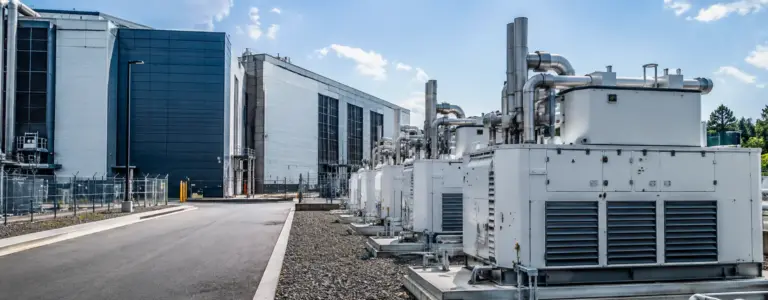
FCEL’s agreement with Fit Energy, which targets up to 380 MW of behind-the-meter generation, offers on-site, low-carbon power that bypasses grid interconnections.

This provides data center firms with a crucial “time-to-power” advantage.

Note that the sharp rally in FuelCell stock on October 6th drove it decisively above its 50-day and 100-day moving averages (MAs), indicating bullish momentum could sustain in the near term.

Should you invest in FCEL shares at current price?

While today’s surge in FCEL stock highlights strong bullish sentiment, prospective investors must carefully assess the risk-reward profile before jumping in.

On one hand, FuelCell boasts a “growing backlog” of multi-megawatt projects and clean power purchase agreements that position it directly at the intersection of AI energy demand and grid decarbonization.

But on the other hand, the company faces ongoing financial and execution scrutiny.

Recent class-action shareholder litigation detailed a $17.0 million charge in Q3 related to Phase 0 contractual pricing and an annualized production rate that dropped to approximately 37.1 MW.

Plus, net losses stood at $45.3 million on $33.0 million in revenue for the quarter ending July 2026, suggesting that buying at current levels requires a high tolerance for operational friction.

What would determine FuelCell’s trajectory?

Looking ahead, FuelCell Energy’s multi-year trajectory hinges on execution discipline rather than speculative demand.

Investors evaluating the clean energy stock today must look beyond headline momentum and focus on how efficiently the management team scales production capacity to meet its megawatt delivery commitments.

The critical metric to track over the coming quarters is not merely “non-binding project pipelines” or preliminary announcements – but the concrete conversion rate of those agreements into firm, high-margin commercial revenue.

For long-term investors seeking high-upside exposure to the global data center power crisis, FCEL shares present a compelling play, but short-term traders should prepare for sharp volatility as the market balances data center enthusiasm against near-term profitability targets.

Note that Wall Street currently rates FuelCell Energy at Moderate Buy.

The post What drove FuelCell stock higher today? appeared first on Invezz