Archive

October 2026

Browsing

Tesla shares TSLA traded lower on Wednesday even as Germany backed a faster rollout of the company’s Full Self-Driving (FSD) software across the European Union, while a broader EU vote on the technology was pushed back.

German Transport Minister Steffen Bilger said he supports prompt approval of Tesla’s driver-assistance system across the bloc after discussions with the company over technical and liability issues.

“My goal is for Tesla drivers to be able to enjoy the benefits of ‘assisted driving’ throughout the EU without delay,” Bilger said.

Tesla CEO Elon Musk responded to the development on X with “Danke Schön!”, which translates to “Thank you very much.”

TSLA shares were about 0.97% lower at the time of writing and were tracking their first decline in four sessions.

Germany’s position adds to support for Tesla’s FSD technology from several European transportation authorities, including those in the Netherlands, Belgium, Denmark and Croatia.

Speed limits remain a key issue

Tesla’s progress in Europe comes as regulators continue to scrutinize the safety of its driver-assistance technology.

France has questioned whether FSD currently meets its safety requirements.

In July, French Transport Minister Philippe Tabarot raised concerns about speeding, driver attention, and the system’s performance in complicated urban driving conditions.

Sweden has also called for greater scrutiny of FSD’s speed-setting functions and said approval should be supported by sufficient safety analysis.

Despite its name, FSD is not fully autonomous.

The system can control steering, acceleration, braking, and lane changes, but drivers must remain attentive and ready to take control.

Germany’s support also comes with restrictions.

Tesla has agreed to rename the system “Tesla Assisted Driving” in Europe because the term FSD could be considered misleading for a supervised driving system.

Germany also agreed with Tesla that the European version could exceed the posted speed limit by up to 10%.

The US “Mad Max” setting, which can allow the vehicle to exceed the detected speed limit by as much as 50%, will not be available in Europe.

EU decision could come in December

Tesla had been seeking an EU-wide vote in October, but the European Union’s Technical Committee on Motor Vehicles held further discussions on October 6 instead of voting on the technology.

That leaves December as the earliest likely opportunity for a bloc-wide decision.

The development comes ahead of Tesla’s third-quarter earnings report, scheduled for October 21.

Investors are expected to focus on the company’s FSD technology, robotaxi plans and Optimus project.

Goldman Sachs said Tuesday that these businesses could become more important to Tesla’s stock than near-term earnings.

Wall Street is expecting about $27.91 billion in third-quarter revenue and earnings of $0.45 per share, according to Fiscal.ai.

Germany’s support adds to Tesla’s efforts to secure wider regulatory approval for FSD in Europe, while restrictions around speed and driver supervision remain central to the approval process.

The post Tesla stock in red even as Germany backs Tesla’s FSD rollout across Europe appeared first on Invezz
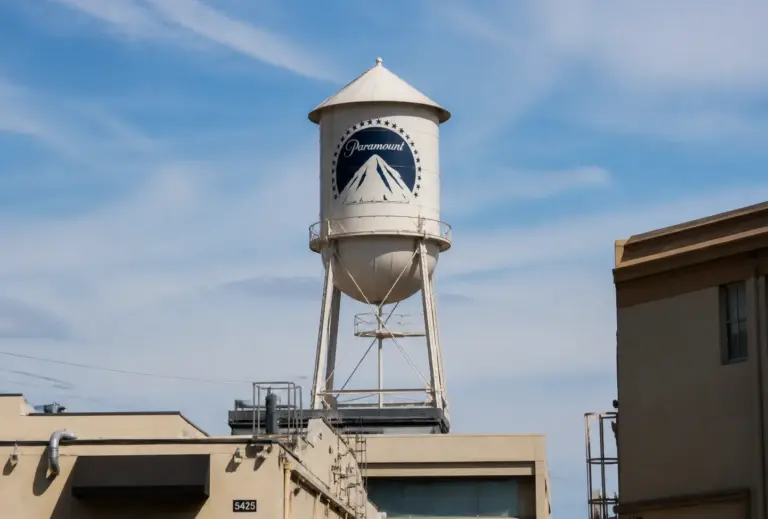
Shares of Skydance Corporation fell 8% Wednesday, extending their decline into a second day after the completion of the company’s $111 billion acquisition of Warner Bros. Discovery.

Skydance began trading on the New York Stock Exchange under the new ticker “SKYD” on Tuesday, replacing the Paramount Skydance listing on the Nasdaq exchange.

The stock fell 2.7% on its first trading day and continued lower Wednesday, hovering around $8.70.

The slide comes as investors assess the financial burden and execution challenges facing the newly combined media company, which is set to drastically alter the US media landscape.

Debt adds to investor concerns

The transaction creates a media group with a broad portfolio that includes Paramount and Warner Bros. movie studios, as well as HBO Max, CBS News and CNN.

While the acquisition gives the company a mammoth collection of media assets, the deal has also raised concerns about its debt load and the cost of integrating the two businesses.

The new entity has more than $80 billion in debt, making its balance sheet a major focus for investors.

Recently, Fitch Ratings and S&P Global Ratings downgraded the company’s long-term credit rating to BB from BB+.

The downgrade could leave Skydance facing higher borrowing costs and greater vulnerability as it works to integrate the businesses and deliver on its financial targets.

Analysts advise caution

Analysts have also expressed concerns about the risks involved in executing the merger.

TD Cowen analyst Doug Creutz maintained a hold rating while advising skepticism. UBS reiterated its sell rating, citing the company’s large debt burden.

The caution contrasts with an upbeat tone from CEO David Ellison, who has emphasized the potential of the combined company while also indicating that cost-cutting measures could affect employees.

“The goal was never simply to add more production capacity, brands or IP. It was to unite the talent, resources and capabilities of these companies into a stronger competitor, one with the scale to take on the biggest players in our industry. Together, we will give these iconic studios the opportunity to win for generations to come,” the company said in a note cited by Variety.

At the same time, the company warned that integrating the two businesses would involve difficult decisions affecting its workforce.

“Integrating two companies will bring change, including difficult decisions that affect our workforce,” the company wrote in the memo.

The comments point to layoffs as one potential avenue for reducing costs as the newly combined company seeks efficiencies.

Scale and savings in focus

Skydance is targeting mid-single-digit growth through 2030 and aims to generate more than $6 billion in annualized cost savings within three years.

The ability to deliver those savings while expanding its streaming operations is going to be key.

UBS analyst John Hodulik said shareholder value would depend on whether management can grow the streaming business faster than the decline in its linear television business.

The company will also seek to leverage the combined libraries and media properties of Paramount and Warner Bros. Discovery, creating a larger content portfolio that could be difficult for competitors to match.

For investors, however, the immediate focus remains on whether Skydance can manage its heavy debt burden, execute the integration, and achieve its stated growth and cost-saving targets.

The skepticism is visible as the shares have so far fallen in both sessions since the Warner Bros. Discovery deal was completed.

The post Why Skydance shares are falling despite Warner Bros. deal completion appeared first on Invezz

Oil prices fell as the IEA moved to accelerate oil stock releases, while US Treasury yields remained near multi-year highs after a strong 10-year note auction.

Bitcoin declined as leverage amplified a broader crypto selloff, while Micron Technology shares gained after DA Davidson raised its price target on the stock to $3,000.

Oil prices fall as IEA accelerates stock releases

Oil prices settled lower on Wednesday after a volatile session as the International Energy Agency moved to accelerate previously announced oil stock releases and prioritize diesel supplies.

US West Texas Intermediate fell 0.55% to $88.97 while Brent crude futures were up 0.40% to $100.98.

The IEA said completing previously announced releases as quickly as possible could bring about 100 million barrels to the market.

Analysts and some governments, however, said that figure did not necessarily represent a new intervention of that size.

France is also set to release 10 million barrels of diesel from its strategic reserves, according to Franceinfo radio.

US crude inventories fell by 3.2 million barrels last week to 424.1 million barrels, according to the Energy Information Administration. Analysts had expected inventories to rise by 1.7 million barrels.

US Treasury yields hit multi-year highs

Treasury yields also remained elevated, with the 10-year yield briefly reaching 5.36%, its highest level since 2002, before retreating after a strong auction.

The 10-year yield was last around 5.286%, while the 30-year yield traded below its 24-year high at 5.67%.

The Treasury sold $39 billion of 10-year notes on Wednesday.

BMO described the auction as “strong,” with non-dealer investors accounting for a higher-than-average share of demand.

Indirect bidders, including global central banks, took 80.3% of the notes, compared with a 72.4% average across the previous 10 auctions.

Dealers bought 2.5%, well below the 9.4% average.

Still, the auction yield of about 5.3% was the highest since 2000.

Treasury yields have risen as investors assess inflation and higher energy prices, with the 10-year yield up about 60 basis points since the end of July.

Bitcoin falls as crypto market faces macro pressure

Bitcoin declined nearly 3% to around $83,313 after reaching about $86,000 earlier in the week, weighing on major cryptocurrencies.

Ethereum fell more than 4.6% to around $2,560, while XRP and Solana each declined about 5% and 3%, respectively.

Leverage amplified the decline, with CoinGlass data showing about 1.25 million traders liquidated over 24 hours, with total liquidations reaching $717.58 million.

Bitcoin liquidations totaled about $185.83 million, including $174.95 million in long positions.

The selloff also affected crypto-related stocks, including Strategy, Coinbase, Circle Internet Group and Robinhood Markets.

Higher Treasury yields and expectations for further Fed rate increases added to the pressure on risk assets.

Minutes from the Fed’s September meeting showed most officials believed another rate increase would likely be appropriate by year-end.

Micron stock rises after analyst raises target

Micron Technology shares rose about 3.74% on Wednesday after DA Davidson analyst Gil Luria raised his price target to $3,000 from $2,100.

Luria said investors remain “early in their journey” in understanding Micron and argued that the market has not fully reflected the company’s expected growth over the next three to five years.

His bullish outlook is based partly on expectations that memory-chip demand will remain above supply for several years as AI data centers expand.

He said memory is important for AI performance, with high-bandwidth memory becoming increasingly important for AI accelerators.

Micron shares have already gained about 230% this year, although their valuation multiple has declined as earnings expectations have risen faster than the stock price.

Luria also pointed to a potential share buyback program as another catalyst, with Micron expected to become free of significant restrictions on repurchases in December.

Separately, a union representing Micron workers in Taiwan authorized a strike over bonus and profit-sharing arrangements. The union said 99% of voting members supported strike authorization, although the timing of any action has not been decided.

The post Evening digest: Treasury yields hit 24 year high, Micron gains appeared first on Invezz

US stocks closed lower on Wednesday as a renewed rise in long-term Treasury yields weighed on equities, with investors also assessing the prospect of another Federal Reserve rate increase before the end of the year.

The Dow Jones Industrial Average fell 341.41 points, or 0.66%, to 51,179.87.

The S&P 500 declined 0.22% to 7,801.77, while the Nasdaq Composite slipped 0.22% to 27,538.69.

Treasury yields rise to multi-year highs

The 10-year Treasury yield climbed to 5.365% during the session, its highest level since April 2002, before easing after the Treasury sold $39 billion of 10-year notes.

The yield was last little changed after the auction.

The 30-year Treasury yield also reached 5.732%, its highest level since May 2002, before pulling back from its session high.

Demand at the 10-year auction was considered strong, with indirect bidders, including global central banks, taking 80.3% of the notes.

The auction yield was around 5.3%, its highest level since 2000.

Rising Treasury yields have remained a key source of pressure for stocks as investors assess inflation, higher energy prices and increasing debt levels.

The 10-year yield has risen about 60 basis points since the end of July.

Fed minutes point to another rate hike

Investors also assessed minutes from the Federal Reserve’s September meeting, which indicated that most officials considered another increase in the federal funds rate likely to be appropriate by the end of the year.

The minutes did not indicate when another increase could take place, while officials stressed that future decisions would depend on incoming economic data and the outlook for risks.

Financial markets were pricing in less than a 20% probability of another rate increase at the Fed’s October meeting, according to CME’s FedWatch tool, down from 37.6% a week earlier.

Higher yields weighed on several parts of the stock market.

Bank shares declined, with Goldman Sachs and Bank of America each falling 1%, while Wells Fargo, Citigroup and JPMorgan also ended lower.

Technology stocks also came under pressure as investors considered the impact of higher borrowing costs on artificial intelligence investment.

CrowdStrike fell nearly 5%, while Palo Alto Networks and Meta Platforms declined more than 3% and 2%, respectively.

Oil prices and AI spending remain in focus

Oil prices remained elevated, adding to concerns about inflation and interest rates. US crude traded just below $90 a barrel, while Brent crude was around $101.

Brent had briefly moved above $100 earlier in the session before turning lower after the International Energy Agency agreed to speed up the release of oil stocks, with diesel supplies prioritised.

The move helped stocks pare some of their losses.

Housing-related stocks also weakened as higher Treasury yields pushed mortgage rates higher. Housing stocks fell 2.3%, while homebuilders declined 2.9%.

Chip stocks, which had gained more than 80% this year, also ended lower.

SpaceX shares retreated following reports that the company was seeking $40 billion in financing to purchase Nvidia chips.

Investors are now turning towards the third-quarter earnings season, with financial companies expected to begin reporting in earnest next week.

Analysts expect S&P 500 earnings to grow 30.6% year over year for the July-through-September period.

The post Dow closes 340 pts lower as rising Treasury yields revive rate hike concerns appeared first on Invezz

Cenovus Energy is doubling down on its footprint in the Canadian oil sands, announcing a cash-and-stock agreement to acquire Athabasca Oil for roughly 5.7 billion Canadian dollars. The move comes as a strategic gamble that the federal government will deliver on promises to expedite a new Pacific pipeline, which would allow producers to bypass traditional bottlenecks and reach international markets more efficiently. By absorbing Athabasca, Cenovus immediately bolsters its thermal operations by about 45,000 barrels of oil equivalent per day, with ambitious plans to scale that figure up significantly by 2032.

The deal also cleans up corporate housekeeping for both parties by giving Cenovus full control of Duvernay Energy. Previously a joint venture between the two firms, the consolidated ownership should streamline development in the Kaybob Duvernay region, where leadership expects output to climb toward 20,000 barrels per day. For Athabasca shareholders, the windfall was immediate; stock prices jumped over 14 percent following the news that they would receive a combination of cash and equity valued at 12 dollars per share.

Timing is everything for this acquisition, arriving shortly after Prime Minister Mark Carney signaled that Ottawa would fast-track reviews for the proposed Pacific Link pipeline. This million-barrel-per-day project is seen as a vital lifeline for Canada to diversify its exports away from the United States during a period of heightened trade tension and tariff pressure. Cenovus CEO Jon McKenzie believes this increased capacity could allow the company to accelerate projects like Athabasca’s Corner site by several years.

However, the path forward isn’t without hurdles. While the production goals are aggressive, the federal government has tied pipeline approvals to strict mandates regarding carbon capture and storage technology. Despite the urgency of the infrastructure build-out, major players including Cenovus have yet to make a final investment decision on those necessary green technologies, leaving a critical piece of the puzzle unsolved even as they expand their physical empire.

The race for artificial intelligence dominance is driving some of the world’s largest tech companies back toward atomic energy. In two significant moves, Google and Oracle have entered into major agreements to modernize and support aging American nuclear facilities. These partnerships aim to solve a growing crisis for the industry: how to find enough stable, carbon-free electricity to run massive data centers without overloading public grids or abandoning climate goals.

Google has struck a comprehensive twenty year deal with Constellation Energy to overhaul eleven nuclear units across Pennsylvania, New Jersey, and Illinois. By investing in updated turbines and digital controls, the project expects to add nearly nine hundred megawatts of capacity by 2032. This strategy allows Google to avoid the grueling permit processes required for building new plants from scratch while securing thousands of megawatts of power. As part of the arrangement, Constellation will actually use Google’s own Gemini AI platform to help manage plant efficiency and plan future upgrades.

Meanwhile, Oracle is focusing its efforts on Wisconsin through a partnership with NextEra Energy at the Point Beach nuclear plant. To facilitate its ambitious eleven billion dollar Project Lighthouse data center in Port Washington, Oracle has agreed to absorb roughly three hundred million dollars in rising energy costs. Company executives noted that this move is intended to shield local residents from price hikes that typically occur when industrial demand spikes, effectively subsidizing the cost of clean energy for over a million utility customers in the region.

These deals reflect a broader trend among hyperscale cloud providers who can no longer rely solely on wind and solar due to their intermittent nature. From Amazon extending the life of plants in Maryland to Google restarting facilities in Iowa, the tech sector is essentially becoming an underwriter for the US nuclear fleet. By guaranteeing long term revenue streams for these utilities, Big Tech is ensuring that critical baseload power remains available just as AI workloads begin to push national electrical infrastructure to its limits.

Iowa voters are bracing for a pivotal confrontation tonight as Republican Representative Ashley Hinson and Democratic State Representative Josh Turek meet for a highly anticipated debate. The two candidates are vying to fill the seat currently held by Senator Joni Ernst, marking one of the most closely watched contests in this election cycle. Viewers can tune in via Iowa PBS starting at 8 p.m. EDT to see how each candidate handles the pressure under the bright lights.

The matchup represents a clash of political trajectories and ideologies in a state that has become an essential battleground. Hinson, who first entered the national spotlight when she won her house seat back in 2020, is leaning into her federal experience to make the jump to the upper chamber. Meanwhile, Turek is attempting to leverage his legislative record at the state level to convince Iowans that he is the right choice to represent their interests in Washington.

Industry analysts suggest that neither side holds a clear advantage heading into this evening’s event. According to data from the Cook Political Report, the race remains a toss up, meaning small shifts in momentum could determine the eventual winner. With such slim margins separating the frontrunners, both campaigns view tonight’s performance as a critical opportunity to sway undecided voters and define their opponents before they head to the polls.

Glen Powell is joining a growing list of A-list stars who are choosing to keep their political views private. In a recent cover story for Esquire, the Top Gun Maverick actor explained that he avoids political discussions because he finds the modern discourse unhealthy and divisive. Reflecting on a childhood where current events weren’t discussed at the dinner table, Powell admitted that he sees these conversations as the worst version of interaction, noting that while he respects those who fight for their beliefs, his personal calling lies elsewhere.

This cautious approach mirrors shifts seen in other major celebrities like Dwayne Johnson and Jennifer Lawrence. Johnson recently expressed regret over past endorsements that split his fanbase, stating a desire to focus exclusively on his craft. Similarly, Lawrence has stepped back from public political commentary, suggesting that celebrity opinions often fail to influence voters and may instead alienate audiences from the very art intended to challenge their perspectives.

While steering clear of social issues, Powell was candid about the professional setbacks he has faced following a series of massive hits. Despite the momentum from Twisters and Anyone But You, his project The Running Man failed to find its footing at the box office. Powell attributed the film’s struggle to internal chaos at Paramount Pictures, claiming that an entire marketing department was laid off just weeks before the movie’s release amidst a corporate merger.

The slump continued with How to Make a Killing, an A24 crime comedy that also struggled commercially. Looking back on these experiences, Powell noted that insufficient preparation and rushed timelines played a significant role in the outcomes. By focusing on the lessons learned from these flops rather than diving into national debates, Powell seems determined to protect both his brand and his peace of mind as he navigates the volatility of Hollywood.

President Donald Trump is returning to Texas for the second time in a single week, signaling a strategic shift in focus toward traditionally reliable Republican strongholds. Tonight’s stop in San Antonio aims to bolster support for state Attorney General Ken Paxton and congressional hopeful Carlos De La Cruz. While these seats might once have been considered safe, recent data suggests a tightening race. Specifically, De La Cruz is fighting a closer battle than expected in the 35th District despite redistricting efforts designed to favor his party, leaving analysts to categorize the seat as merely leaning Republican rather than secure.

Adding an interesting layer of local tension, Governor Greg Abbott will be notably absent from the rally. While Abbott praised Trump’s ability to energize the base and drive voter turnout, he cited scheduling conflicts as the reason for his absence. This distancing comes at a time when Abbott himself is facing a more challenging reelection path than previous cycles provided. Once accustomed to winning by comfortable double digits, the governor is now seeing national Democrats push more resources toward his opponent, Gina Hinojosa, with Latino leaders calling for millions in additional funding to close a significant financial gap before early voting begins.

This trend of creating space between themselves and the former president extends beyond Texas borders. In Michigan, GOP nominees Mike Rogers and John James have both signaled divergence from Trump’s positions on tariffs and international conflict during recent ads and debates. Similar dynamics are playing out across several other states, where candidates are navigating the complicated balance of needing Trump’s endorsement while trying to appeal to moderate voters concerned about economic stability and foreign policy.

Former President Donald Trump took the stage in San Antonio tonight, marking his third visit to Texas in just one month as he campaigns heavily for Senate candidate Ken Paxton. Introduced by baseball legend Roger Clemens, Trump used the high energy atmosphere of the rally to energize his base and double down on his economic track record. Throughout his remarks, he leaned heavily into a claim that his policies brought twenty one trillion dollars into the American economy, a figure that continues to draw scrutiny as critics note it contradicts data listed even on his own official platforms.

While the mood remained celebratory in San Antonio, the broader political climate is fraught with tension between the two major parties. House Minority Leader Hakeem Jeffries expressed grave concerns earlier today, suggesting that Democrats are bracing for potential attempts by MAGA extremists to disrupt the upcoming elections. This wariness comes amid a deepening legal battle between the Democratic National Committee and the administration, as the DNC has filed a lawsuit alleging that taxpayer funds were illegally used to produce campaign style television advertisements favoring Trump.

Beyond the immediate presidential orbit, other GOP figures are working through various strategies to secure house seats. Speaker Mike Johnson is heading to Kentucky for a luxury fundraiser supporting Ralph Alvarado, who is running in a traditionally red district but has notably attempted to distance himself from Trump recently. Meanwhile, inside Texas, local Latino leaders are increasing pressure on the Democratic Governors Association to invest more aggressively in challengers attempting to unseat Governor Greg Abbott.