Archive

October 2026

Browsing

Micron Technology has sent shockwaves through the semiconductor industry after reporting a staggering revenue surge of 379 percent, a jump that underscores the explosive demand for artificial intelligence infrastructure. As tech giants race to build out massive data centers capable of handling complex generative AI models, the need for high bandwidth memory has shifted from a luxury to an absolute necessity. This windfall positions Micron as one of the primary beneficiaries of the current hardware supercycle, proving that the AI boom is translating into tangible balance sheet growth rather than just speculative hype.

The company’s recent performance highlights a critical shift in how investors view chip stocks. While much of the initial excitement surrounding AI focused heavily on processors and GPUs, Micron is demonstrating that memory chips are equally vital components of the ecosystem. By specializing in the high speed storage required to feed data into powerful AI accelerators, Micron has carved out a dominant niche that allows it to command premium pricing during this period of scarcity and rapid scaling.

Industry analysts suggest that this trajectory places Micron among a small group of elite AI chip stocks currently dominating the NASDAQ. The sheer scale of their revenue increase suggests that we are still in the early stages of an infrastructural overhaul across global computing systems. For observers watching the sector, Micron serves as a bellwether for broader enterprise spending on AI, signaling that companies are now moving past experimentation and into heavy capital investment to secure their digital futures.

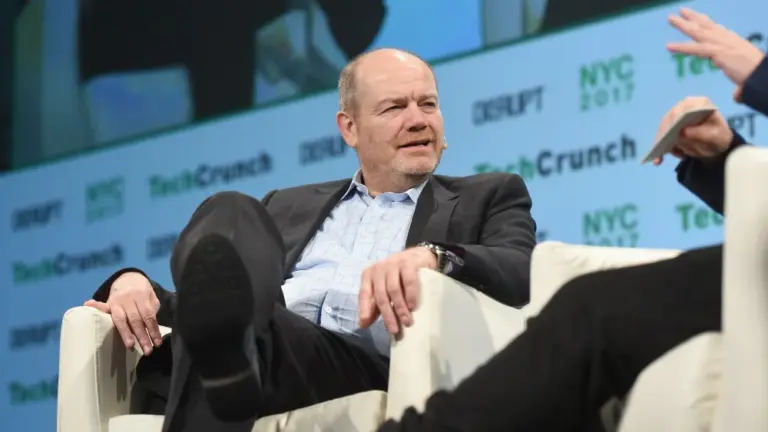
The future of CNN’s leadership appears slightly more stable as Paramount Skydance enters early stage discussions to keep Mark Thompson in his post. This development suggests that the merging media entities intend to keep CBS News and CNN operating separately for the time being while they navigate the complex acquisition of Warner Bros. Discovery. While neither company provided an official comment, these talks signal a potential continuity in management that could soothe nerves across one of the world’s most prominent newsrooms.

For CNN staffers, the possibility of Thompson remaining at the helm brings a measure of relief amidst significant uncertainty. Employees have voiced concerns over whether Paramount CEO David Ellison is fully committed to traditional, credible newsgathering, especially following recent scrutiny regarding appointments at CBS News. There are also lingering questions about how Paramount intends to handle CNN’s pivot toward digital growth and its evolving streaming strategy after years of shifting corporate directions under previous ownership.

Thompson himself has expressed a strong desire to lead the network forward, telling employees during a recent town hall meeting that he is enthusiastic about staying. However, he admitted to staff that he still lacks clarity on exactly how Paramount plans to manage its news assets once the deal closes. Despite this ambiguity, Thompson has remained steadfast in calling for CNN to maintain total editorial independence from corporate interference.

To address those concerns and satisfy legal requirements, Paramount has already agreed to establish a dedicated board tasked with safeguarding the independence of its news properties. This move comes as part of a settlement with several state attorneys general who had initially sought to block the merger. As Thompson continues to push content toward younger audiences through initiatives like the All Access subscription service, his long term fate remains tied to how well these independent safeguards can coexist with Paramount’s broader business goals.

Alphabet stock GOOGL fell in trading on Thursday even after Google unveiled Gemini 4 Argon, its latest frontier artificial intelligence model, with analysts highlighting its performance across coding, cybersecurity and complex workflows.

JPMorgan maintained its ‘Overweight’ rating on Alphabet following the announcement.

In a note cited by TheFly, the bank said Google needs to “re-establish itself at the frontier and as an AI leader for both the industry and investors.”

KeyBanc also reiterated its ‘Overweight’ rating and $435 price target, while Jefferies maintained a ‘Buy’ rating and a $445 target. Morningstar kept its $433 fair value estimate.

Gemini 4 Argon targets OpenAI and Anthropic

Google’s benchmark comparisons show Gemini 4 Argon competing with models from OpenAI and Anthropic, including GPT-6 Astra, Claude Fable 5.1 and Claude Opus 5.5.

The model leads on several evaluations covering knowledge work, coding and long-context tasks, although competitors remain ahead on some benchmarks.

JPMorgan pointed to Argon’s performance across complex workflows, software engineering and cybersecurity as areas that could help Google strengthen its position in the AI market.

The launch comes as AI companies increasingly focus on applications beyond consumer chatbots.

OpenAI and Anthropic have expanded into software development, enterprise workflows and agentic tasks, increasing the expectations for frontier models.

Google is initially rolling out Argon to trusted cyber defenders through its Fairwind programme, with wider availability planned later.

The company said the phased approach is intended to gather feedback and strengthen safeguards before the model becomes available to developers, enterprises and consumers.

KeyBanc said the earlier-than-expected launch could support near-term sentiment, although the limited rollout makes it difficult to assess the model’s performance in real-world use.

Argon focuses on coding and cybersecurity

Google is positioning Gemini 4 Argon for long-horizon tasks, including software engineering, legal and financial knowledge work, and cybersecurity.

The company said the model achieved a 77.9% score on the DeepSWE v1.1 coding benchmark, which it described as a record result.

Jefferies noted that Argon still trails leading competitors on the more demanding FrontierSWE v2 benchmark.

The brokerage also said Argon ranked first for coding on LLM Arena’s Text Arena and eighth on Code Arena: Web Dev, 21 positions above Gemini 3.8 Flash.

Google said Argon can autonomously identify, verify, and address software vulnerabilities.

Jefferies said the model tied Grok 4.7 with a 68% score on CWE-bench v1, which tests vulnerability fixes.

For the initial cybersecurity rollout, Google said Argon will be provided to trusted defenders and internal teams without some of its standard safeguards.

Cybersecurity company Wiz is using the model through its Scan for Good programme, according to Google.

Google said it plans to strengthen safeguards before a broader release, including monitoring for potential misuse and intervening when necessary to prevent harmful actions.

Analysts focus on adoption, costs and AI spending

Gemini 4 Argon launches at an introductory price of $2 per million input tokens and $10 per million output tokens.

Jefferies noted that Claude Fable 5.1 costs $10 and $50, respectively, while Claude Opus 5.5 costs $4 and $20. Google is also offering a 95% discount on cached input tokens.

KeyBanc identified several issues for investors to monitor, including how quickly Google can improve its AI assistants, how Gemini 4 and those assistants affect Search and Cloud, and the capital expenditure required to support the business.

Jefferies cautioned that real-world use will be needed to determine whether Argon’s benchmark results translate into practical performance.

Morningstar said its fair value estimate already incorporates a return to the AI frontier and strong Gemini adoption.

The firm said it continues to see Alphabet’s full-stack AI opportunity as potentially underappreciated.

Morningstar also noted that Alphabet’s cloud business could continue benefiting from compute deals with Anthropic, even if the company faces challenges at the model layer.

The post Alphabet stock falls despite Gemini 4 Argon launch, Why are analysts bullish?  appeared first on Invezz

SpaceX (SPCX) stock rose more than 1.5% on Thursday, bucking a broader market decline as investors focused on the company’s growing role in space-based artificial intelligence infrastructure.

SpaceX shares traded near $153, while the S&P 500 fell 0.2%, the Nasdaq Composite slipped 0.1%, and the Dow Jones Industrial Average declined 215 points, or 0.1%.

The broader market was under pressure as Treasury yields surged.

The 10-year Treasury yield reached an intraday high of 5.342%, its highest level since April 2002, while the 30-year yield climbed to 5.663%, also around levels not seen in roughly 24 years.

Against that backdrop, SpaceX benefited from a major development involving Alphabet’s efforts to move AI computing into orbit.

Google tests AI chips in space

Alphabet plans to launch its homegrown AI chips into orbit Thursday aboard a SpaceX Falcon 9 rocket, marking an important test for the company’s Project Suncatcher initiative.

The launch is scheduled for around 11:15 a.m. PT from Vandenberg Space Force Base in California during the uncrewed Transporter-18 mission.

The mission will carry Planet Labs satellites, including a solar-powered prototype equipped with Google’s tensor processing units, or TPUs.

It will mark the first in-orbit test for Project Suncatcher, a “moonshot” initiative that Alphabet first revealed in November 2025.

The project aims to develop solar-powered AI computing infrastructure capable of operating continuously in space.

Alphabet has described the initiative as an effort to explore whether space could eventually support scalable machine-learning infrastructure.

The concept could offer an alternative to the rapidly expanding data-center infrastructure being built on Earth, where power availability, land constraints and community opposition have become increasingly important considerations for AI companies.

SpaceX plans its own orbital data centers

SpaceX is also developing plans for its own orbital data centers.

The company has said it intends to build and launch swarms of satellites equipped with graphics processing units and solar arrays.

Elon Musk has previously said space-based data centers could eventually become the cheapest way to train AI, arguing that the technology could reach that point within several years.

SpaceX COO Gwynne Shotwell said at an event in September that the company expects to deploy “supercompute in space” in 2027.

Alphabet is also a significant investor in SpaceX, with its stake currently valued at more than $82 billion.

The companies are partners in space infrastructure while simultaneously competing in parts of the broader AI market.

TD Cowen sees computing driving growth

The potential AI-computing business is increasingly becoming part of the investment case for SpaceX.

TD Cowen analysts led by John Blackledge initiated coverage earlier this week with a Buy rating and a $200 price target, describing computing as the company’s “biggest near-term driver” of revenue.

The near-term opportunity identified by TD Cowen is SpaceX’s ground-based AI computing business, while the company’s orbital data-center ambitions represent a longer-term opportunity.

The brokerage expects roughly 35% of SpaceX’s 2026 sales to come from activities linked to selling computing power.

TD Cowen sees the business potentially overtaking Starlink, which it describes as SpaceX’s “crown jewel,” as early as the first quarter of 2027.

The brokerage forecasts AI compute leasing to account for roughly 60% of SpaceX revenue in 2027 and 65% by 2028.

It also expects SpaceX revenue to grow at a compound annual rate of 62% between 2026 and 2031, while forecasting nearly 1,000 low-Earth-orbit launches by 2031.

Blackledge expects close to half of SpaceX’s planned computing capacity to be leased to external companies over the next several years.

The post Why SpaceX stock is beating the broader market today appeared first on Invezz

IBM stock gained on Thursday as strong earnings from Accenture boosted sentiment around the consulting sector.

The company also announced a self-hosted deployment option for IBM Bob, its agentic software development platform.

IBM shares rose as much as 5% during the session although it was trading up 2% at the time of writing, while Accenture surged more than 20% after reporting stronger-than-expected results and raising its full-year outlook.

Accenture results provide a boost for IBM

Accenture reported quarterly revenue of $9.28 billion, above analysts’ expectations of $8.86 billion.

Its stronger results and outlook suggested that its consulting business was holding up despite broader macroeconomic pressures and concerns about artificial intelligence disrupting traditional consulting services.

The results also offered some relief for Accenture, whose shares had fallen nearly 32% before Thursday’s session.

The strength in consulting was relevant for IBM because consulting is the company’s second-largest business unit.

IBM also generates a significant portion of its revenue from higher-margin software, while its legacy mainframe business remains part of its portfolio.

Cognizant Technology, another consulting competitor, also raised its annual profit forecast in July, citing strong growth in its financial services division.

Cognizant shares were also higher on Thursday.

For IBM investors, the latest consulting-sector results came after a difficult period for the company.

IBM shares had fallen 26% year to date through Wednesday’s close following its second-quarter results and a rare pre-announcement that signalled weaker customer spending.

IBM’s recent earnings raised concerns

IBM reported $17.2 billion in second-quarter revenue, below Wall Street expectations, and reduced its full-year guidance.

Performance varied across the company’s business segments. Software revenue remained resilient, while infrastructure revenue fell 7% and consulting revenue was flat.

CEO Arvind Krishna said customers shifted quarterly budgets towards servers, storage and memory products at the end of June to get ahead of expected price increases for “supply-constrained infrastructure.”

Krishna also attributed the quarterly results to execution issues, saying IBM did not “adapt and move quickly enough” to prevent several large deals from falling through before the end of the quarter.

The results raised concerns about IBM’s organic growth and contributed to the decline in its shares.

Accenture’s recent results offered a contrasting signal for the consulting industry, although the two companies have different business mixes.

IBM expands AI deployment options

Separately, IBM announced self-hosted deployment for IBM Bob, its agentic software development platform, as the company seeks to address enterprise demand for greater control over AI systems.

The new deployment option allows organisations to run AI-powered software development in on-premises, private-cloud, sovereign-cloud and air-gapped environments.

IBM said the setup is designed to help enterprises keep sensitive code, data and workflows within environments they control.

The offering is aimed at regulated industries that require greater control over data residency, security policies and AI governance.

Customers can run supported models on premises, including in air-gapped environments, or connect Bob to external model services through hybrid configurations.

“The future of enterprise AI will depend on security, governance and sovereignty,” said Neel Sundaresan, GM of AI and Automation at IBM.

“Organizations need AI that operates inside environments they have control over, especially when working with sensitive code and regulated data,” Sundaresan added.

He said Bob’s self-hosted deployment allows enterprises to use agentic AI while maintaining security, compliance and operational control.

The post IBM stock gains and it has Accenture to thank for appeared first on Invezz

Netflix investors have had little to celebrate in recent weeks.

Shares of the streaming giant fell 14% in September, according to S&P Global Market Intelligence, extending a broader decline that has taken the stock down about 18% over the past month and 25% this year.

The stock is now heading for a fifth consecutive week of losses as investors grapple with slowing engagement, a softer content slate and intensifying competition for consumers’ attention.

The concerns received an unusual boost from Netflix itself on Thursday, when co-CEO Ted Sarandos acknowledged that the company’s growth has not been fast enough.

“Overall, we’re not growing as fast as I want us to,” Sarandos said at Bloomberg’s 2026 Screentime event in Los Angeles.

“We are, though, also doing things that create a lot of headwind to that number,” he added.

Netflix’s viewership increased only 2% during the first half of 2026, according to Sarandos.

The comments come at a difficult time for the stock, with investors increasingly demanding evidence that Netflix can maintain growth while continuing to invest heavily in programming.

Live programming offers a potential growth lever

Sarandos pointed to live programming as one area where Netflix could potentially accelerate growth.

The company, however, has yet to generate viewing returns from live content that match its spending.

Netflix allocates about 5% of its roughly $20 billion annual content budget to live programming, while live shows account for only about 1% of viewing.

The strategy nevertheless gives Netflix another avenue to attract audiences beyond its traditional scripted and unscripted programming.

The company is also expanding into gaming, documentaries, sports and shorter-form content as it seeks to increase engagement across its platform.

Those initiatives are being closely watched because the core streaming business is becoming increasingly mature in some of Netflix’s biggest markets.

Wells Fargo warns of weaker engagement

A series of analyst downgrades has compounded the pressure on Netflix shares.

Earlier this month, Wells Fargo downgraded Netflix to Underweight from Equal Weight and reduced its price target to $57 from $80.

The new target represented about 16% downside from Netflix’s Thursday closing price.

Analyst Steven Cahall and his team said Netflix viewership fell 8% year over year during the first half of 2026, while hours viewed for its Top 100 Originals declined 3%.

The analysts expect a more than 20% year-over-year decline in viewership for Netflix’s Top 100 Originals during the second half.

Wells Fargo said Netflix appeared to be broadening engagement by taking content more directly to YouTube while also investing in gaming, documentaries and sports.

But the brokerage warned about a shift in Netflix’s content mix and the possibility of “missing the water cooler originals.”

The firm also expects Netflix’s second-half content slate to pressure margins, forecasting operating margins of 32.6% in 2027 and 34.2% in 2028, below its previous expectations.

Wells Fargo said Netflix could face a “content spend reboot” and described the potential outcome as a “messier NFLX story.”

YouTube becomes a bigger competitive threat

HSBC also downgraded Netflix later in September, cutting its rating to Hold from Buy and lowering its price target to $76 from $96.

The brokerage cited increasing competition from Alphabet’s YouTube and concerns about near-term viewer engagement.

YouTube’s growing presence on television screens is particularly important because Netflix is competing not simply against other streaming services, but against virtually every form of entertainment competing for time in the living room.

According to HSBC, YouTube captured a record 14.2% share of US television viewing in July, while Netflix’s share fell to 7.8%, its lowest level in several years.

HSBC believes YouTube’s momentum is increasingly coming at Netflix’s expense as the Google-owned platform expands its presence on television.

The shift also highlights the changing nature of Netflix’s competitive landscape.

YouTube combines long-form videos, short-form content, creator programming and an enormous advertising ecosystem, giving it multiple ways to attract and retain viewers.

Bulls point to international growth

Not all analysts believe Netflix’s recent decline represents a deterioration in its long-term story.

Evercore ISI raised its price target to $110 from $100 and reiterated its Outperform rating, citing improving subscriber trends in the US and Japan along with opportunities in live events, short-form content and advertising.

Evercore analyst Kutgun Maral said Netflix’s penetration rate reached a multi-year high of 63% in the US.

In Japan, penetration reached a record 22%, according to the brokerage’s surveys.

Churn intentions also improved in both markets, although customer satisfaction remained a concern in the US.

The findings came from Evercore ISI’s 58th quarterly US subscriber survey and its semi-annual Japan survey.

The brokerage said the results reinforced its view that Netflix continues to have meaningful subscriber engagement and pricing power.

Deutsche Bank has also turned more positive on the stock, upgrading Netflix to Buy from Hold, although it lowered its price target to $95 from $100.

The firm reduced its operating income and free cash flow estimates after Netflix’s second-quarter results but argued that investors may be focusing too heavily on US viewing trends while overlooking the company’s international opportunity.

Analyst Bryan Kraft noted that international engagement has increased year over year in each of the past four six-month periods.

Kraft believes Netflix’s global scale, brand and production capabilities could support a broader “Netflix As A Platform” opportunity over time.

Valuation has become less demanding

The sharp decline has also changed Netflix’s valuation.

The stock now trades at around 18 times Kraft’s forecast 2027 earnings, substantially below the roughly 40 times forward earnings multiple it commanded in June 2025.

That decline means the stock no longer reflects the same expectations for rapid growth that investors had previously priced in.

The lower valuation provides more room for upside if international growth remains healthy and Netflix can stabilize engagement.

Artificial intelligence could also become part of the longer-term bull case.

Kraft argues that AI could help Netflix create content more efficiently, personalize recommendations and improve advertising capabilities.

For Netflix, that could mean using AI not merely to reduce costs but also to create additional monetization opportunities from its enormous international audience.

However, the potential benefits remain longer-term possibilities rather than immediate solutions to the company’s engagement problem.

October 20 earnings will be crucial

Netflix is scheduled to report third-quarter earnings on October 20, but the results themselves may not be enough to reverse the stock’s decline.

Wall Street expects diluted earnings per share of $0.82, up 39% from $0.59 in the year-ago quarter.

Netflix has beaten Wall Street’s EPS estimates in two of its past four quarters and missed in the other two.

More importantly, the market has recently shown little interest in earnings beats alone.

Netflix exceeded EPS expectations in each of its last three reported quarters, yet shares declined after every release.

The most recent report was followed by a 6.42% drop despite a modest earnings beat.

That pattern suggests investors are placing greater weight on forward guidance than on the quarter that has already ended.

Netflix’s own third-quarter forecast calls for revenue of about $12.9 billion, representing 12% year-over-year growth, and an operating margin of 33.2%, compared with 28.2% a year earlier.

The margin comparison, however, requires some context.

Netflix’s year-ago quarter included a Brazilian tax charge that reduced operating margin by more than five percentage points.

Excluding that charge, the projected margin would be roughly flat with the underlying margin a year ago, or slightly lower.

The bigger question may therefore be what Netflix says about the fourth quarter.

If the company meets its third-quarter target, its narrowed full-year guidance could allow fourth-quarter revenue growth to fall as low as about 11%.

A forecast toward that lower end could raise fresh concerns that growth is slowing faster than expected.

Is Netflix stock cheap enough ahead of earnings?

At around $70, Netflix trades at roughly 18 times earnings based on the average analyst estimate for 2027 profits.

The valuation no longer assumes a return to the 18% growth rate Netflix delivered in late 2025.

But it still appears to assume that growth can settle around 12% while profits continue to rise.

That makes the fourth-quarter outlook particularly important.

“In the end, four straight post-earnings drops have taken a lot of optimism out of Netflix’s valuation. Still, the pattern has held all year. What the company says about the next quarter has counted more than what it just reported, and I’d want to see that fourth-quarter forecast before buying shares,” Daniel Sparks of The Motley Fool writes.

Wall Street remains broadly positive despite the recent selloff.

According to The Wall Street Journal, 32 analysts have a Buy rating on Netflix, while seven have a Hold rating and one has a Sell rating.

The split in the outlook reflects the central question surrounding Netflix today: whether the recent weakness is a temporary slowdown in an otherwise strong global streaming business, or evidence that the company is entering a more difficult phase in which maintaining engagement and double-digit growth becomes increasingly challenging.

For now, the stock’s valuation is considerably lower than it was during its 2025 peak, but the company’s own admission that growth is slower than desired means investors may need more than another earnings beat to regain confidence.

The post Netflix stock lost 14% in September as growth slows: is NFLX a buy after the selloff? appeared first on Invezz

Moderna stock (NASDAQ: MRNA) rose more than 2% in early premarket trading on Friday after Nasdaq said the biotech company will join the Nasdaq-100 next week, creating new demand from index-tracking funds.

The move follows a spectacular 2026 rally that has pushed Moderna more than 500% higher and transformed it from a post-pandemic recovery story into an oncology bet.

Yet Wall Street remains divided, as Citi downgraded Moderna to Sell this week, arguing that optimism around its personalised cancer vaccine has run too far ahead of the evidence.

Nasdaq-100 entry creates a new buyer

Nasdaq said Moderna will replace Warner Bros. Discovery in the Nasdaq-100 before markets open on October 9.

The benchmark covers 100 large non-financial Nasdaq companies and is tracked by more than 200 investment products with over $800 billion globally.

That creates a mechanical distinction in Moderna’s rally.

Investors buying the stock because of its cancer pipeline are making a fundamental call on future revenue.

Funds that track or benchmark themselves against the Nasdaq-100, however, may need to add Moderna simply because the company is entering the index.

That helps explain Friday’s 2% premarket gain even though the underlying valuation debate has not changed overnight.

Index inclusion can support near-term demand, but it does not settle what the business is ultimately worth once rebalancing flows have passed.

Citi says the cancer story is already priced in

Citi analyst Geoff Meacham downgraded Moderna to Sell from Neutral on September 30 while raising his price target to $80 from $60.

His central objection is valuation. “We struggle to justify the valuation through public-company comparisons or pipeline NPV,” Meacham wrote, according to Investing.com.

Citi said Moderna’s market value had moved close to Regeneron’s despite lower expected revenue and earnings.

Even assuming a 100% probability of success for Intisermin’s leading programmes, Citi supported only about $100 per share.

The bank also estimated that a share price around $200 would require roughly $26 billion in annual oncology sales, with approximately half going to Moderna and the remainder to partner Merck. That is nearly seven times Citi’s own forecast.

The contradiction is unusually sharp. Nasdaq-linked funds may soon have to buy Moderna regardless of valuation, while one of Wall Street’s most bearish analysts believes fundamental investors should be doing the opposite.

Bulls say Moderna is no longer just a Covid company

The bull case starts with the Phase 3 INTerpath-001 study.

Moderna and Merck said intismeran, combined with Keytruda, met its primary recurrence-free-survival endpoint and a key secondary endpoint in high-risk melanoma.

The result gave investors their clearest evidence yet that Moderna’s mRNA technology can create a meaningful commercial franchise beyond infectious-disease vaccines.

William Blair analyst Myles Minter upgraded Moderna to Outperform after the result, saying the company now has “a clear line of sight to revenue diversification from the COVID business”.

That is the strongest answer to Citi’s caution.

But the debate remains unsettled. Rothschild & Co Redburn analyst Simon Baker called the Phase 3 result “undoubtedly good” while arguing the share-price reaction was overexuberant because melanoma success does not prove Moderna can reproduce it across other tumour programmes.

That leaves two competing valuation frameworks. One treats intismeran as the beginning of a broad oncology platform, while the other sees one major clinical success being extrapolated too aggressively.

Nasdaq-100 inclusion now adds another layer to that argument. Passive funds may soon have little choice but to own Moderna, while fundamental investors remain split over how much cancer-vaccine success is already embedded in the price.

The post Moderna stock rises 2% on Nasdaq 100 entry but this analyst says sell appeared first on Invezz

It was a volatile week for Canadian equity markets, characterized by mixed results across the major indices and a heavy focus on macroeconomic pressures. While the S&P/TSX Composite Index managed a slight gain of 0.35 percent, both the TSX Venture and CSE Composite Indices saw declines near two percent. Investors spent much of the week digesting fresh inflation data from Statistics Canada, which showed an annualized climb of 3 percent driven largely by soaring gasoline prices amid geopolitical tensions in the Persian Gulf.

Despite these headwinds, the federal government attempted to stimulate growth through its inaugural Canadian Investment Summit. The event aimed to attract one trillion dollars in funding over the next decade for key economic sectors, including resources. Early reports suggest the goal is already halfway met, with substantial commitments coming from major financial institutions like TD Bank and Scotiabank, as well as partnerships involving Brookfield Asset Management and the Canada Pension Plan Investment Board. To further sweeten the deal for investors, Ottawa introduced a productivity mega deduction that significantly lowers the effective marginal tax rate for companies investing in new assets.

In the commodities space, precious metals provided some optimism as gold closed up more than one percent and silver surged over four percent for the week. Copper also trended upward, gaining about 2.57 percent on the Comex. These favorable metal prices helped propel several junior miners to impressive gains despite the broader market instability seen in venture exchanges.

Leading the charge among mining stocks was Orosur Mining, which saw its share price skyrocket by 63.27 percent this week. The Colombian-focused explorer captured investor attention after releasing positive updates regarding its flagship Anza project. Specifically, new assay results from its El Cedro target revealed a fully mineralized interval averaging nearly one gram per tonne of gold over sixty-one meters, fueling confidence in Orosur’s ability to expand its footprint in South America’s primary gold belt.

Austin based startup Supra Elemental Recovery has taken a significant step toward securing the American supply chain after landing a Phase I Small Business Innovation Research contract from the U.S. Department of Defense. Working specifically with the Defense Logistics Agency, the company will evaluate whether its proprietary separation platform can feasibly and scalably recover high purity scandium from domestic industrial byproducts. This move comes as part of a broader federal push to reduce reliance on foreign imports, particularly those coming from China, which currently dominates the rare earth refining market.

The technology behind Supra’s approach was born out of research at the University of Texas at Austin before the company officially spun off in early 2026. Rather than relying on conventional refining techniques that are often slow and environmentally taxing, Supra uses specialized reusable cartridges that act like sponges to dissolve and capture critical minerals from industrial waste. According to the company, this method can be up to 100 times faster and more selective than existing processes, all while avoiding the production of toxic byproducts.

CEO Katie Durham emphasized that while the United States possesses plenty of scandium resources onshore, the challenge has always been extracting them efficiently enough to meet domestic demand. By focusing on both scandium and gallium initially, Supra aims to provide a resilient alternative to current supply chains. However, their ambitions extend beyond those two elements; the firm is already working to validate its platform for other essential battery and magnet materials such as lithium, cobalt, and various lanthanides.

Industry confidence in Supra’s vision is growing quickly beyond government contracts. The startup recently secured an investment from mining giant Rio Tinto and joined the Defense Industrial Base Consortium to help strengthen national security infrastructure. As COO Jordan Sessler noted during the company’s launch, rare earths themselves are not actually rare but are notoriously difficult and expensive to purify. By diversifying both their sources and the elements they recover, Supra believes it can finally break the bottleneck in critical mineral refinement.

As the next round of elections looms, a small but critical slice of the electorate finds themselves adrift, feeling alienated by both major political parties. For voters like James Morton, a retired truck driver from Colorado, the choice is not between two viable paths but between two sets of frustrations. While he views Democrats as having drifted too far toward socialism, he sees Republicans as globalists who have abandoned the working class. This sentiment is echoed by others across the country who feel that neither side truly grasps the daily struggles of ordinary citizens, leaving them to consider third party options or simply remaining undecided until the final hour.

The primary driver behind this disillusionment is almost universally tied to the wallet. High costs of living and stubborn inflation have become the defining issues for these swing voters, outweighing concerns about government corruption or threats to democracy. Whether it is a retiree adjusting his grocery list to survive price hikes or a young security worker in Texas struggling to make ends meet, the demand is simple: bring prices down. With current polling showing a narrow gap between those favoring Democratic or Republican control of Congress, these pragmatic concerns over basic affordability could ultimately dictate the balance of power in Washington.

This voter frustration creates a precarious situation for President Donald Trump, who recently admitted he has done a poor job of explaining why he believes the economy is performing well. This rare admission highlights a widening chasm between the administration’s optimistic rhetoric and the lived experience of Americans feeling the squeeze of rising interest rates and tariffs. As Trump attempts to bridge this gap without alienating his base or appearing out of touch, he faces a daunting communication challenge. Ultimately, voters will have to decide if their financial hardship is merely a result of poor messaging from the White House or a fundamental failure of policy.