Archive

October 2026

Browsing

Micron (MU) delivered a blockbuster Q4 earnings report on September 30, crushing Wall Street estimates and proving the artificial intelligence infrastructure (AI) boom remains in hyperdrive.

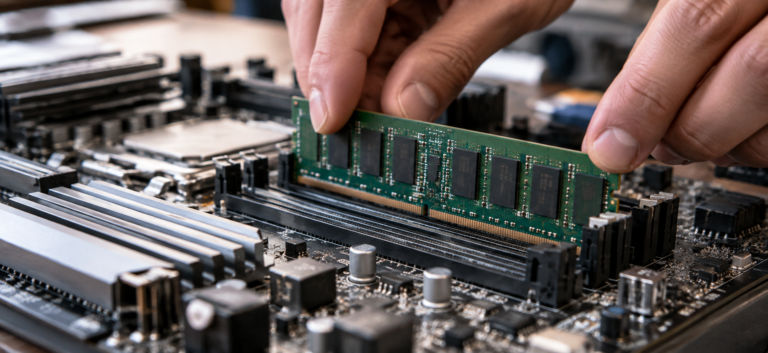
Driven by surging global demand for High-Bandwidth Memory (HBM), the semiconductor giant posted unprecedented top- and bottom-line performance, with data center sales up 11x.

Revenue came in at a record $54.23 billion for the quarter – up sharply from $11.32 billion in the same quarter last year, while GAAP net income also reached an astounding $37.7 billion or $32.87 a share.

Micron stock is currently trading at more than 3x its price at the start of this year.

Why Micron stock is pushing higher after Q4 earnings

Beyond raw headline figures, Micron demonstrated pricing power in fiscal Q4 previously unheard of in the traditionally cyclical memory market.

Non-GAAP gross margins surpassed management’s aggressive target of 86%, demonstrating how strategic long-term customer agreements have insulated the firm from broader macro volatility.

HBM3E memory modules, which power next-generation graphic processing units for enterprise deep learning clusters, remain fully sold out deep into next year.

Operating cash flow swelled to $89.68 billion for fiscal 2026 – allowing Micron to simultaneously fund $27.37 billion in capital expenditures while sustaining robust liquidity reserves.

Crucially, the “14-week quarter” provided extra operational tailwinds, reinforcing MU’s transition from a commoditized chip maker into an irreplaceable AI infrastructure player.

Guidance suggests MU shares have more room to run

MU shares fell after the earnings release despite management issuing exceptionally strong Q1 guidance, projecting revenue of $61.5 billion, plus or minus $1.5 billion, and GAAP diluted EPS of $37.84.

This outlook confirms that server memory tightness will persist, despite rising competition from Chinese mainstream DRAM producers.

Note that Micron showed material strength across its broader portfolio in the fourth quarter.

Data center storage demand surged – led by “high-capacity” enterprise SSDs (eSSDs) that complement high-performance AI training and inference server deployments.

High-density server DRAM modules (DDR5) and LPDDR5X for AI-enabled edge devices also saw accelerated enterprise adoption, expanding MU’s footprint past traditional accelerators.

  • DRAM revenue rose to $38.26 billion in Q4 (representing ~70.5% of total quarterly revenue).
  • NAND revenue surged to $12.32 billion in Q4 (representing ~22.7% of total quarterly revenue).
  • High-capacity eSSDs (specifically 30TB+ and 60TB class drives) crossed the $1.5 billion quarterly run rate mark.

Micron confirmed over $100 billion in total cumulative long-term “take-or-pay” contract value locked in across top hyperscale cloud providers and AI GPU customers.

These binding contracts guarantee pricing floors and volume commitments, insulating Micron from standard cyclical price spot dips.

How to play Micron Technology after fourth-quarter earnings

Following the post-earnings breakout, investors should approach Micron shares with a strategic balance of momentum participation and risk management.

With shares up over 200% year-to-date, chasing extended green candles risks exposure to short-term pullback volatility.

A prudent approach involves writing cash-secured puts below key technical support levels to establish entries on dips or holding core long equity while selling out-of-the-money covered calls to harvest elevated option premiums.

Given MU’s long-term order visibility and structural gross margin expansion, dollar-cost averaging on temporary macro consolidations allows long-term investors to participate in the multi-year AI memory super-cycle without overextending capital at local peaks.

The post Micron revenue quadrupled to $54 billion but the stock fell: here’s why appeared first on Invezz

Broadcom’s relationship with Anthropic is starting to look less like a conventional supplier deal and more like a financing loop built around future AI demand.

Anthropic’s IPO prospectus shows Broadcom has agreed to make up to $42 billion of financing available for infrastructure spending, with the ability to designate a financing partner.

The facility could fund roughly a third of Anthropic’s $125.2 billion five-year commitment to lease TPU computing capacity.

At the same time, Anthropic is expected to become Broadcom’s largest custom-chip customer in 2027, tying the financing directly to the semiconductor company’s future revenue ambitions.

Why Broadcom wants to finance the buyer

The structure explains why Broadcom is willing to put so much capital around one customer.

Its AI semiconductor business is expanding far faster than the rest of the company, and management expects revenue from those chips to reach about $115 billion in fiscal 2027 and $230 billion in 2028.

Broadcom and Google have already agreed to support about 3.5 gigawatts of next-generation TPU capacity for Anthropic beginning in 2027.

In June, Broadcom also launched an AI infrastructure platform with Apollo and Blackstone, starting with a $35 billion financing tranche tied to more than 1 gigawatt of Anthropic compute.

Broadcom has said that outside financial partners are expected to underwrite and capitalise most of these assets rather than leaving the entire burden on its own balance sheet.

Still, the Anthropic filing shows how closely financing, equipment supply and future chip sales are becoming linked.

The circularity risk is real

That creates an obvious circularity risk. The supplier is helping create the financing that allows its customer to buy or lease more of the supplier’s technology.

If Anthropic keeps growing rapidly, the structure can accelerate Broadcom’s sales, but in case the economics disappoint, the same relationship could concentrate both credit and customer risk.

Anthropic itself flags potential conflicts of interest around Broadcom’s dual role as hardware supplier and financing partner.

The filing also warns that some defaults could accelerate lease obligations while limiting Anthropic’s ability to draw further on the financing facility.

Bank of America analysts have previously modelled Broadcom’s residual-value exposure on AI financing structures and concluded that losses could remain manageable under moderate default assumptions.

But the bank also highlighted how quickly exposure could rise if Broadcom scales the model across more customers.

JPMorgan analyst Harlan Sur recently argued that Broadcom’s long-term AI revenue guidance may still prove conservative if deployments and supply ramp faster than management currently assumes. That is the upside Broadcom is financing towards.

Anthropic’s IPO becomes a Broadcom test

The broader numbers show why the company is willing to take that risk. Broadcom says demand from its six major AI customers exceeds the supply it has secured, with roughly $350 billion of AI semiconductor revenue expected across fiscal 2027 and 2028.

For Broadcom, the $42 billion facility is therefore not simply a loan to Anthropic. It is a way of helping finance the infrastructure that could create one of its biggest future revenue streams.

The trade-off is concentration, as Broadcom is betting that Anthropic will grow quickly enough to service its commitments and keep buying compute at enormous scale.

The post Why Broadcom is lending Anthropic $42B while betting on its future spending appeared first on Invezz

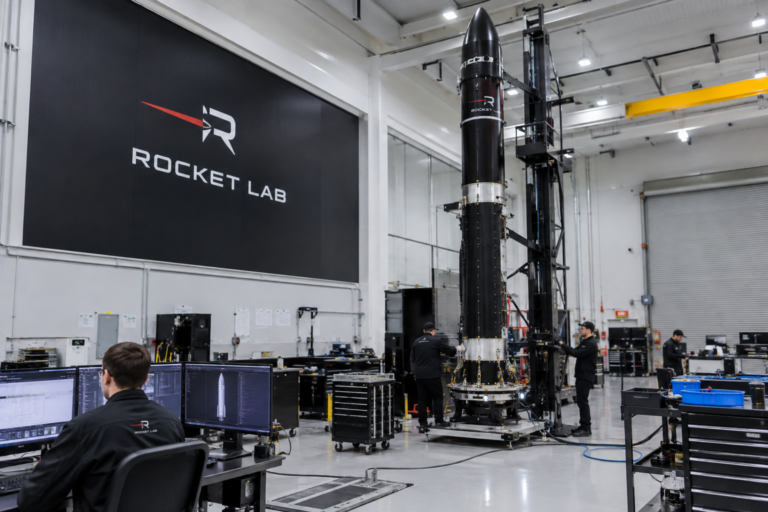
Rocket Lab shares RKLB rose over 1% during Thursday trading after the space company secured its largest commercial launch contract to date, strengthening its position in the increasingly competitive satellite-launch market.

Further, Citi also initiated coverage of Rocket Lab with a Buy rating and a $105 price target, implying about 50% upside from Wednesday’s closing price.

The company signed a multiyear agreement with Tokyo-based satellite operator Synspective for 20 additional Electron missions.

The deal takes the total number of Electron launches contracted by Synspective to 47, making it Rocket Lab’s largest customer by mission count.

Financial terms of the agreement were not disclosed.

The stock had gained over 4% in premarket trading but lost most of the gains after the market opened.

Rocket Lab expands Synspective partnership

Rocket Lab will launch 20 StriX synthetic aperture radar satellites into sun-synchronous orbit from its Launch Complex 1.

The missions are scheduled annually between 2028 and 2031 and will support Synspective’s plans to build a satellite constellation capable of imaging locations around the world within hours, regardless of whether it is day or night or whether weather conditions are favorable.

The contract provides Rocket Lab with additional visibility into future launch activity as it continues expanding its commercial and government customer base.

The company operates launch facilities in both New Zealand and the US and offers multiple rocket platforms, including Electron, Haste and the larger Neutron vehicle.

Citi sees further upside for Rocket Lab stock

The latest contract comes as Wall Street firms highlight Rocket Lab’s position in the commercial space market.

Citi initiated coverage of Rocket Lab with a Buy rating and a $105 price target, implying about 50% upside from Wednesday’s closing price.

The brokerage said Rocket Lab is one of only a few companies “on the planet” providing regular commercial access to orbit.

Citi also highlighted the company’s established Electron rocket and described Rocket Lab shares as a “core holding for space bulls.”

Cantor Fitzgerald earlier this week reiterated its Overweight rating and $122 price target.

The firm pointed to Rocket Lab’s track record of successful launches and its diversified business across commercial and government customers and domestic and international markets.

Cantor identified the first launch of Rocket Lab’s Neutron rocket and the closing of the company’s Iridium acquisition as potential catalysts.

Neutron remains under development and testing, with its first launch date yet to be confirmed. Cantor has previously described the vehicle as a potential competitor to SpaceX’s Falcon 9.

Revenue and backlog continue to grow

Rocket Lab’s operational momentum has also been reflected in its financial results.

Revenue jumped 62% year over year to $234 million in the second quarter, while the company’s backlog surged 137% to a record $2.36 billion.

Rocket Lab secured $437 million of contracts during the quarter across its Electron, HASTE and Neutron programs.

The company is targeting the start of Neutron launches either this year or early next year, although the timing remains dependent on development and testing progress.

Rocket Lab shares are still down more than 8% this year despite gaining about 11% over the past month.

Analysts expect the company’s growth to accelerate.

The average forecast calls for annual revenue to rise about 60% to $958 million this year and reach approximately $1.36 billion next year.

The latest Synspective agreement adds another long-term source of launch demand as Rocket Lab seeks to convert its growing backlog and launch track record into sustained revenue growth.

The post Rocket Lab shares rise on contract with Synspective: why Citi sees a 50% upside appeared first on Invezz

Friends and colleagues are mourning the loss of George Waft, a stalwart of Manx public life who passed away at the age of 89. A man defined by his lifelong commitment to others, Mr Waft left behind a legacy of service that stretched from the halls of Tynwald to the heart of the Onchan community. His death marks the end of an era for those who remember him not just as a politician, but as a steady hand and a source of wisdom for generations of residents.

His journey into leadership began locally, where he spent twenty years serving on the Onchan Commissioners before stepping onto the national stage. After winning a by-election in 1991, he represented his constituency in the House of Keys for three years before being elevated to the Legislative Council. He remained a fixture in the island’s government for nearly two decades until his retirement in 2010, earning a reputation for stability and diligence throughout his tenure.

Beyond his political achievements, Mr Waft lived a multifaceted life dedicated to care and duty. Before entering politics, he served as a catering officer with naval companies and spent thirty years working as a psychiatric nurse with the Department of Health and Social Security. This background in healthcare informed his approach to governance, blending administrative skill with genuine compassion for those under his care.

Even after leaving official office, he refused to step back from public service. As president of the local Royal British Legion branch, he continued to support veterans and their families, becoming one of the most respected figures in Onchan. Local MHK Rob Callister recalled him as someone who was incredibly generous with his time and always ready to offer sound advice to those seeking guidance.

In tributes released following his passing, members of the Royal British Legion described him as a caring and compassionate individual whose kindness will be deeply missed by everyone who knew him. While he will be remembered for his nineteen years in Tynwald, it is perhaps his quiet devotion to his neighbors and his unwavering spirit of volunteerism that leave the deepest mark on the Isle of Man. Condolences have been shared with his wife, Lynn, and their extended family during this time of grief.

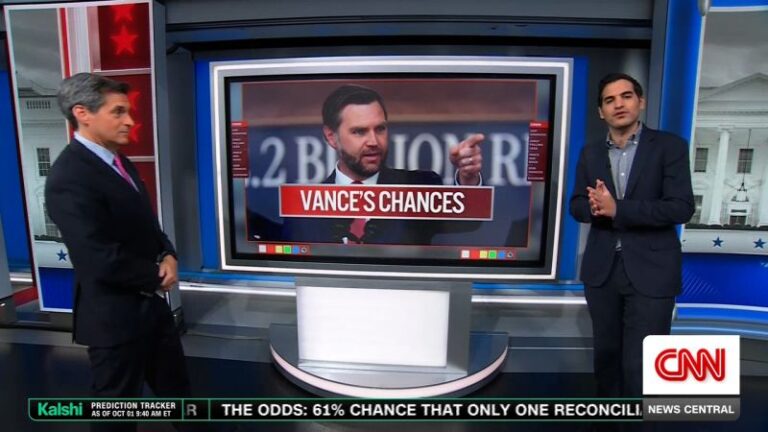
The political landscape is already shifting toward 2028, with early data suggesting that Vice President JD Vance has carved out a significant advantage within his own party. In a recent analysis featured on CNN News Central, anchor John Berman and Chief Data Analyst Harry Enten explored the metrics that currently position Vance as the frontrunner for the next Republican nomination. By examining current polling, the duo highlighted how Vance has managed to secure a strong grip on the GOP base long before an official primary season begins.

To put these figures into perspective, Enten looked back at historical trends to see how often early favorites actually cross the finish line. While politics is notoriously unpredictable, the patterns suggest that building this kind of momentum early on can be a decisive factor in securing a nomination. This statistical head start indicates that Vance is not just filling a role but is actively consolidating power among voters who will decide the future of the ticket.

Beyond traditional polls, the discussion turned toward prediction markets, which offer a real time glimpse into how bettors and analysts view the race. These markers provide another layer of insight into Vance’s viability, signaling whether his strength within the party translates to broader appeal across the general electorate. As it stands, the odds reflect a candidate who is well positioned to potentially seek both the nomination and the presidency in four years.

Conservative politicians have hit back at Andy Burnham, claiming his recent comments regarding Manchester City’s financial rule breaches are completely out of touch with football fans and the general public. The controversy erupted after the former Mayor of Greater Manchester admitted in a BBC interview that he would be really concerned if the club’s ownership decided to sell up following a damning report from an independent commission. This admission came shortly after the Premier League alleged that City systematically broke rules for nearly a decade through sham contracts designed to hide over 830 million pounds in secret funding.

Tory MPs described Burnham’s stance as frankly extraordinary, accusing him of publicly siding with the owners while legal processes are still underway. Shadow sports minister Louie French argued that fans are rightfully horrified by the allegations and questioned whether political pressure is being exerted due to the owners’ extensive investments across Manchester. French emphasized that football must be governed independently and insisted that no club or owner should ever be considered above the rules regardless of their economic contribution to the region.

For his part, Burnham maintained that he is not intervening in the official proceedings and believes it would be wrong to jump to conclusions before appeals are heard. While expressing confidence that his own dealings with the club during his time as mayor would withstand scrutiny, he praised the owners for helping turn Manchester City into a global force and contributing to the modernization of the city itself. He further suggested that other clubs, including his own supported team Everton, had not always been treated fairly under similar regulatory frameworks.

Downing Street has joined the chorus calling for impartiality, stating that any proven wrongdoing must lead to appropriate consequences. As Manchester City maintains its innocence and prepares its appeal, the newly formed Independent Football Regulator has signaled that it may use its powers to assess the suitability of owners based on these findings. With potential sanctions ranging from massive fines to points deductions, both the club and the league remain in a period of intense instability while awaiting a final resolution.

Donald Trump arrived in Durant, Oklahoma, late Tuesday night following a dramatic journey through severe weather that forced him to ditch his usual flight for a high speed motorcade from Texas. The former president joked with the cheering crowd about the ordeal, recounting how he ordered his security detail to drive nearly 100 miles per hour just to ensure the event took place. Reporters accompanying the convoy noted that their own vehicles reached speeds of 98 mph during the rush to reach the venue.

Once on stage, Trump shifted his focus toward upcoming elections, urging supporters to treat local Republican candidates as though he himself were on the ballot. He specifically threw his weight behind gubernatorial candidate Mike Mazzei and Representative Kevin Hern, who is seeking a seat formerly held by Senator Markwayne Mullin. His platform for the evening included several key campaign pillars, ranging from stricter immigration controls and voter ID laws to specific policies targeting transgender athletes.

One of the most provocative moments of the rally came when Trump reiterated a promise to provide every adult American with 5,000 dollars if Republicans maintain control of both the House and Senate. While critics from across the political spectrum have questioned the feasibility of such payments, some allies like Senator Bernie Moreno have already pledged to introduce supporting legislation. Commerce Secretary Howard Lutnick defended the plan, claiming these dividends would not increase the national deficit or rely on taxpayer funding.

Between policy pledges, Trump also touched upon foreign affairs and military action, celebrating recent U.S. naval strikes in the Caribbean aimed at dismantling drug trafficking networks near Venezuela. He boasted that maritime drug shipments had plummeted significantly because smugglers were now too terrified to take to the water. In a moment of levity, he jokingly apologized to Venezuelan fishermen who might be avoiding the seas due to those same fears.

The stop in Oklahoma is part of an aggressive final stretch leading into the midterms, with White House officials indicating that Trump plans to visit at least 17 different states. This extensive tour aims to energize casual voters and secure a slim Republican majority in Congress during what is shaping up to be a highly contested election cycle.

Walmart is turning its aisles into a high tech scavenger hunt to solve one of the oldest frustrations of big box shopping: finding a single item among 120,000 different products. The retail giant is expanding a series of tools linked to its digital shelf labels designed to guide both shoppers and staff toward specific items using flashing lights. A new feature called Shop to Light allows customers to search for a product on the Walmart app and then trigger the corresponding shelf label to blink once they arrive in the correct aisle, essentially creating a visual beacon for their purchase.

The innovation extends beyond the customer experience through two companion systems known as Pick to Light and Stock to Light. These tools assist store associates in quickly locating merchandise for digital orders and streamlining the restocking process. According to Greg Cathey, Walmart’s senior vice president of digital transformation, the goal is to leverage AI and automation not to replace humans but to free up employee time so they can focus more on direct customer service rather than wandering aisles searching for misplaced inventory.

This rollout arrives as Walmart aggressively modernizes its infrastructure ahead of the busy holiday season, with plans to implement these features companywide by winter. Digital labels were originally introduced primarily to handle systemic price updates without the need for manual paper replacements, but they have now become central to a broader strategy involving AI agents and automated supply chains. Early results suggest strong adoption, with five million flashes already recorded during limited pilot tests this summer.

However, the transition from paper to pixels hasn’t been without friction. Some critics and state legislators have expressed concerns that digital labels could pave the way for dynamic pricing or surveillance based on shopper data. In response, CEO John Furner recently issued an open letter clarifying that the company intends to price products rather than people, asserting that factors like income or shopping history will not influence the cost displayed on those screens. For now, Walmart remains committed to its vision of a tech powered environment where blinking lights simplify the chore of grocery shopping.

President Trump has spent much of his second term boasting that his return to office ended the era of runaway egg prices, frequently pointing to the dramatic drop in costs as a victory for his administration. Federal data supports the claim that prices have plummeted, falling from an average of 4.95 dollars a dozen in January 2025 to just 2.27 dollars by August. However, agricultural experts argue that the reality behind these numbers is far more complex than political rhetoric suggests, noting that market forces played a larger role than any specific white house policy.

The primary driver of the volatility has been avian flu rather than legislation. Massive outbreaks starting in 2022 and peaking again in early 2025 decimated millions of laying hens, creating a supply shock that sent prices soaring to a record high of 6.23 dollars a dozen in March 2025. Because eggs are considered an inelastic product—meaning families continue to buy them regardless of price due to their versatility in cooking and baking—consumers felt the pinch acutely. As the virus subsided and farmers successfully rebuilt their flocks during a milder winter season, supply naturally increased and prices corrected themselves.

The Trump administration did take steps to stabilize the industry, including providing hundreds of millions of dollars for biosecurity enhancements and cutting some regulatory red tape for farmers. There was also a significant spike in imports to help bridge the gap while domestic production recovered. While these efforts provided some support, analysts suggest that roughly ninety percent of the price decline can be attributed to simple luck regarding the cycle of bird flu and basic biological recovery rather than government intervention.

Despite the lower grocery bills for consumers, some farmers find themselves in a precarious position. Economics professors note that while certain regulations were loosened, new burdens have emerged under current policies. Tariffs on foreign trading partners and geopolitical tensions involving Iran have driven up essential operating costs, such as diesel fuel, eating into farm profits. As midterm elections approach and food affordability remains a top concern for voters, the debate continues over whether today’s cheaper eggs are a result of strategic leadership or merely a fortunate break in nature’s patterns.

It was a tug of war on Wall Street this Thursday as investors grappled with rising treasury yields and mixed corporate reports. The Dow Jones Industrial Average drifted lower, slipping about 0.1 percent, while the S&P 500 struggled to maintain its footing. Technical analysts noted that the S&P 500 dipped below its critical 50 day moving average, a sign that suggests some growing hesitation among traders as they weigh macroeconomic pressures against individual company successes.

The primary headwind for the broader indices came from the bond market, where surging yields created an environment of uncertainty despite signs of cooling inflation elsewhere in the economy. This volatility pushed several major benchmarks into negative territory during afternoon trading, though energy markets provided a slight counterweight as oil prices saw a noticeable jump throughout the session.

Despite the general gloom across the boards, certain companies managed to carve out their own winning streaks. Accenture emerged as a standout performer, vaulting higher after delivering earnings results that beat analyst expectations. While not every tech giant fared as well, with Micron Technology seeing some downward pressure following its report, others like Lumentum surged, proving that strong fundamentals can still drive gains even when the overall market sentiment is fragile.