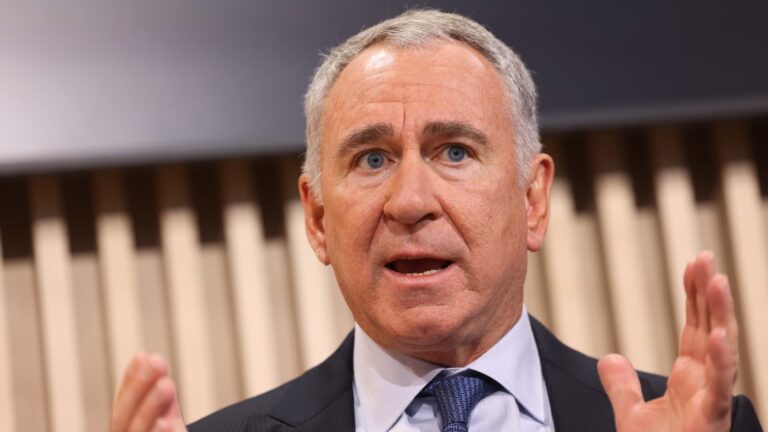
Sam Altman took the stage at OpenAI’s DevDay in San Francisco this Tuesday, delivering a series of remarks that felt less like a standard corporate presentation and more like a philosophical manifesto for the age of artificial intelligence. While the event served as the launchpad for Dots, a new AI agent designed to streamline digital life, Altman spent much of his time challenging common perceptions of the technology. Most notably, he pushed back against comparing the current AI boom to the Industrial Revolution. Instead of merely turning the economic crank faster, Altman argued that AI should emulate the Renaissance by focusing on human empowerment rather than raw industrial efficiency.
The CEO didn’t shy away from criticizing the very systems his own company uses to bill clients. In a surprising admission, Altman described tokens, the basic units used to price AI inputs and outputs, as a terrible metric for measuring value. He noted that because different models process data differently to achieve the same result, tokens provide a poor proxy for actual productivity. Despite these reservations, he admitted that OpenAI hasn’t yet found a billing method that satisfies customers’ desire for an underlying basis of cost, leaving them stuck with a system he clearly finds flawed.
On a more personal note, Altman shared how his new Dots agent is helping him reclaim his mental clarity by acting as a buffer between himself and his smartphone. By processing notifications and managing tasks overnight, the tool allows him to avoid what he described as brain pollution during his morning routine. This move toward reduced screen dependency comes as Altman navigates an increasingly tense conversation regarding AI safety. Positioning himself as a centrist in the debate, he rejected both those who wish to accelerate without caution and those calling for total pauses in development, arguing instead that safety must simply evolve slightly faster than capability.
Closing with a message to the next generation of workers, Altman offered an optimistic take on employment despite widespread fears of automation replacing white collar roles. Addressing students entering an uncertain job market, he claimed it is actually one of the best times in history to graduate. While acknowledging that some job categories will inevitably vanish, he insisted that doomist predictions underestimate potential economic growth and suggested that ambitious newcomers stand to gain more from this transition than any previous era.