Author

admin

Browsing

Tesla TSLA shares rose more than 1.5% in premarket trading Friday after the electric vehicle maker reported a 5% year-over-year increase in sales of China-made vehicles in September.

The stock appeared poised to open higher after falling in each of the previous two sessions.

The latest sales figures offered another sign of improving demand for Tesla vehicles.

Tesla recovering

Tesla’s deliveries of its China-made EVs increased by over 4500 units as the company, led by Elon Musk, aims to script a recovery after two years of a slump.

Sales of EVs made in China saw a 3.6% year-on-year growth in August, which has now improved further to 5% for September.

Deliveries of Model 3 and Model Y vehicles manufactured in Shanghai went up to 95,366 last month from 90812 in September 2025.

The latest figures come as Tesla seeks to return to full-year sales growth after a difficult two-year period owing to increased competition.

Tesla’s annual sales declined for the first time in more than a decade in 2024, and the company was unable to recover in 2025.

It also lost its position as the world’s largest electric vehicle maker by sales to China’s BYD, which has expanded rapidly, particularly in Europe.

This year has been relatively stronger for Tesla, with the latest China figures adding to signs of improvement in several markets.

Vehicles manufactured at Tesla’s Shanghai factory are sold in China and exported to markets including Europe, Asia-Pacific and Canada, making the facility an important part of the company’s international business.

European sales also improve

Tesla has also recorded stronger sales in several European countries.

Registrations more than doubled in Portugal in September compared with a year earlier.

Sales rose more than 60% in France, 38% in Sweden and 24.8% in Spain.

Denmark and Norway also recorded modest annual increases even as the EV market in these countries remains largely saturated.

The company delivered 486,532 vehicles in the third quarter, comfortably exceeding Wall Street estimates of about 461,000 deliveries.

However, total deliveries were still roughly 2.1% lower than in the same period a year earlier.

The figures leave investors weighing the company’s stronger-than-expected quarterly deliveries against the continued year-over-year decline in total vehicle volume.

Q3 earnings in focus

Tesla’s third-quarter earnings report, scheduled for October 21, will be the next major event for investors assessing the company’s recovery.

The stock remains almost 25% down from its peak of $498.82.

Wall Street expects Tesla to report approximately $27.91 billion in third-quarter revenue and earnings of $0.45 per share, according to Fiscal.ai.

Investors are also expected to focus on Tesla’s Full Self-Driving (FSD) technology, robotaxi plans, and Optimus humanoid robot project.

Goldman Sachs said Tuesday that these businesses could become more important to Tesla’s stock performance than near-term earnings, highlighting the attention investors are paying to the company’s longer-term ambitions beyond vehicle sales.

The post Tesla stock up 1.5% in premarket: is it back on track? appeared first on Invezz

US stocks opened higher on Friday as oil prices retreated following easing concerns about further escalation in the Middle East, while investors assessed the outlook for artificial intelligence stocks and the impact of SpaceX’s latest spectrum deal on telecom companies.

The Nasdaq Composite gained 172 points while the S&P 500 was up 0.35%. Dow Jones Industrial Average traded up 0.24%.

The moves followed two consecutive sessions of losses for major indexes, with technology stocks under pressure after a report on OpenAI’s annualised revenue raised questions about the AI investment boom.

Oil retreats as Middle East concerns ease

Oil prices fell after US President Donald Trump said the country would not attack Iran before next month’s midterm elections, easing some concerns about further disruptions to global energy supplies.

Brent crude declined by more than 1% but remained above $100 a barrel. Meanwhile, the 10-year US Treasury yield was steady at 5.25%, close to the 24-year high of 5.37% reached on Wednesday.

Higher oil prices have added to concerns about inflation and the possibility of further Federal Reserve rate increases.

Investors are also preparing for the third-quarter earnings season to gather pace next week, with major US banks scheduled to report results.

The S&P 500 was on track to gain around 0.6% for the week, while the Dow Jones Industrial Average and Nasdaq Composite were roughly flat.

The equal-weighted S&P 500 was also poised to end a seven-week losing streak.

AI and chip stocks recover after OpenAI revenue report

Technology and semiconductor stocks moved higher in trading after declining sharply on Thursday.

OpenAI told investors that its annualised revenue reached around $50 billion at the end of September, below the $68 billion figure widely reported last month.

The earlier estimate reportedly included gross revenue from partners, complicating comparisons.

The update triggered a sell-off in AI-linked stocks, with the Nasdaq Composite falling more than 1% on Thursday.

Investors also remain concerned about the scale of debt and equity financing required to support AI infrastructure spending.

On Friday, Nvidia shares rose 0.47%, while Tesla gained 2.63%. Amazon and Alphabet edged higher, and the iShares Semiconductor ETF, an exchange-traded fund tracking US semiconductor stocks, advanced 0.78%.

Lumentum shares gained 7%, while KLA rose 2%, as technology stocks broadly recovered.

SpaceX spectrum deal weighs on telecom stocks

SpaceX shares climbed 2.9% in trading after the company agreed to acquire a nationwide low-band spectrum portfolio, strengthening its position in mobile connectivity through its Starlink satellite network.

The deal raised concerns about increased competition for established US wireless operators. T-Mobile US shares fell 9%, AT&T declined 7.7%, and Verizon slipped 6.3%.

Other company-specific moves included a 16% gain for Humana after government data showed that 95% of its Medicare Advantage members were enrolled in plans rated four stars or higher for 2027.

Apple shares fell 2.5% following a report that the company had asked some suppliers to reduce production of components for its newly launched iPhone 18 Pro models amid rising memory-chip costs and concerns about consumer demand.

Delta Air Lines dropped 2.43% after lowering its annual profit forecast, citing fuel costs that were outpacing gains from fares.

The post Nasdaq opens higher as oil retreats, AI stocks recover and telecom shares slide appeared first on Invezz

Moderna MRNA shares jumped more than 9% in early trading Friday, reaching a fresh 52-week high as the biotechnology company returned to the Nasdaq-100 index.

Moderna hit a 52-week high of $216.95. It lost some of the gains and was trading at $208.69, up 5.9% at the time of writing.

The broader market was also higher, with all three major US stock indexes gaining as Treasury yields cooled and oil prices declined.

Nasdaq-100 inclusion adds fuel

Moderna’s return to the Nasdaq-100 is proving to be the major catalyst for the stock.

The company had previously been part of the index before being removed following a decline in its shares after the pandemic. Its shares had fallen to as low as $22 before scripting a dramatic comeback.

Its re-entry comes after a sharp recovery in its market performance, with a rise of over 670% in one year. It has been among the most outstanding performers in the market this year.

The biotechnology company is replacing Warner Bros. Discovery in the technology-heavy index.

The inclusion has created additional demand for Moderna shares as index funds and exchange-traded funds that track the Nasdaq-100 adjust their portfolios to reflect the change.

The index is tracked by more than 200 investment products with over $800 billion in assets, broadening the pool of investors exposed to Moderna, who now have to include the biotech company in their funds.

Cancer therapy pipeline remains key

Investors are also looking ahead to Moderna’s oncology pipeline, particularly the upcoming Phase 3 data for intismeran autogene, an individualized neoantigen therapy developed in collaboration with Merck.

The data are scheduled to be presented on October 24. The positive Phase 3 results have been described as a historic milestone for commercialized individualized mRNA cancer therapy, attracting attention from investors and Wall Street.

Moderna has also announced Juan Andres as its new chief operating officer as the company looks toward potential expansion in oncology and a broader portfolio of commercial vaccines.

These developments are adding to investor interest beyond the immediate impact of the Nasdaq-100 inclusion.

Stock price trading above analysts’ target price

However, the stock’s substantial rise also raises questions about how much of the anticipated progress has already been reflected in its valuation.

Investors will be watching whether developments in Moderna’s pipeline can translate into sustained financial gains over the longer term.

Earlier this month, Morgan Stanley raised its price target on Moderna to $95 from $89 while maintaining an Equal-Weight rating.

Citigroup analyst Geoff Meacham, meanwhile, downgraded the stock to Sell from Neutral, although he raised his price target to $80 from $60.

Both price targets remain well below Moderna’s current trading level of just above $200.

These numbers indicate that analysts are still taking a cautious view of the stock even as the bull run refuses to end.

The post Moderna stock fires past 52-week high: what’s behind Friday’s rally? appeared first on Invezz

The artificial intelligence stocks saw a sell-off on Thursday after reports said OpenAI’s reported annualised revenue was $20 billion short of previously reported figures. 

The report raised questions about whether the revenue generated by AI companies can justify the sector’s substantial investment in chips, data centres and computing infrastructure.

The figure was around $50 billion, less than the $70 billion previously reported, prompting investors to reassess growth expectations across the AI ecosystem. 

The Nasdaq Composite fell 1.25% on Thursday, while Nvidia, Advanced Micro Devices and Oracle dropped 2.9%, 3.9% and 5.5%, respectively.

However, the discrepancy did not necessarily indicate a sudden deterioration in OpenAI’s business.

Different revenue calculations appear to explain at least part of the gap, while subsequent reports pointed to continued growth expectations.

The episode nevertheless highlighted the sensitivity of AI-linked stocks to developments involving major customers and the funding needed to sustain the industry’s expansion.

Nasdaq Composite recovered 0.51% on Friday.

Revenue discrepancy triggers concerns across AI stocks

The Financial Times reported on October 8 that OpenAI’s annualised revenue was approximately $50 billion at the end of September, below the $70 billion figure previously circulated.

The distinction centres on how revenue generated through cloud-computing partners is counted.

Some earlier estimates included gross revenue associated with those partners to make comparisons with rival Anthropic more straightforward.

OpenAI’s reported figure excluded the partners’ share of certain sales.

Consequently, the difference should not be interpreted as evidence that OpenAI had suddenly lost $20 billion in customer spending.

Instead, it raised questions about how investors compare the financial performance of AI companies and assess their underlying growth.

The market reaction was immediate. Nvidia, a key supplier of chips used in AI systems, declined alongside AMD and Oracle, which has significant exposure to AI infrastructure and cloud computing.

The sell-off demonstrated how concerns about a major AI customer can spread to companies supplying the hardware, networking and computing capacity required to operate AI services.

Some of those losses were partly recovered in trading on October 9. Oracle shares gained 5%, and Coherent was up 1.85%. However, Nvidia was trading down 0.31%.

Spending, cash flow and valuations under scrutiny

Beyond the revenue discrepancy, investors are assessing whether the rapid expansion of AI infrastructure can generate sufficient returns to justify its cost.

According to Barclays, Microsoft, Alphabet, Amazon and Meta spent a combined $165 billion on capital equipment in the second quarter of 2026, up from $88 billion a year earlier.

Their combined free cash flow after those purchases was approximately $6.7 billion.

Bain and Company recently said the AI industry needs to generate $6 trillion in annual revenue by 2031 to justify the infrastructure buildout.

The figures illustrate the scale of investment being directed towards data centres and related infrastructure, alongside the relatively small amount of cash remaining after capital expenditure.

Higher Treasury yields add another consideration by increasing borrowing costs.

Investors are also questioning whether AI companies can sustain their spending plans without placing greater pressure on their balance sheets or relying on continued access to equity and debt markets.

Lee Yang, an analyst at Alchemy Markets in an Investing.com report, identified AI customer revenue, cash remaining after spending, and continued growth in chip orders as important indicators to monitor.

Weakness across those measures would provide a stronger warning about the sector’s outlook than a single revenue discrepancy, particularly when the reported figures use different accounting approaches.

Firmus IPO setback adds to AI funding concerns

Concerns about the AI investment cycle also received attention after Nvidia-backed cloud-computing company Firmus Grid scrapped plans for a $5 billion initial public offering in Australia.

Investors weren’t ready to back the company at the proposed $30 billion valuation.

Firmus operates data centres and rents computing capacity, including Nvidia chips, to customers such as OpenAI and Meta.

The proposed valuation was nearly three times the $10.5 billion at which the company had reportedly been valued two months earlier. Firmus has two operational data centres and five more in development.

Independent analyst Richard Windsor, who publishes the Radio Free Mobile blog, said Firmus could still raise money privately, but argued that its proposed valuation was too high given the company’s early stage and associated risks.

The abandoned listing does not, by itself, establish that demand for AI infrastructure is weakening.

However, it adds to scrutiny of the valuations being assigned to companies seeking to benefit from the AI boom.

The stakes extend to Nvidia, whose business depends in part on sustained demand from AI developers and infrastructure providers.

The prospect of major public listings by OpenAI and Anthropic has also become part of the market’s focus as investors look for evidence that leading AI businesses can support their valuations.

OpenAI’s revenue report therefore exposed a broader sensitivity within the AI trade: investors are not only watching spending on chips and data centres, but also the revenue, cash flow and financing conditions needed to sustain that investment.

The revenue discrepancy has an explanation, but questions over profitability, capital requirements and valuations remain central to the sector’s outlook.

The post How OpenAI’s revenue discrepancy shook the AI stock trade appeared first on Invezz

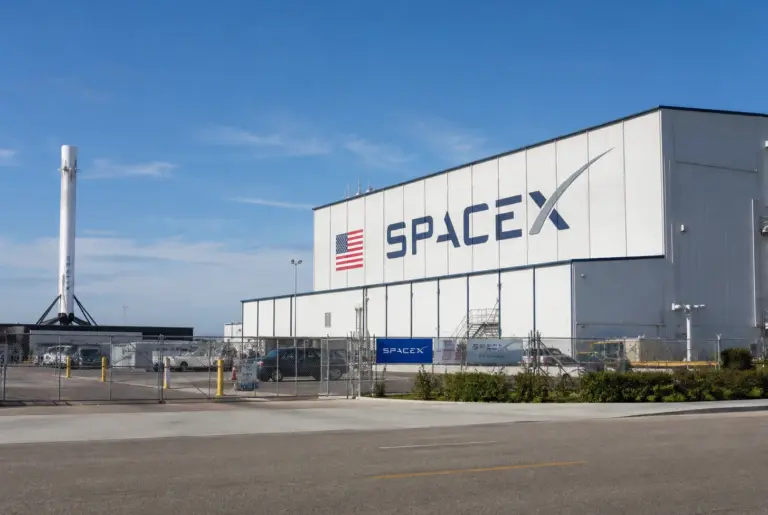
Shares of major telecommunications companies tumbled Friday after SpaceX SPCX announced an agreement to acquire a nationwide portfolio of low-band spectrum licenses, intensifying concerns about competition from Elon Musk’s space and artificial intelligence company.

SpaceX shares rose roughly 1% around midday following the announcement, while traditional wireless carriers faced a sharp sell-off even as the broader US stock market remained in positive territory.

Verizon shares fell 10%, putting the stock on track for its worst trading day since 2002, according to CNBC. T-Mobile dropped 13.03%, while AT&T declined more than 10%, hitting its lowest level in more than two months.

The pressure extended beyond the United States, with the STOXX 600 Telecommunications index falling 2.9%.

What is SpaceX planning?

SpaceX is expanding into the mobile market through a reported agreement to acquire a nationwide portfolio of low-band spectrum licenses from Grain Management.

The deal, reportedly valued at about $8 billion, covers up to 14 megahertz of paired spectrum in the 800 MHz band.

Low-band spectrum carries less data than mid- and high-band frequencies but can cover larger geographical areas and penetrate physical obstacles, including buildings, more effectively.

SpaceX plans to integrate the spectrum into its next-generation satellite system, positioning the company to compete more directly with established telecommunications providers.

The transaction still requires approval from the Federal Communications Commission (FCC).

FCC Chair Brendan Carr told CNBC that SpaceX’s entry into the market was a positive development for American consumers.

For incumbent wireless carriers, however, the proposed acquisition has raised questions about the competitive threat posed by a company seeking to expand its mobile capabilities.

Analysts sound warning bells

The prospect of SpaceX entering the market prompted concerns among analysts about the future competitive position of established wireless operators.

TD Cowen analyst Gregory Williams said the implications could be significant for traditional carriers if SpaceX follows through on its plans.

“We still believe SPCX wants an MVNO first; thus, SPCX could be bluffing,” Williams wrote. “This could be a tactic, but taking SPCX on its word, this puts the carriers on notice.”

An MVNO, or mobile virtual network operator, provides wireless services using another company’s network rather than relying entirely on its own infrastructure.

Evercore ISI analyst Kutgun Maral expressed a similar view, writing in a note that “The carriers’ best argument just got weaker.”

However, JPMorgan sees limited near-term competitive risk for US wireless carriers.

SpaceX’s ability to expand its mobile offering will depend partly on how it combines satellite connectivity with terrestrial infrastructure or partnerships with existing wireless providers.

Tower operators rally

While telecommunications carriers suffered steep losses, companies that operate mobile towers moved higher as investors anticipated that SpaceX would need ground infrastructure to support the expansion of its network.

American Tower shares rose 7.8% on Friday, while Crown Castle gained around 12.7% and SBA Communications advanced 6.7%.

The gains reflected expectations that SpaceX’s entry into the mobile market could create additional demand for terrestrial infrastructure, even as traditional wireless operators faced selling pressure.

JPMorgan has said SpaceX would need a terrestrial network or an agreement with a mobile virtual network operator to support its plans.

Goldman Sachs has expressed a similar view, helping bolster investor interest in tower operators.

With FCC approval still required, the proposed spectrum acquisition marks a potential expansion of SpaceX’s role in the mobile market.

Investors will be watching how the company develops its network strategy and how established telecommunications operators face this challenge.

The post SpaceX’s network plans have rattled legacy carriers, but there’s a surprise gainer appeared first on Invezz

Dr. Annie Andrews, a pediatrician and Democratic candidate for the U.S. Senate in South Carolina, is pushing back against a wave of targeted attacks from her Republican opponents regarding transgender rights. In a newly released advertisement where she appears in her medical attire, Andrews explicitly stated that she does not support biological men competing in women’s sports nor the performance of gender surgeries on minors. The move comes as a direct response to aggressive campaigning by a Super PAC supporting her opponent, Darline Graham, which utilized rhetoric framing transgender individuals as predators to paint Andrews as too radical for the state.

This clash reflects a broader national trend where Republicans are utilizing culture war issues to create strategic wedges within the Democratic coalition ahead of the midterms. Former President Donald Trump has long championed these restrictions, gaining significant momentum following a Supreme Court ruling that upheld bans on transgender girls and women in female sports across several conservative states. By mirroring ads used during previous election cycles, GOP strategists aim to tie Democratic candidates to a perceived extreme agenda centered on they them identity politics rather than traditional constituent needs.

The pressure has created an internal rift among Democrats over how to navigate these accusations without alienating their base or losing moderate voters. Some candidates in competitive districts have adopted more restrictive language similar to Andrews, including representatives from Ohio and North Carolina who have publicly argued that boys should stay out of girls’ sports. While these politicians view the shift as necessary survival in red leaning areas, LGBTQ plus advocacy groups like Equality Pac and the Human Rights Campaign have condemned the approach, arguing that echoing Republican terminology validates harmful narratives and betrays a vulnerable community.

While some seek middle ground through policy concessions, other Democrats are attempting to bypass the debate entirely by redirecting focus toward economic stability and healthcare costs. Advocacy groups have praised strategies that frame these cultural attacks as distractions designed by figures like Elon Musk and Donald Trump to avoid discussing affordability. As the South Carolina race intensifies, Dr. Andrews represents one version of a precarious balancing act currently being played out across the country by Democrats trying to maintain inclusivity while fighting off potent electoral charges.

The ghost of previous election cycles is returning to haunt the Republican Party as concerns grow that Donald Trump may once again jeopardize the GOP’s grip on the Senate. History suggests a pattern where loyalty to the MAGA movement takes precedence over electability, pointing back to 2020 and 2022 when controversial endorsements and political crusades potentially suppressed turnout or installed flawed candidates in winnable districts. Now, heading toward 2026, several key battlegrounds are showing similar cracks, leaving strategists worried that personal vendettas are outweighing strategic necessity.

Texas has become the epicenter of these fears following the rise of Attorney General Ken Paxton. Despite warnings that Paxton carries significant baggage, including impeachment proceedings and criminal charges, Trump threw his weight behind him over Senator John Cornyn. Recent polling indicates this move may have been a catastrophic miscalculation, with Paxton trailing Democrat James Talarico by as much as six points. While Cornyn was far from beloved, analysts suggest he offered a stability that Paxton lacks, particularly among moderate voters who are now drifting toward the Democratic camp.

The ripple effects extend beyond Texas into North Carolina and Georgia, where Trump’s influence appears to have cleared the path for less viable alternatives. In North Carolina, public attacks from Trump reportedly pushed Senator Thom Tillis toward retirement, opening the door for high-profile Democrats like former Governor Roy Cooper to enter the fray. Meanwhile, in Georgia, Trump’s preference for Representative Mike Collins over more traditional options has handed opponents ammunition due to Collins’ alleged ties to extremist groups. These choices seem designed more to punish internal rivals than to secure a legislative majority.

Even in safe havens like South Carolina, Trump’s fingerprints are creating unnecessary friction. By elevating Darline Graham from relative obscurity over experienced politicians, he has alienated party regulars and sparked talk of write-in campaigns. From using inflammatory language on social media to ignoring seasoned incumbents in favor of loyalists, Trump continues to steer the party toward candidates who appeal to his base but struggle with the broader electorate. If the fight for the Senate comes down to a few narrow margins in 2026, those decisions may prove to be the tipping point.

San Francisco Mayor Daniel Lurie is calling for a fundamental shift in how the city governs, admitting in a candid interview with CNN that the municipality lost its way by becoming too entwined in ultra-left ideologies. Speaking with Dana Bash, Lurie argued that a preoccupation with progressive rhetoric blinded officials to the deteriorating conditions of the city’s streets, leading to a crisis characterized by rampant drug overdoses, soaring property crime, and a mass exodus of local businesses.

The mayor was blunt about the human cost of these policy failures, pointing specifically to the hundreds of overdose deaths occurring annually. He challenged the notion that allowing open air drug use or ignoring tens of thousands of car break-ins could ever be considered truly progressive. According to Lurie, certain factions within the city became so entrenched in their beliefs that they began treating criminal activity and public addiction as acceptable behaviors rather than urgent problems requiring intervention.

To steer the city back toward stability, Lurie says his administration is prioritizing common sense over political theory. This new approach involves a harder line on crime and a rejection of movements like Defund the Police in favor of increased law enforcement investment. He believes that good governance means focusing on practical outcomes, such as ensuring mothers can walk their children to bus stops without encountering dangerous narcotics use on every corner.

Beyond policing, the mayor is pushing for systemic changes to support recovery and economic growth. His plan includes slashing bureaucratic red tape for businesses and expanding access to both voluntary and involuntary drug treatment centers. While acknowledging that much work remains regarding addiction services, Lurie highlighted a significant drop in vehicle thefts as evidence that moving away from ideological purity and toward active enforcement is already yielding results for residents.

President Donald Trump is taking his longstanding grievances regarding the 2016 election to the highest court in the land. On Friday, the president asked the U.S. Supreme Court to revive a previously dismissed lawsuit targeting Hillary Clinton, former FBI Director James Comey, and several other political figures. At the heart of the dispute is Trump’s assertion that these individuals conspired to rig the 2016 contest by fabricating a narrative that linked his campaign to Russian interference.

The journey to the Supreme Court follows a series of stinging defeats in lower courts. A federal judge originally tossed out the case, describing it more as a two hundred page political manifesto than a legitimate legal filing. The presiding judge went further by slapping Trump and his lawyer, Alina Habba, with nearly one million dollars in sanctions, arguing that the lawsuit was frivolous and designed solely to advance a dishonest political agenda through the misuse of the judicial system. An appeals court later upheld both the dismissal and those financial penalties.

This particular legal battle stems from a massive complaint filed in Florida back in 2022 while Trump was out of office. He alleged racketeering and conspiracy, claiming that Clinton and her allies worked together to smear him during his first run for the presidency. While Trump ultimately won that election, he has remained focused on what he calls a hoax surrounding Russian meddling, despite findings from Special Counsel Robert Mueller documenting extensive contacts between his team and Russian operatives.

Lawyers for Trump now argue that the lower courts’ decisions carry profound implications for both the presidency and the country at large. This move comes amid a broader pattern of legal aggression toward former rivals, including previous attempts to indict James Comey under a handpicked prosecutor. As the case moves forward, it highlights once again how deeply rooted remains the conflict over whether various intelligence probes into 2016 were justified investigations or politically motivated attacks.

Former President Donald Trump has leveled sharp criticism at Ukrainian President Volodymyr Zelensky, suggesting that the nation needs a change in leadership to move forward. In remarks that underscore his ongoing skepticism regarding the current administration in Kyiv, Trump argued that the devastating conflict with Russia was fundamentally rooted in incompetence.

The comments come at a particularly sensitive time as discussions surrounding a US-Russia diesel deal emerge, adding another layer of complexity to the geopolitical tensions involving these global powers. By framing the outbreak of war as a failure of management rather than an inevitable aggression, Trump positioned himself against the narrative often championed by Western allies who view Zelensky as a symbol of national resilience.

This latest critique marks another instance where Trump has questioned the strategic decisions made within Ukraine. While much of the international community continues to provide military and financial support to hold back Russian forces, Trump’s insistence on new leadership suggests he believes a different diplomatic approach under a new figurehead could be the key to ending the hostilities.