
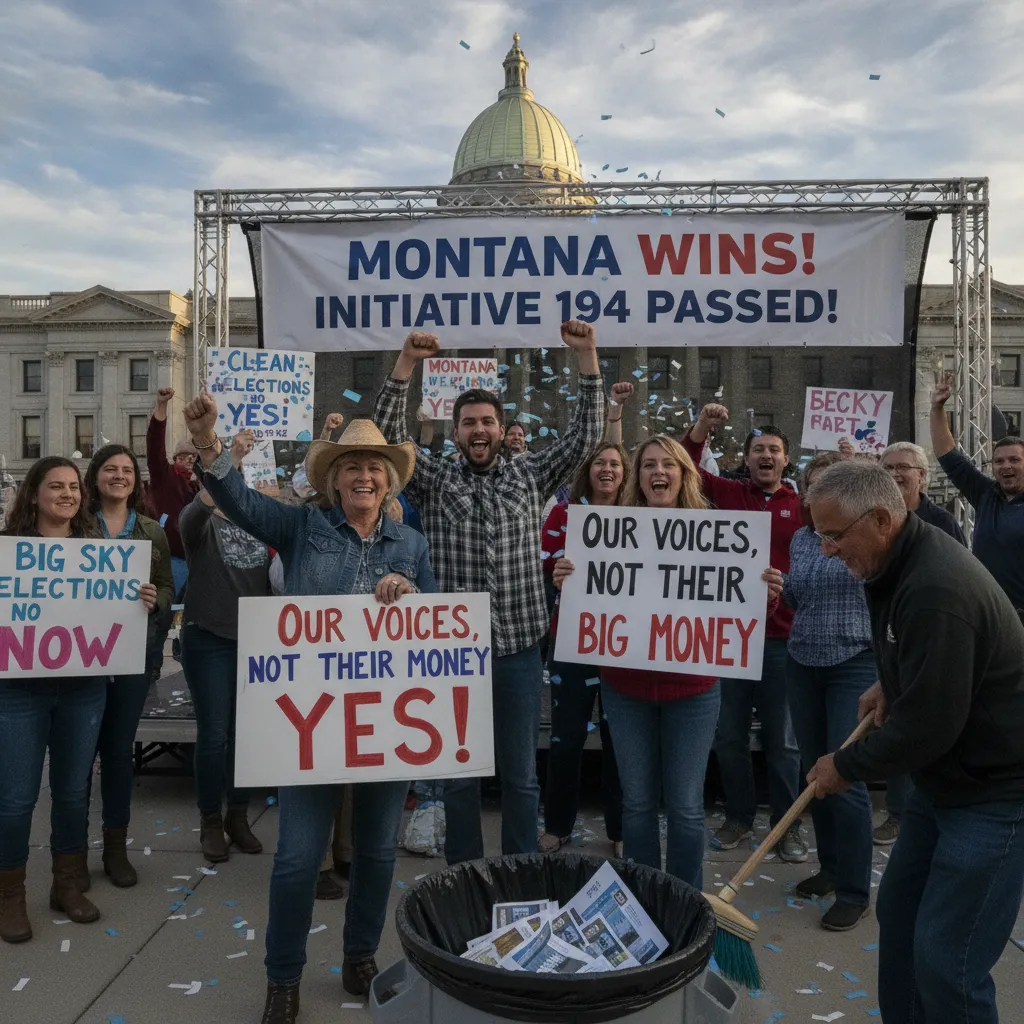
Montanans have sent a clear message about the role of big business in their elections, voting overwhelmingly to pass Initiative 194, better known as the Montana Plan. In a state that remains a stronghold for Republicans, roughly 65 percent of voters approved a daring new strategy designed to scrub corporate money from the political landscape. Rather than attempting to limit free speech, which has been largely protected since the Citizens United ruling, the plan targets the legal privileges granted to corporations by the state.
The mechanism of the law is straightforward yet aggressive. By stripping corporations, labor unions, and trade associations of their power to spend money on elections, Montana aims to eliminate corporate funded attack ads and bankrolled referendums. Companies that ignore these rules risk losing critical protections like limited liability, meaning shareholders could potentially be held personally responsible for corporate debts until any illegally spent funds are returned. This approach attempts to bypass previous court rulings by arguing that while corporations may have rights, those rights exist only because the state allows them to operate.
However, the victory comes with significant contradictions and looming obstacles. While intended to curb elite influence, the push for the Montana Plan was fueled by wealthy donors themselves, including figures linked to Walmart and LinkedIn fortunes. Furthermore, the law creates a distinct gap between institutional wealth and individual riches; billionaire donors can still pour unlimited personal sums into races, whereas their companies cannot. Critics argue this selectively silences smaller community organizations and local trade groups while leaving doors wide open for the ultra wealthy.
The battle now shifts toward a likely collision with the U.S. Supreme Court. Opponents claim the move is an unconstitutional attempt to circumvent established law by using business licenses as leverage against political expression. With over 30 other states exploring similar measures, Montana has become a primary testing ground for whether states can reclaim control over their democratic processes or if Citizens United remains an immovable wall in American politics.


Comments are closed.