Archive

November 3, 2026

Browsing

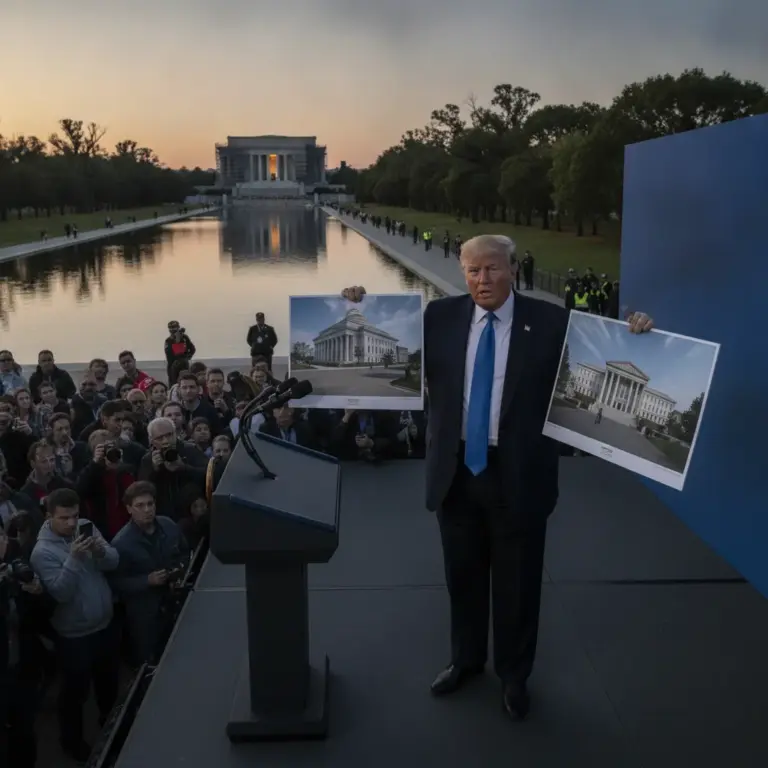
In a surprising turn for a campaign closing speech, President Donald Trump spent more than twenty minutes of his final address before the midterm elections focusing on architectural updates rather than political strategy. Speaking from the Reflecting Pool, the president held up photographs and went into extensive detail about renovations performed throughout Washington DC, shifting the tone of his message toward public works just as voters prepared to head to the polls. The unusual focus came at a time when his party is facing a challenging electoral landscape, with some forecasting agencies suggesting Republicans may struggle to maintain their House majority.

The preoccupation with city beautification stood in stark contrast to several high stakes legal and geopolitical battles currently surrounding the administration. Just hours earlier, federal courts had dealt another blow to the White House by rejecting attempts to force California to set aside thousands of ballots suspected of being cast by noncitizens. While Attorney General Todd Blanche continued to warn that violators would be prosecuted, judges have repeatedly found the administration’s lists of ineligible voters to be deeply flawed and its demands unconstitutional.

Beyond domestic disputes, the president used his remaining time to signal a potential shift in foreign policy regarding Iran. Amid plummeting approval ratings driven by skyrocketing gas prices and an unpopular war, Trump suggested via Truth Social that a settlement could happen soon. This optimistic outlook was echoed by Vice President JD Vance, who noted that progress had been made in talks despite the unpredictable nature of Iranian leadership.

As Election Day looms, Democratic hopes are rising according to recent polling showing them leading in five key battleground states. Meanwhile, internal GOP tensions are surfacing in places like Michigan, where Representative Haley Stevens faces private backlash from her own caucus after endorsing a Republican Senate candidate. With spending escalating across various districts and turnout remains uncertain, the administration seems to be balancing aggressive warnings of vetoes with unexpected pivots toward diplomacy and urban renovation projects.
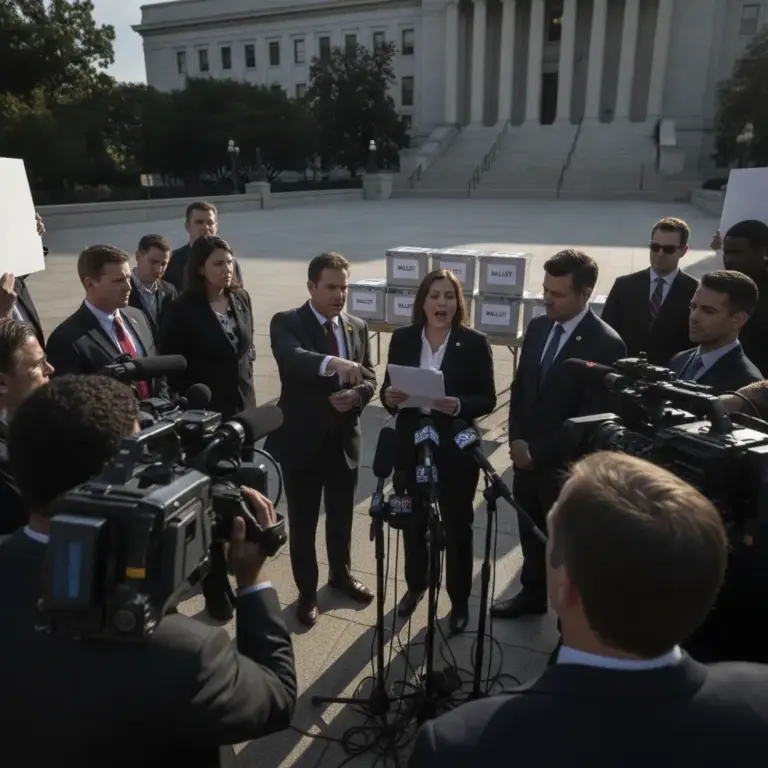

The Supreme Court swiftly dismissed an emergency request from the Trump administration on Monday, refusing to force California to isolate thousands of ballots that the Justice Department claimed may have been cast by noncitizens. In an unusually rapid response, the court issued a one sentence order denying the petition just hours after it was filed, offering no detailed reasoning or dissenting opinions. The move effectively ends a last minute attempt to interfere with the state’s ballot counting process on the eve of the midterm elections.

Solicitor General D John Sauer had argued that over 20,000 registered voters in California appeared to be noncitizens based on public records and sought what he called a modest remedy of setting these votes aside until their eligibility could be verified. However, this argument failed to gain traction in lower courts, including the 9th US Circuit Court of Appeals, which previously ruled that the federal government lacks the authority to dictate how states manage their own elections. That court suggested that any desired changes to mail in voting procedures should be addressed through Congress rather than the judiciary.

Legal experts pointed out that the timing of the appeal played a significant role in its rejection. Under a long standing legal guideline known as the Purcell principle, federal courts generally avoid altering election rules immediately before a vote to prevent chaos and confusion. With tens of millions of early ballots already cast across the country and many in California likely already processed, judges expressed concern that such an intervention would create a material risk of disenfranchising legitimate citizen voters.

While some members of the judiciary voiced concerns about protecting election integrity and enforcing laws against noncitizen voting, California officials and voting rights advocates maintained that the administration’s claims relied on shaky evidence. They argued that existing voter eligibility procedures were sufficient and that the Justice Department was overstepping its bounds. This latest defeat adds to a string of recent setbacks for the administration’s efforts to challenge state level election protocols via emergency appeals.

Global oil markets took a sharp dive on Monday morning following reports that a draft proposal aimed at ending the protracted conflict between the United States and Iran has begun circulating among key diplomats. The sudden shift in geopolitical sentiment triggered an immediate sell off, as traders bet that a resolution would stabilize energy corridors and potentially bring sanctioned Iranian crude back into the global supply chain.

The volatility was felt instantly across major exchanges, reflecting a broader relief rally among investors who have spent months bracing for escalation in the region. Analysts suggest that while the document remains a preliminary framework rather than a signed treaty, its mere existence suggests both powers are seeking an exit strategy from years of hostility. This prospect of stability effectively stripped away the risk premium that had been propping up prices throughout the quarter.

Energy giants like Exxon Mobil saw their valuations dip slightly amidst the chaos as market participants recalibrated for a world with more predictable flow through the Strait of Hormuz. Industry experts note that any formal agreement could lead to a significant surplus in available barrels, fundamentally altering the pricing landscape for months to come. For now, all eyes remain on official government channels to see if these diplomatic whispers will translate into a lasting peace.

Elon Musk is eyeing a significant expansion of his telecommunications empire as SpaceX explores a potential acquisition or partnership with Boost Mobile. According to reports from The Washington Post, discussions have already taken place between Musk and EchoStar chairman Charlie Ergen regarding how the aerospace company might leverage the budget carrier to transform Starlink into a major player in the mobile phone market. While the exact nature of the arrangement remains unclear, the strategy likely involves either buying Boost Mobile outright or securing deep access to its existing infrastructure.

This move represents a strategic shift for SpaceX as it attempts to bridge the gap between space and ground communications. By combining Starlink’s satellite-to-mobile capabilities with a traditional terrestrial network, Musk hopes to eliminate dead zones across the country. However, integrating these systems won’t be seamless, as Boost Mobile currently relies on networks operated by T-Mobile and AT&T. Any formal agreement would likely require navigation through complex permissions and regulatory hurdles involving those larger industry giants.

The push toward becoming a full-scale cellular provider is already well underway behind the scenes. Over the past year, SpaceX has aggressively collected wireless spectrum licenses from EchoStar and invested in low-band frequencies designed to help signals penetrate walls and buildings more effectively. Reports also suggest that the company is negotiating access to roughly 80,000 cell sites throughout the United States, signaling that Starlink intends to compete directly with established carriers rather than remaining a niche backup service for remote areas.

The world’s largest cryptocurrency exchange is grappling with a massive exodus of capital after security experts identified what they believe to be the biggest digital coin theft in history. In the wake of the breach, Binance users withdrew more than 4.6 billion dollars from the platform. While some confidence returned on Sunday as transactions resumed for major assets like Bitcoin and Ethereum, leading to about 1 billion dollars in new deposits, the exchange still faced a staggering net outflow of 3.64 billion dollars.

The chaos follows a devastating heist in which cybercriminals stole roughly 6.3 billion dollars in digital currency. The FBI has linked the attack to a North Korean hacker group known as TraderTraitor, which previously targeted another exchange called Bybit earlier this year. To conceal their tracks, investigators say the group attempted to convert much of the loot into Ethereum. While Binance managed to freeze approximately 3 billion dollars of the stolen assets, federal authorities are urging other private firms to block any addresses associated with the laundering operation.

Despite the scale of the theft, Binance leadership is attempting to project stability to its base of over 300 million users. Cofounder Yi He emphasized that securing the environment remains the top priority before full operations can resume. The company noted that the withdrawn funds represent only 2.1 percent of its total assets, which sit at 171 billion dollars. To prevent a total collapse of user trust, Binance has pledged to cover all losses using its own corporate funds and reported that nearly 95 percent of the impacted amount had been covered by Sunday morning.

Apple entered a new era this week as CEO John Ternus oversaw his first quarterly earnings report, delivering total revenue that surpassed Wall Street expectations despite a complicated landscape of supply chain hurdles. The tech giant reported revenue of 114.48 billion dollars, marking a 12 percent increase from the previous year. While the results provided a strong opening act for Ternus, who succeeded Tim Cook on September 1, the figures showed some volatility across different product lines, with robust iPhone and Mac sales offsetting misses in iPad and accessory revenue.

The cornerstone of the quarter remained the iPhone, which continued to drive over half of the company’s total sales. Demand stayed high even as Apple reluctantly raised prices by 100 dollars to combat rising costs for memory and critical computer components. Interestingly, these numbers only captured eight days of sales for the new iPhone 18 Pro, while the highly anticipated iPhone Duo had not yet reached consumers. This suggests significant momentum heading into the next reporting period, especially as Ternus noted that market share gains have persisted globally.

Beyond hardware, investors are closely watching how Ternus intends to monetize artificial intelligence following the release of an updated Siri AI. During conversations with reporters, the CEO hinted that AI would serve as a powerful catalyst for hardware upgrades rather than relying solely on subscription fees. He expressed confidence that the best is yet to come for Apple, pointing toward strategic expansions like HomeView and strong recovery efforts in Greater China, where business grew by 21 percent thanks to surging demand for Macs and iPhones.

Despite the overall win, there were signs of cooling in some areas. The lucrative services division experienced its slowest growth rate since 2022, expanding by less than 10 percent. Additionally, wearables and home accessories lagged behind analyst estimates as the company pivots its strategy for domestic technology. Meanwhile, Apple continues to maintain a conservative approach to infrastructure spending compared to its rivals, keeping capital expenditures significantly lower than those of other AI focused giants.

Squarespace is trimming nearly a fifth of its global staff as the company attempts to streamline its operations and pivot toward a more agile future. According to Jeff Seedman, a spokesperson for the firm, the restructuring involves cutting roughly 300 positions. The move is designed to simplify internal processes and sharpen corporate priorities as the web hosting giant prepares for what leadership describes as its next phase of growth.

This downsizing comes at a volatile time for the website construction industry, which has been fundamentally altered by the rise of generative artificial intelligence. A new wave of vibe coding tools now allows users to generate fully functional front end designs using simple text prompts, drastically reducing the manual effort once required to launch a site. Competitors have moved aggressively to capture this market, with Wix acquiring Base44 and newcomers like Lovable securing massive valuations from investors eager to capitalize on automated design.

In response to these pressures, Squarespace has doubled down on its own technical evolution. The company recently introduced an AI tool known as Blueprint and is currently building anticipation for Forma, an upcoming AI native platform that already has a growing waitlist of interested users. By integrating these capabilities, Squarespace hopes to remain competitive against both legacy rivals and nimble startups backed by venture capital.

The financial trajectory of the company has seen similar turbulence since it first entered the public eye. After going public in 2021 with a ten billion dollar valuation, Squarespace found it difficult to maintain momentum on the open market. This struggle eventually led to a decision to return to private ownership via a seven billion dollar private equity deal earlier this year, setting the stage for current structural changes meant to stabilize the business long term.