Archive

October 7, 2026

Browsing

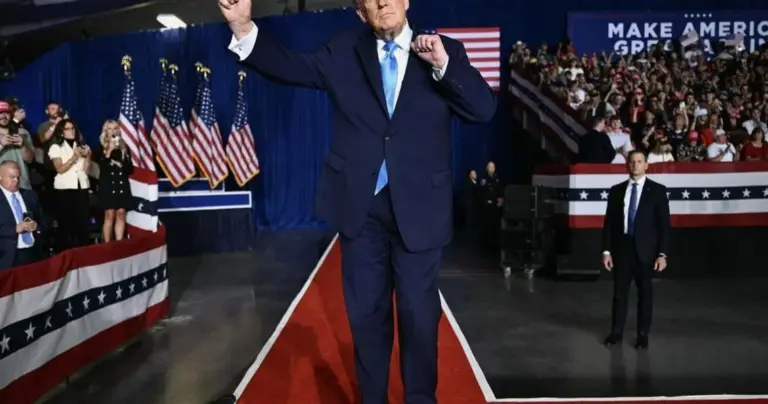
As the midterm elections enter their final stretch, President Trump has leaned heavily into a familiar campaign tactic, casting California as the ultimate political villain to energize his core supporters. During a recent swing through red states like Nebraska and Oklahoma, the president has used the Golden State as a convenient scapegoat for everything from soaring gasoline prices to allegations of systemic voter fraud. However, this strategy took a provocative turn during a Nebraska rally when Trump suggested that Iranian aggression might result in the loss of major West Coast hubs, remarking that letting Iran take out Los Angeles or San Diego would be a small price to pay for global security.

The fallout from these comments was immediate and widespread, crossing traditional party lines. While the White House later attempted to walk back the remarks by claiming they were taken out of context, several California officials expressed outrage. Governor Gavin Newsom labeled the rhetoric dangerous, while mayors from both Los Angeles and San Diego condemned the callousness of suggesting American cities be sacrificed. Even some within his own party felt the sting; Jim Desmond, a Navy veteran and Republican candidate in a tight House race, publicly broke with the president, asserting that the primary duty of any commander in chief is to protect every inch of American soil.

This aggressive approach highlights a delicate balancing act for the GOP. In deep-red strongholds, bashing California serves as an effective applause line that motivates conservative voters. Yet, in an era where digital clips circulate instantly, such inflammatory language can alienate moderate voters and put Republicans in competitive districts in an uncomfortable position. Political analysts suggest that while Trump remains adept at capturing attention and dominating the news cycle, there is growing concern over whether this unpredictability is beginning to undermine his own broader strategic goals.

Beyond the rhetoric regarding national security, Trump continues to tie California to economic grievances that resonate nationwide. By blaming closed refineries in blue states for high fuel costs—while simultaneously promising that conflict with Iran will eventually drive prices down—he is attempting to pivot away from poor polling on his economic record. Despite these efforts to frame California as a corrupt failure, local polls indicate significant disapproval toward his foreign policy decisions, leaving many to wonder if treating one of the nation’s largest economies as a punchbag will ultimately help or hinder the Republican cause at the ballot box.
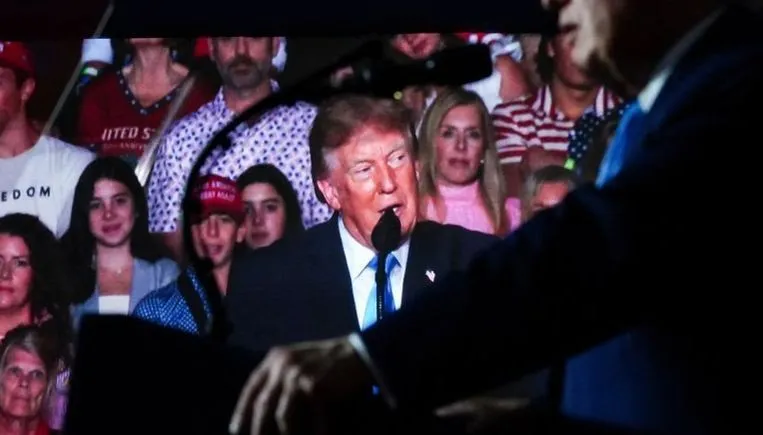

Donald Trump found himself at the center of a firestorm following a campaign stop in Nebraska, where remarks regarding Iran and the potential destruction of major California cities left listeners bewildered. During a rambling sequence of comments, Trump appeared to suggest that letting Iran take out Los Angeles and San Diego would be a small price to pay. The statement immediately triggered a wave of condemnation, drawing sharp rebukes from Democratic senators and even Republican allies, including a GOP congressional candidate from San Diego who expressed vehement disagreement with the idea of writing off American cities as an acceptable cost of war.

Despite the alarming nature of the phrasing, a closer look at the transcript suggests the controversy was born more from linguistic chaos than actual policy intent. Throughout his recent appearances and social media posts, Trump has frequently argued that higher gas prices are a small price to pay to prevent Iran from acquiring nuclear weapons. In several instances over the last few months, he has framed current economic burdens as negligible compared to the horror of a nuclear attack. Just days prior to the Nebraska event, he used almost identical logic during a rally in Alabama, noting that oil prices were far preferable to seeing Mobile targeted by foreign lunatics.

The issue in Nebraska was not necessarily a change in heart, but rather what critics describe as increasing incoherence. As Trump navigated through various topics ranging from Kamala Harris to Venezuelan politics, his sentence structure collapsed, making it sound as though he were permitting an attack rather than comparing its cost to fuel prices. While those familiar with his speaking style might recognize this as part of what he calls his weave—a meandering rhetorical approach designed to circle back to a main point—the result in this instance was nearly impenetrable.

Perhaps most unsettling for observers was the reaction from within the crowd, where some attendees reportedly cheered as the prospect of destroying Western cities was mentioned. Beyond the immediate shock value of the words used, the incident highlights a growing concern regarding clarity and authority coming from one of the most powerful men in the world. Whether viewed as accidental slips or signs of cognitive decline, such fragmented communications carry significant risks when discussing global security and nuclear deterrence.

October has brought another wave of massive discounts for tech enthusiasts, with some of the year’s most anticipated hardware seeing significant price drops. Smartphone shoppers are spoiled for choice, ranging from the ultra thin iPhone Air and budget friendly iPhone 16E to substantial savings on the Samsung S26 Ultra. Those leaning toward Google will find deep cuts across the entire Pixel 11 lineup, including a notable hundred dollar discount on the base model and even larger savings on the Pro versions. Even foldables are getting love, with the Z Fold 8 hitting its lowest price point since launch.

For those looking to upgrade their home theater or personal audio setups, the sales extend far beyond just phones. High end sound solutions from Sonos and Bose are heavily discounted, alongside various Roku streaming options that range from simple sticks to high performance Pro TVs. Audiophiles may also want to look at WiiM’s wireless streaming gear or Anker’s high wattage power banks to keep everything charged up during travel. From gaming headsets like the Omni to athlete focused Powerbeats Pro, there is something tailored for every type of user this season.

Reading enthusiasts have plenty of reason to celebrate as well, thanks to a wide array of Kindle deals. Amazon has slashed prices on everything from the basic Paperwhite to the sophisticated Colorsoft models and the expansive Scribe tablets for those who prefer digital note taking. Whether you are hunting for a flagship device to replace your current phone or just adding a few smart accessories around the house, these limited time offers make it an ideal moment to pull the trigger on upgrades you have been eyeing all year.

Walking through Midtown South today feels remarkably like a stroll back to the late nineties. Once again, New York City is witnessing a gold rush of startups setting up shop, fueled by an era of exuberance and astronomical valuations. This time, the catalyst is artificial intelligence, drawing giants like OpenAI and Anthropic to establish massive footprints outside of San Francisco. On the surface, it looks like a triumph for the city’s economy, with Wall Street riding a hundred foot wave of activity as investment banks rake in stunning profits from IPOs and infrastructure deals.

However, beneath this veneer of prosperity lies a haunting familiarity for those who remember the wreckage of the dot com crash. Back then, the sudden disappearance of companies like Pets.com triggered a domino effect that gutted Wall Street, erasing tens of thousands of jobs and leaving a gaping hole in city coffers during an already fragile post 9/11 recovery. Now, analysts worry that we are seeing history repeat itself. While current AI investments are driving record earnings for big banks and padding government budgets, there is growing concern that these asset prices no longer reflect actual profitability.

The danger for New York is particularly acute because the city’s fiscal health has become inextricably linked to this volatility. With twenty percent of state revenue stemming from Wall Street and nearly ten percent of city taxes following suit, any sharp correction could be catastrophic. City Comptroller Mark Levine warns that residents may not realize how deeply their fate is tied to this boom since AI development here often happens behind closed doors rather than in flashy hubs. If another bubble bursts, existing budget gaps could balloon into multi billion dollar crises, forcing drastic austerity measures or tax hikes.

Despite the looming threat described by skeptics and financial prophets like Michael Burry, some believe this cycle will end differently. Optimists argue that while there is certainly froth in the market and plenty of overhyped ventures destined to fail, the underlying technology possesses real utility that early internet companies lacked. Industry leaders suggest that even if several startups vanish overnight, New York’s diverse financial ecosystem would simply absorb the displaced engineering talent. Still, as JPMorgan Chase CEO Jamie Dimon noted recently, while the market remains exuberant for now, nobody truly knows how much longer the party can last.

The landscape of global entertainment underwent a seismic shift this week as the massive deal to combine two of Hollywood’s most influential legacies finally crossed the finish line. In a transaction valued at 111 billion dollars, Paramount has acquired Warner Bros. Discovery to form a new entity known as Skydance. This merger brings an unprecedented collection of assets under one roof, granting the new company control over heavyweights like HBO, CBS, and the legendary movie studios associated with both brands.

For Atlanta, the closing of this deal marks a pivotal moment for several iconic networks that helped define the city as a media hub. Under the leadership of co-CEOs David Ellison and Ynon Kreiz, Skydance now oversees a sprawling empire that includes CNN along with TNT, TBS, and Cartoon Network. While the corporate structure changes, Mark Thompson is expected to remain in his role as chairman and editor-in-chief at CNN, providing some continuity during what is essentially the fifth major ownership transition for those properties in twenty five years.

David Ellison expressed high ambitions for the venture, stating that the goal was to merge these storied studios into a more competitive force capable of reaching audiences across every imaginable platform. By pooling their resources and talent, Skydance aims to challenge dominant streaming players like Netflix while leveraging massive intellectual properties ranging from DC Comics to various cinematic franchises.

However, the road ahead involves significant logistical challenges as the company works to integrate two distinct employee bases and vast amounts of real estate. With anticipated annual revenues hitting 70 billion dollars and billions in new debt financing secured to fuel the move, the industry will be watching closely to see if this consolidated giant can successfully navigate its integration without losing the creative spark of its individual parts.

Starbucks is facing a federal lawsuit alleging that several of its drinks marketed as sugar free actually contain amounts of sugar comparable to a Kit Kat candy bar. The legal action focuses specifically on the company’s hot and iced protein lattes and protein matcha beverages in caramel and vanilla flavors. According to the filing, these drinks can contain anywhere from 13 to 21 grams of sugar per serving, leading plaintiffs to argue that no reasonable consumer would expect such high levels of sweetener in a product explicitly labeled as sugar free.

Lawyers representing consumers from California, New York, and Washington argue that this isn’t simply a matter of hidden nutritional data, but rather a case of blatant and misleading naming conventions. Steve Berman, a partner at Hagens Berman, noted that for individuals managing diabetes or strict health regimens, this kind of labeling discrepancy is more than just an oversight; it is a significant health concern. The lawsuit seeks financial damages for affected customers and demands that the coffee giant stop using the term sugar free for any product containing actual sugar.

In response to the allegations, Starbucks has denied misleading its customers and vowed to fight the claims in court. The company explained that while they use sugar free syrups for flavor, the sugars found in these specific drinks come naturally from the protein boosted milk used in the recipes. They maintain that their nutritional information has always been clearly available via their app, website, and physical menus throughout the promotional process.

While some listings on the Starbucks website previously described these items as sugar free, they also simultaneously listed the total gram count of sugar per drink and specified that there was no added sugar. This nuance lies at the heart of the dispute, pitting corporate definitions of additive sweeteners against consumer expectations of what a zero sugar label should actually mean.

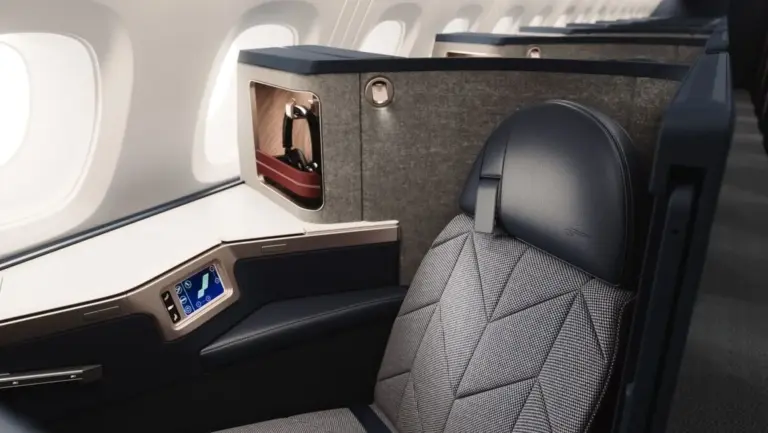
British Airways is doubling down on the luxury market by transforming its fleet of Airbus A380 jumbo jets into floating hotels for the wealthy. In a significant shift in strategy, the airline is stripping away nearly a hundred standard economy seats to make room for an expansive business class cabin featuring 106 suites equipped with sliding doors. This move represents one of the most aggressive pivots toward premium travel seen in recent years, effectively dedicating the entire upper deck of the world’s largest passenger plane to its highest paying customers.

The reconfiguration does not stop at business class, as the carrier is also expanding its premium economy section from 55 to 84 seats while slightly trimming its first class offering to twelve exclusive suites. By reducing the economy capacity from 303 down to just 215 seats, British Airways is signaling a clear preference for profit margins over passenger volume. This trend mirrors moves made by other global carriers like American Airlines and Qantas, all of whom have noted a surge in demand from travelers willing to pay thousands of dollars for increased privacy and comfort on long haul journeys.

This gamble extends beyond seat maps, serving as a vote of confidence in the A380 itself at a time when many other airlines have retired their jumbo jets in favor of smaller, more fuel efficient models. While manufacturers stopped delivering these giants years ago, British Airways believes that providing an ultra luxurious experience can justify the operational costs of such large aircraft. It is a risky but calculated play in an industry where high end tickets often fetch five figures and luxury has become the primary battleground for competition between major airlines.