Archive

October 2, 2026

Browsing

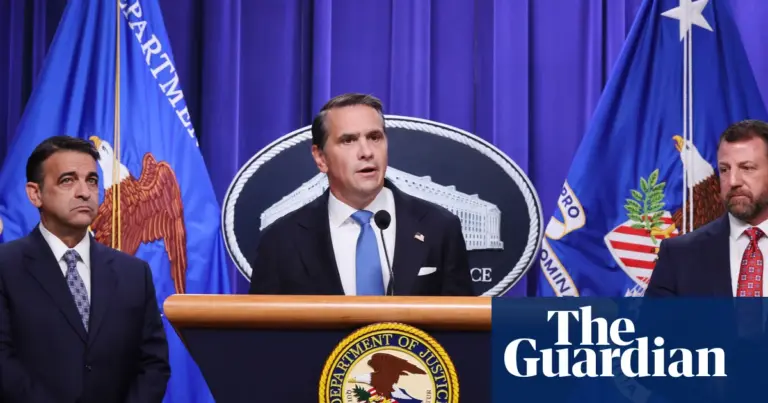
Former government officials and security experts are sounding the alarm after the Trump administration systematically dismantled several key bodies tasked with investigating threats to U.S. elections. According to recent reports, the Justice Department’s election threats task force, which previously prosecuted dozens of individuals for harassing and intimidating poll workers regardless of their political affiliation, has effectively gone dormant. Critics argue that while the federal government once provided a critical deterrent against domestic terrorism and violence targeting election staff, that safety net has vanished in practice.

The erosion of these safeguards accelerated shortly after the start of the second term. Attorney General Pam Bondi moved quickly to eliminate the FBI’s foreign influence task force, which monitored interference from adversaries like Russia and China. Simultaneously, leadership at the Cybersecurity and Infrastructure Security Agency saw personnel fired or reassigned, and vital funding for local official training programs was cut. Experts like Geoff Hale warn that these moves have destroyed a decade of trust and communication between federal and local agencies, leaving regional authorities blind to broader patterns of malicious activity.

Despite abandoning these broad security frameworks, the administration has redirected its resources toward specific priorities that align with the president’s long held grievances. Federal agents recently conducted high profile raids in Fulton County and Puerto Rico to seize old election materials under the guise of foreign interference probes, though these actions have yet to produce concrete results. These maneuvers coincided with a primetime address where President Trump alleged significant vulnerabilities in U.S. hardware and databases without providing substantiating evidence.

More recently, the focus has shifted heavily toward pursuing noncitizen voters. Attorney General Todd Blanche highlighted a surge in prosecutions for voter fraud involving noncitizens, framing this as a return to law enforcement basics compared to previous administrations. However, former advisors like Caitlin Durkovich suggest this pivot ignores genuine risks, arguing that the administration has gutted the very apparatus needed to detect sophisticated bad actors just as they claim foreign operations remain a threat to American democracy.


The cornerstone of American democracy rests on the belief that informed citizens use reason and logic to navigate the complexities of governance. However, a recent study conducted by social scientists at UC Berkeley suggests that this ideal is far from reality. Rather than carefully weighing multiple variables when faced with difficult political decisions, most Americans rely on mental shortcuts, focusing on a single priority while ignoring almost everything else.

Researchers Kirk Bansak and Nidhi Banavar explored how people make choices regarding sensitive topics such as immigration, climate change, and the selection of political candidates. In one exercise, participants were asked to choose between fictional Senate candidates based on several attributes including age, race, education, and military experience. Instead of analyzing the full profile of each candidate, many participants based their entire decision on just one specific factor that mattered most to them personally.

This tendency toward simplification does not necessarily mean that voters are acting irrationally. According to Banavar, human brains are simply not built like infinite computational machines capable of processing every possible variable in a complex equation. While some individuals do conduct a thorough analysis or a balanced tally of pros and cons, the majority opt for the path of least resistance to reach a conclusion quickly.

These findings have significant implications for how political campaigns communicate with the public. If policymakers know that a vast segment of the population makes decisions based on a single issue—such as immediate financial costs in the case of climate change—they may tailor their messaging to highlight that lone factor while omitting broader scientific or systemic contexts. This creates a feedback loop where complex issues are reduced to slogans because it aligns with how the human mind naturally filters information.

Global energy markets reached a significant milestone this week as crude oil flows through the Strait of Hormuz finally returned to prewar levels. Data from Goldman Sachs, JPMorgan, and Kpler indicate that exports moving through this critical maritime chokepoint have averaged about 13.5 million barrels per day over the last week, effectively hitting the previous baseline. While the restoration of these volumes suggests a return to stability in raw crude transport, the recovery has not translated into relief for consumers at the pump.

Despite the steady flow of crude, the global economy continues to struggle with severe constraints in refined product supplies. This imbalance has pushed diesel prices to record highs, creating persistent inflationary pressure across various sectors. The situation has become so acute that President Donald Trump is reportedly weighing a ban on diesel exports in an attempt to force more fuel into domestic markets and drive down costs for American drivers and businesses. In early trading Thursday, both Brent and WTI crude futures trended lower as traders balanced these logistical gains against broader economic anxieties.

The timing of this energy shift coincides with the start of the fourth quarter, which opens amidst lingering volatility in the bond market. Global equities remain sensitive to elevated Treasury yields even after a slightly softer inflation reading in the United States showed August PCE rising by 3.4 percent. Minneapolis Fed President Neel Kashkari emphasized that inflation remains stubbornly high after five years of elevation, suggesting that recent data does little to change the central bank’s cautious outlook on interest rates.

Beyond energy and economics, the technology sector continues its rapid evolution with Google unveiling Gemini 4 Argon, its most sophisticated AI model focused on cybersecurity and coding. This comes as Meta celebrates its strongest monthly performance since 2022, fueled by investor enthusiasm for its new Muse personal AI agent. Meanwhile, political scrutiny is turning toward Commerce Secretary Howard Lutnick following financial disclosures revealing he earned over 250 million dollars last year, largely through distributions from his former firm, Cantor Fitzgerald.

Prospective homebuyers are facing a steeper climb as mortgage rates hit their highest mark since late 2023. According to the latest Primary Mortgage Market Survey from Freddie Mac, the average rate for a benchmark 30 year fixed mortgage jumped to 7.28 percent this week, up from 7.03 percent just seven days prior. This represents a significant leap compared to where things stood a year ago, when the average rate sat at 6.34 percent. Shorter term options aren’t faring much better, with the average 15 year fixed mortgage climbing to 6.6 percent.

While many people associate these shifts with direct actions from the Federal Reserve, experts note that mortgage rates actually track more closely with the 10 year Treasury yield, which recently hovered around 5.23 percent. These fluctuations are often driven by a complex mix of geopolitical tensions and broader economic indicators. Despite the volatility, Freddie Mac chief economist Sam Khater suggested that overall favorable economic conditions continue to provide some baseline support for the housing market.

However, the real world impact on family budgets is becoming harder to ignore. Hannah Jones, a senior economist at Realtor.com, pointed out that because rates have risen nearly a full percentage point over the last year, monthly payments on a median priced home have increased by more than 200 dollars in principal and interest alone. This comes even as some median home prices have dipped slightly over the same period, effectively neutralizing any potential savings for new buyers.

For those still determined to enter the market, professionals suggest focusing on personal financial health rather than trying to time the peaks and valleys of national trends. Because final rates vary wildly based on credit scores and down payments, two different borrowers could see an entire percentage point of difference regardless of what the headlines say. Experts advise buyers to rate proof their budgets now to ensure they can handle future swings without compromising their financial stability.

Nike shares dipped further in extended trading on Thursday after the sportswear giant missed revenue expectations and revealed a deepening crisis in one of its most critical markets. While earnings per share actually beat analyst predictions, coming in at 48 cents against an expected 43 cents, total revenue fell four percent to 11.21 billion dollars. This slight miss underscores a broader struggle for the company as it grapples with shifting consumer habits and stubborn economic headwinds.

The primary driver behind the disappointing numbers was a staggering collapse in China, where revenues plunged by 26 percent. This continued slump reflects a volatile environment characterized by geopolitical tension and decreased consumer spending power. Although performance in North America remained relatively stable, barely exceeding estimates at 5.13 billion dollars, it wasn’t enough to offset the bleeding in Asia or soothe investors who have already seen Nike’s stock plummet more than 40 percent so far this year.

In response to these challenges, CEO Elliott Hill announced a sweeping reorganization aimed at positioning the brand for long term growth. The plan involves modernizing the supply chain, expanding operations into India, and streamlining how the global workforce is organized. However, this strategic shift comes with a human cost; Hill admitted in a letter to employees that the changes would lead to layoffs starting in 2027, acknowledging the uncertainty such news brings to the staff.

Financial analysts see this restructuring as a necessary but painful step toward efficiency, with Nike projecting about 2.5 billion dollars in savings through fiscal 2031. Despite these hopes for future lean operations, the immediate outlook remains bleak. The company warned that overall revenues are expected to decline by a high single digit percentage throughout fiscal 2027 as it continues to fight for footing amidst rising inflation and intense competition globally.

Most people imagine their lives changing instantly if they stumbled upon a small fortune, but for one Texas man, finding over 128 thousand dollars atop an ATM was simply a problem that needed solving. The thirty seven year old barber was visiting a Bank of America machine in Lewisville, about thirty miles north of Dallas, when he and a companion noticed two bags resting on the equipment. One contained nineteen checks, while the other held a staggering sum of cash totaling exactly 128,514 dollars.

Rather than walking away with the windfall, the man immediately began searching for the rightful owner. After noticing information on one of the bags that seemed to link the money to a nearby Chick fil A, he drove straight to the restaurant to see if it belonged there. When a manager informed him that the money did not belong to the business, he didn’t hesitate to call 911 so that law enforcement could secure the funds and track down whoever had lost them.

An investigation later revealed that the money actually belonged to Bank of America and had been handled by its cash vendor, Brinks. Police believe a technician servicing the ATM likely forgot the bag on top of the machine after finishing their work. Officers verified the total using a digital currency counter and confirmed that every single cent was accounted for, noting there was no evidence that any of the funds were tied to criminal activity.

Local authorities say they have rarely encountered such honesty given the scale of the find. Detective Gina Miller mentioned she has dealt with returned wallets and IDs throughout her career but had never seen anyone turn in this much cash. Police Chief Brook Rollins praised the man for his decisive action, stating that he didnt even blink before trying to return the money. While keeping it could have led to felony theft charges, the man sought neither rewards nor publicity, though he has agreed to attend a private ceremony honoring his integrity.

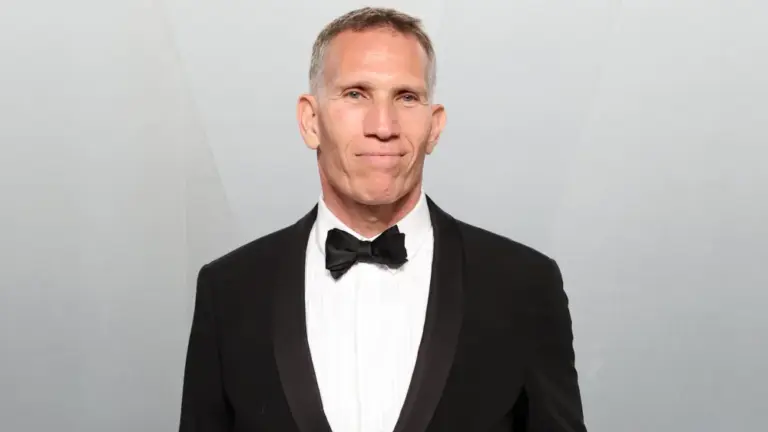
Ynon Kreiz is stepping into his new role as Co-CEO of the combined entity formed by the merger of Paramount and Warner Bros. Discovery with a paycheck that reflects the massive scale of the deal. According to a recent SEC filing, the sixty-one year old executive will see his first-year compensation soar to more than 46.5 million dollars. This represents a significant leap from his time leading Mattel, where his total compensation for 2025 was roughly 15.1 million dollars.

The bulk of this windfall comes from a substantial signing incentive consisting of restricted stock units valued at 31.5 million dollars. Beyond the initial sign-on bonus, Kreiz’s basic terms include an annual base salary of 5 million dollars and eligibility for a yearly performance bonus targeted at nearly 5 million dollars. He is also slated to receive 1.25 million shares of Class B common stock as part of a pre-closing award, further tying his financial success to the health of the newly merged media giant.

As David Ellison’s primary partner in managing the consolidated organization, Kreiz begins his tenure on October 5, just twenty four hours before the anticipated closing of the staggering 111 billion dollar merger. The company has yet to announce an official name for the joined venture, but it is already making waves with these high-level leadership investments. Following the merger’s completion, Kreiz will be eligible for additional grants totaling up to 5.1 million dollars shortly after closing, followed by another equity award of about 20 million dollars on his first anniversary.

To ensure long term stability during this transition, most of these stock awards are structured with specific strings attached. With the exception of the immediate signing reward, those equity grants will vest in equal quarterly installments over a three year window. This means Kreiz must remain employed with the firm through those dates to fully realize the gains, aligning his personal wealth with the successful integration of two entertainment titans into one singular powerhouse.